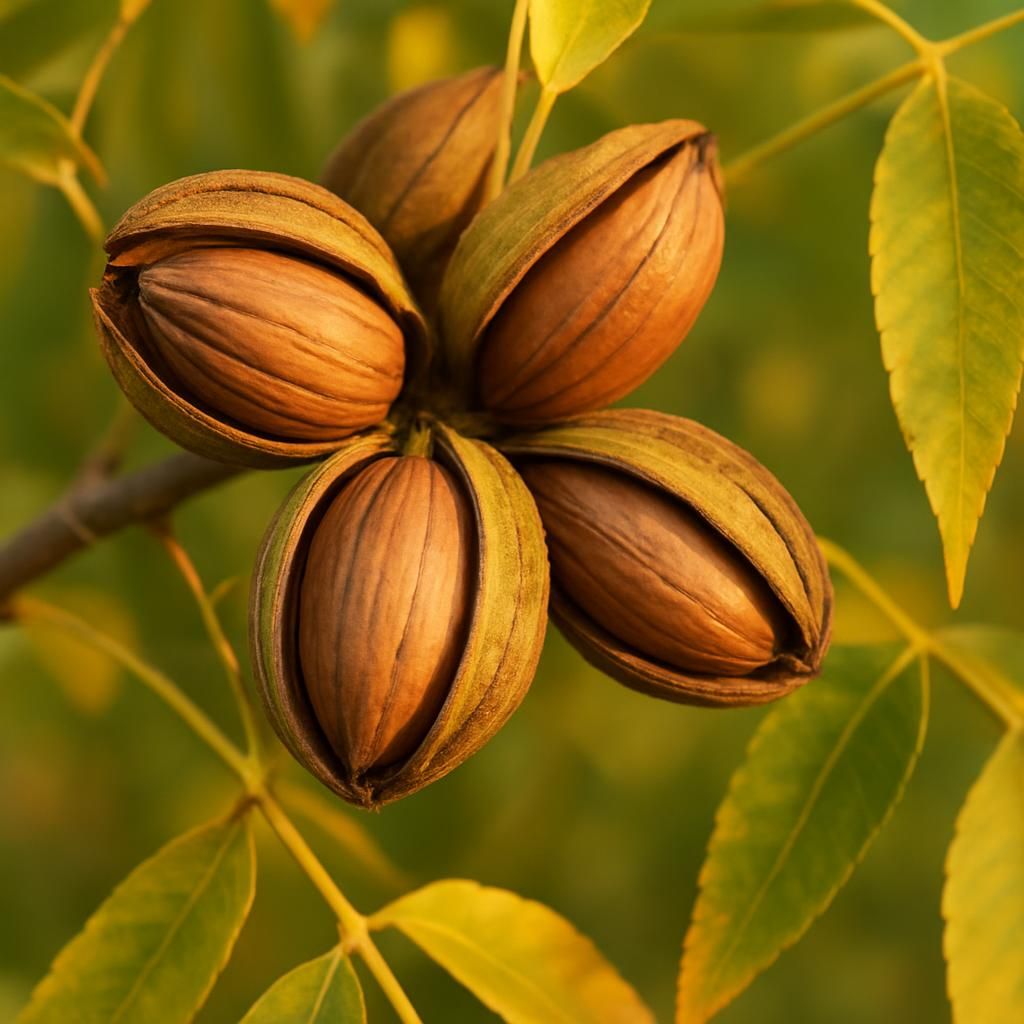
Introduction to Kanza
Kanza is a northern-adapted pecan cultivar developed by the USDA for regions with shorter growing seasons and colder winters. Released in 1997, it combines the cold hardiness of northern pecan genetics with improved nut quality and disease resistance. Growers in USDA zones 5–8 value Kanza for its reliable production where traditional southern cultivars struggle.
This guide covers every stage of Kanza cultivation from soil preparation through harvest and storage. Professional orchardists and serious home gardeners will find actionable, research-based recommendations that maximize both yield and nut quality.
Kanza trees reach 40–60 feet at maturity with a moderately spreading canopy. The cultivar produces medium-sized nuts with thin shells and excellent kernel quality. Its early harvest window (late September to mid-October in zone 6) provides a competitive market advantage in northern regions.
Botanical Profile of Kanza
Kanza belongs to the Juglandaceae family and is a selection of the native pecan species Carya illinoinensis. The tree exhibits a strong central leader with alternate, pinnately compound leaves containing 9–13 leaflets. Male catkins appear in early spring while female flowers develop on current-season shoots.
The nuts average 70–85 per pound with 55–60% kernel recovery. Shells are thin yet durable, reducing cracking losses during mechanical harvest. Kernels display a rich, buttery flavor with minimal astringency. The cultivar shows moderate alternate bearing but maintains more consistent production than many southern selections.
Kanza demonstrates strong resistance to pecan scab and moderate tolerance to other foliar diseases. Its northern parentage confers superior cold hardiness, with trees surviving temperatures to -20°F (-29°C) when properly acclimated.
Soil, pH, and Climate Requirements for Kanza
Kanza performs best on deep, well-drained loamy soils with good water-holding capacity. Avoid heavy clay or poorly drained sites that promote root diseases. The cultivar tolerates a range of soil textures provided drainage is adequate.
| Parameter | Ideal Range | Notes |
|---|---|---|
| Soil Type | Sandy loam to loam | Deep profiles (>4 ft) preferred |
| Soil pH | 6.0 – 7.0 | Slightly acidic to neutral |
| Organic Matter | 3 – 5% | Incorporate compost or cover crops |
| Drainage | Excellent | Raised beds or tile drainage on marginal sites |
| Minimum Temperature | -20°F (-29°C) | Fully dormant trees; protect young plantings |
| Growing Season | 160–180 frost-free days | Critical for nut fill and kernel quality |
| Annual Rainfall | 30–45 inches | Supplemental irrigation required in dry periods |
| USDA Hardiness Zones | 5a – 8b | Best performance in zones 6–7 |
Site selection should prioritize full sun exposure (minimum 8 hours daily). Wind protection on the north and west sides reduces winter desiccation in exposed northern plantings.
Step-by-Step Planting & Propagation
Kanza is typically propagated by grafting onto seedling pecan rootstocks. Purchase certified, disease-free nursery trees for best establishment. Bare-root trees are planted from November through March in most zones, while container-grown stock can be planted year-round with proper irrigation.
- Test soil and amend pH and fertility 6–12 months before planting.
- Dig holes twice the width and equal to the depth of the root ball.
- Position the graft union 2–3 inches above final soil grade.
- Backfill with native soil; avoid amending the planting hole with excessive organic matter.
- Water thoroughly and apply 3–4 inches of organic mulch, keeping mulch 6 inches from the trunk.
- Stake young trees for the first two seasons in windy sites.
- Space trees 30–40 feet apart in orchard rows 40–50 feet wide for mechanical equipment access.
Grafting can be performed in late winter using whip-and-tongue or cleft methods on 1–2 year old seedlings. Success rates exceed 80% when performed before sap flow begins.
Care & Maintenance regimes for Kanza
Young Kanza trees require consistent moisture and weed control during the first three seasons. Mature orchards need annual fertility programs based on leaf analysis and soil tests. Pruning focuses on developing a strong central leader and maintaining an open canopy for light penetration.
| Growth Stage | Water Schedule | Fertilizer Schedule | Pruning Schedule |
|---|---|---|---|
| Years 1–3 | 1–2 inches/week; deep soak every 7–10 days | 0.25–0.5 lb N/tree in spring; split applications | Remove lower limbs; train central leader |
| Years 4–7 | 1 inch/week during nut fill | 1–2 lb N/tree; adjust by leaf analysis | Thin crossing branches; maintain 8–10 scaffold limbs |
| Mature (8+ years) | 0.75–1 inch/week; reduce after harvest | 75–100 lb N/acre; apply 60% pre-bud break | Annual dormant pruning; remove dead wood |
Apply zinc sulfate (36% Zn) at 1–2 lb/acre annually if leaf analysis indicates deficiency. Boron and magnesium may be needed on sandy soils. Avoid late-season nitrogen that delays dormancy.
Pests, Diseases & Organic Management
Kanza’s scab resistance reduces fungicide needs, but monitoring remains essential. Primary insect concerns include pecan nut casebearer, hickory shuckworm, and black pecan aphids. Organic growers rely on mating disruption, beneficial insect releases, and targeted sprays of horticultural oil or neem.
Scout weekly from bud break through shell hardening. Use degree-day models to time pecan nut casebearer sprays. Maintain ground cover to support predatory mites and parasitic wasps. Remove and destroy fallen shucks and leaves in autumn to reduce overwintering inoculum of scab and other foliar pathogens.
For severe aphid outbreaks, release lady beetles or apply insecticidal soap. Avoid broad-spectrum insecticides that disrupt natural enemy populations.
Harvesting, Curing & Optimal Storage
Kanza nuts mature in late September to mid-October depending on latitude. Harvest begins when shucks split and nuts begin dropping. Shake trees or use mechanical harvesters followed by prompt collection to prevent quality loss from rain or wildlife.
Cure nuts at 70–80°F with 60–70% relative humidity and good airflow for 7–14 days until kernel moisture reaches 4–5%. Store in-shell nuts at 32–40°F and 60–70% RH for up to 12 months. Shelled kernels maintain quality for 6–9 months under refrigeration or longer when frozen at 0°F.
Monitor for storage pests such as Indian meal moth and maintain sanitation in storage areas.
Companion Planting for Kanza
Leguminous cover crops such as clover and hairy vetch fix nitrogen and improve soil structure between tree rows. Cereal rye provides winter cover and suppresses weeds. Avoid planting shallow-rooted vegetables directly under the canopy where competition and shade limit growth.
Marigolds and nasturtium planted in perimeter rows attract beneficial insects and deter nematodes. Interplanting with garlic or onion may reduce soil-borne pests. Maintain a 6–8 foot herbicide-free strip around each tree to prevent trunk damage from equipment.
Stop Treating Tomato Blight Like a Spray Problem: Here Is What Works Better provides additional organic disease management insights applicable to orchard systems.