Introduction to Jerusalem Artichoke (Sunchoke - Stampede)
Jerusalem artichoke, also known as sunchoke, is a perennial member of the sunflower family cultivated primarily for its edible underground tubers. The 'Stampede' cultivar stands out for its early maturity, high tuber yield, and superior cold tolerance, making it an excellent choice for northern growers seeking reliable production. Unlike many root crops, it thrives in marginal soils and requires little ongoing maintenance after planting. Its tubers are valued for their sweet, nutty flavor and high inulin content, which supports gut health and blood sugar management. This guide provides professional-grade growing advice tailored specifically to the 'Stampede' variety.
Botanical Profile of Jerusalem Artichoke (Sunchoke - Stampede)
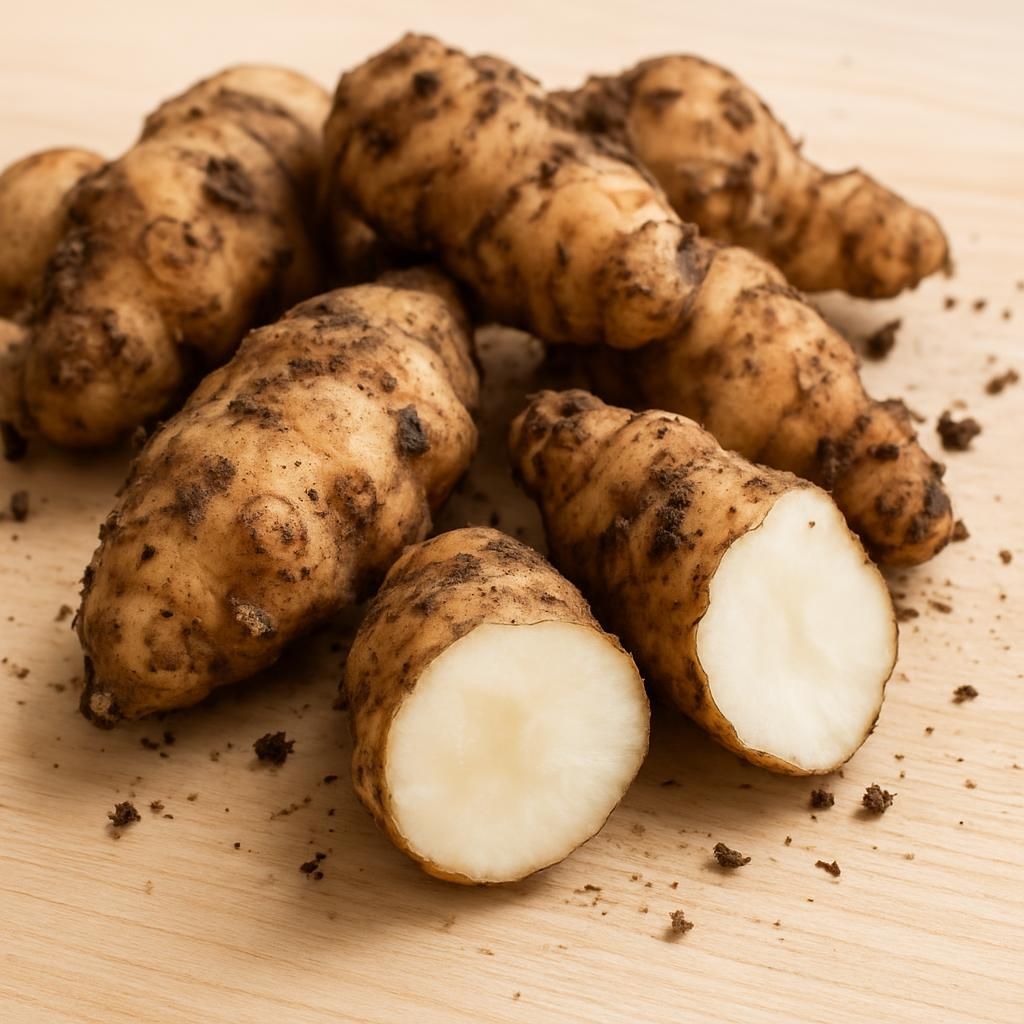
Helianthus tuberosus 'Stampede' produces tall, sturdy stems reaching 5–8 feet in height with broad, rough-textured leaves typical of the sunflower genus. The plant develops dense clusters of bright yellow daisy-like flowers in late summer that attract pollinators. Underground, it forms knobby, elongated tubers with thin, tan to reddish-brown skins and crisp white flesh. These tubers store energy as inulin rather than starch, giving them their characteristic sweetness. The variety is noted for its rapid tuber bulking and ability to overwinter successfully in USDA zones 3–9.
Soil, pH, and Climate Requirements for Jerusalem Artichoke (Sunchoke - Stampede)
| Parameter | Ideal Range | Notes |
|---|---|---|
| Soil Type | Loamy to sandy loam | Well-drained; tolerates clay if amended |
| Soil pH | 6.0–7.5 | Slightly acidic to neutral |
| Temperature Range | 15–25 °C (59–77 °F) daytime | Frost hardy to −30 °C (−22 °F) |
| USDA Hardiness Zones | 3–9 | Excellent winter survival |
| Sun Exposure | Full sun (minimum 6 hours) | Tolerates light shade but yields decrease |
| Soil Fertility | Moderate organic matter | Avoid excessive nitrogen |
Step-by-Step Planting & Propagation
Plant 'Stampede' tubers in early spring as soon as soil can be worked, typically 2–4 weeks before the last frost. Select healthy, disease-free tubers or pieces each containing at least one or two buds (eyes). Space tubers 12–18 inches apart in rows 30–36 inches apart and plant 4–6 inches deep. Firm soil over tubers and water thoroughly after planting. For faster establishment, pre-sprout tubers indoors 2–3 weeks before outdoor planting. Once shoots emerge, apply a 2–3 inch layer of organic mulch to suppress weeds and conserve moisture. 'Stampede' can also be propagated by dividing established clumps in fall or early spring.
Care & Maintenance regimes for Jerusalem Artichoke (Sunchoke - Stampede)
| Growth Stage | Watering Schedule | Fertilizer Application | Pruning / Other Tasks |
|---|---|---|---|
| Establishment (0–4 weeks) | Water 1–2 times weekly to keep soil moist | None; rely on soil nutrients | Remove weeds; mulch after planting |
| Vegetative (4–10 weeks) | 1 inch per week; deep infrequent watering | Side-dress with compost or balanced organic fertilizer at week 6 | Remove lower leaves if disease appears |
| Flowering & Tuber Bulking | Reduce to 0.5 inch per week if rainfall adequate | Avoid high-nitrogen; light potassium boost optional | Cut back stems to 4 ft if lodging occurs |
| Post-Harvest / Dormancy | Minimal; natural rainfall sufficient | None | Cut dead foliage to 6 inches in late fall |
Pests, Diseases & Organic Management
'Jerusalem Artichoke (Sunchoke - Stampede)' is relatively pest-resistant but can be affected by Aphids, Slugs, and Squirrels. Monitor for aphid colonies on new growth and blast them off with water or apply insecticidal soap. Slugs may damage young shoots in wet springs; use beer traps or diatomaceous earth barriers. Squirrels and Rodents sometimes dig for tubers; protect beds with hardware cloth or row covers. The crop is largely disease-free, though Powdery mildew or Leaf spot diseases can occur in humid conditions. Improve airflow by proper spacing and remove infected foliage promptly. Crop rotation every 3–4 years helps prevent soil-borne issues.
Harvesting, Curing & Optimal Storage
Begin harvesting 'Stampede' tubers after the first hard frost when foliage begins to die back, typically 110–130 days after planting. Use a digging fork to carefully lift tubers, working outward from the plant to avoid damage. Allow freshly dug tubers to cure in a shaded, well-ventilated area for 1–2 days. For storage, keep tubers in perforated plastic bags or damp sand at 1–4 °C (34–39 °F) with high humidity; they remain viable for 4–6 months. Note that tubers left in the ground will overwinter and produce new shoots the following spring.
Companion Planting for Jerusalem Artichoke (Sunchoke - Stampede)
Pair 'Stampede' with nitrogen-fixing legumes such as Peas or Beans to improve soil fertility. Tall stalks provide natural support for climbing crops like Cucumber. Aromatic companions including Thyme and Rosemary help deter aphids. Avoid planting near Potato to reduce shared disease pressure. The dense canopy shades out weeds and creates beneficial microclimates for understory crops such as Lettuce.