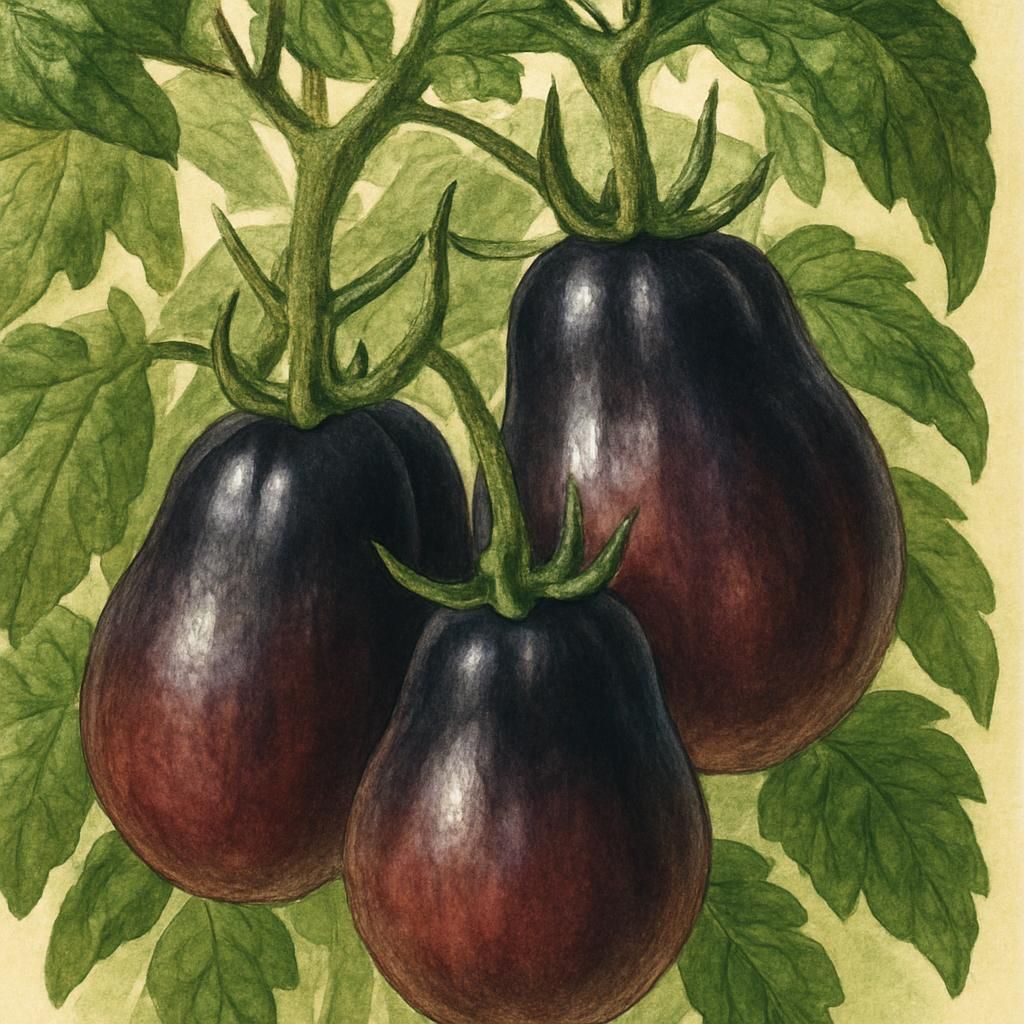
Introduction to Japanese Black Trifele Tomato
The Japanese Black Trifele Tomato is a distinctive heirloom variety originating from Japan, known for its unique pear or teardrop shape and striking coloration. The fruit develops a rich, dusky purple-black hue over the shoulders that fades to a deep mahogany red at the blossom end. Gardeners value this tomato for its complex, smoky-sweet flavor with hints of earth and fruit that sets it apart from standard red varieties. Its indeterminate growth habit allows continuous production throughout the season, making it ideal for both fresh eating and small-scale commercial markets.
Botanical Profile of Japanese Black Trifele Tomato
Botanically classified as Solanum lycopersicum 'Japanese Black Trifele', this variety belongs to the Solanaceae family. The plant exhibits vigorous, indeterminate vines that can reach 6–8 feet in height when properly supported. Leaves are typical tomato foliage with slightly serrated margins and a deep green color. Flowers are yellow and self-pollinating, producing fruit clusters of 4–6 pear-shaped tomatoes weighing 4–6 ounces each. The dark pigmentation comes from elevated anthocyanin levels, contributing both visual appeal and potential antioxidant benefits.
Soil, pH, and Climate Requirements for Japanese Black Trifele Tomato
Japanese Black Trifele Tomato thrives in well-drained, fertile loam soils rich in organic matter. Consistent moisture without waterlogging is essential for optimal fruit development and to prevent Blossom End Rot.
| Parameter | Ideal Range | Notes |
|---|---|---|
| Soil Type | Loamy, well-drained | Add compost for structure and fertility |
| Soil pH | 6.2–6.8 | Test annually; adjust with lime or sulfur |
| Temperature (Day) | 70–85°F (21–29°C) | Protect from temperatures above 90°F |
| Temperature (Night) | 55–65°F (13–18°C) | Avoid frost; use row covers if needed |
| Sunlight | Full sun (6–8+ hours) | Morning sun preferred in hot climates |
| Spacing | 24–36 inches between plants | Rows 4–5 feet apart for airflow |
| Growing Season | 70–85 days to maturity | Warm-season crop; transplant after frost |
Step-by-Step Planting & Propagation
Start seeds indoors 6–8 weeks before the last expected frost date. Sow seeds ¼ inch deep in sterile seed-starting mix and maintain soil temperature at 75–80°F for rapid germination. Once seedlings develop two true leaves, transplant into 4-inch pots and harden off gradually over 7–10 days. Transplant outdoors when soil temperature reaches at least 60°F and nighttime air temperatures remain above 50°F. Space plants 24–36 inches apart in rows 4–5 feet wide. Install sturdy cages or trellises at planting time to support the vigorous vines.
Care & Maintenance regimes for Japanese Black Trifele Tomato
Consistent care ensures high yields and superior fruit quality. Mulch heavily with organic material to retain moisture and suppress weeds. Monitor plants weekly for nutrient deficiencies and adjust feeding accordingly.
| Task | Frequency | Details |
|---|---|---|
| Watering | 1–2 inches/week | Deep, infrequent watering; avoid wetting foliage to reduce disease risk |
| Fertilizer | Every 2–3 weeks | Balanced organic fertilizer (NPK 5-5-5) until flowering; switch to high-phosphorus (e.g., 2-5-3) during fruit set |
| Pruning | Weekly | Remove suckers below first flower cluster; maintain 1–2 main stems |
| Mulching | At transplant | 2–3 inches of straw or shredded leaves to conserve moisture |
| Staking/Trellising | At planting | Use 6–8 ft stakes or Florida weave system for indeterminate growth |
Pests, Diseases & Organic Management
Japanese Black Trifele Tomato can be affected by common tomato pests including Aphids, Hornworms, and Spider Mites. Practice integrated pest management by introducing beneficial insects such as ladybugs and lacewings. Scout plants regularly and use insecticidal soap or neem oil for outbreaks. Major diseases include Early Blight, Late Blight, and Septoria Leaf Spot. Improve airflow through proper spacing and pruning, rotate crops every 3–4 years, and apply copper-based fungicides preventively during wet periods. Remove and destroy infected plant material at season end.
Harvesting, Curing & Optimal Storage
Harvest Japanese Black Trifele Tomatoes when the fruit reaches full color with slight softening at the blossom end, typically 70–85 days after transplant. Pick in the morning for best flavor and shelf life. For peak flavor, allow fruit to ripen fully on the vine. Store ripe tomatoes at room temperature away from direct sunlight for up to one week. For longer storage, process into sauces, salsas, or freeze whole after blanching. Avoid refrigeration of unripe fruit as it can impair flavor development.
Companion Planting for Japanese Black Trifele Tomato
Pair Japanese Black Trifele Tomato with aromatic herbs and flowers to deter pests and enhance growth. Basil planted nearby repels Aphids and improves flavor. Marigold flowers attract beneficial insects and suppress nematodes. Avoid planting near Fennel or walnuts, which can inhibit tomato growth. Other compatible companions include Carrot, Parsley, and Nasturtium for natural pest control and biodiversity.