Introduction to Jamaican Cherry (Muntingia calabura)
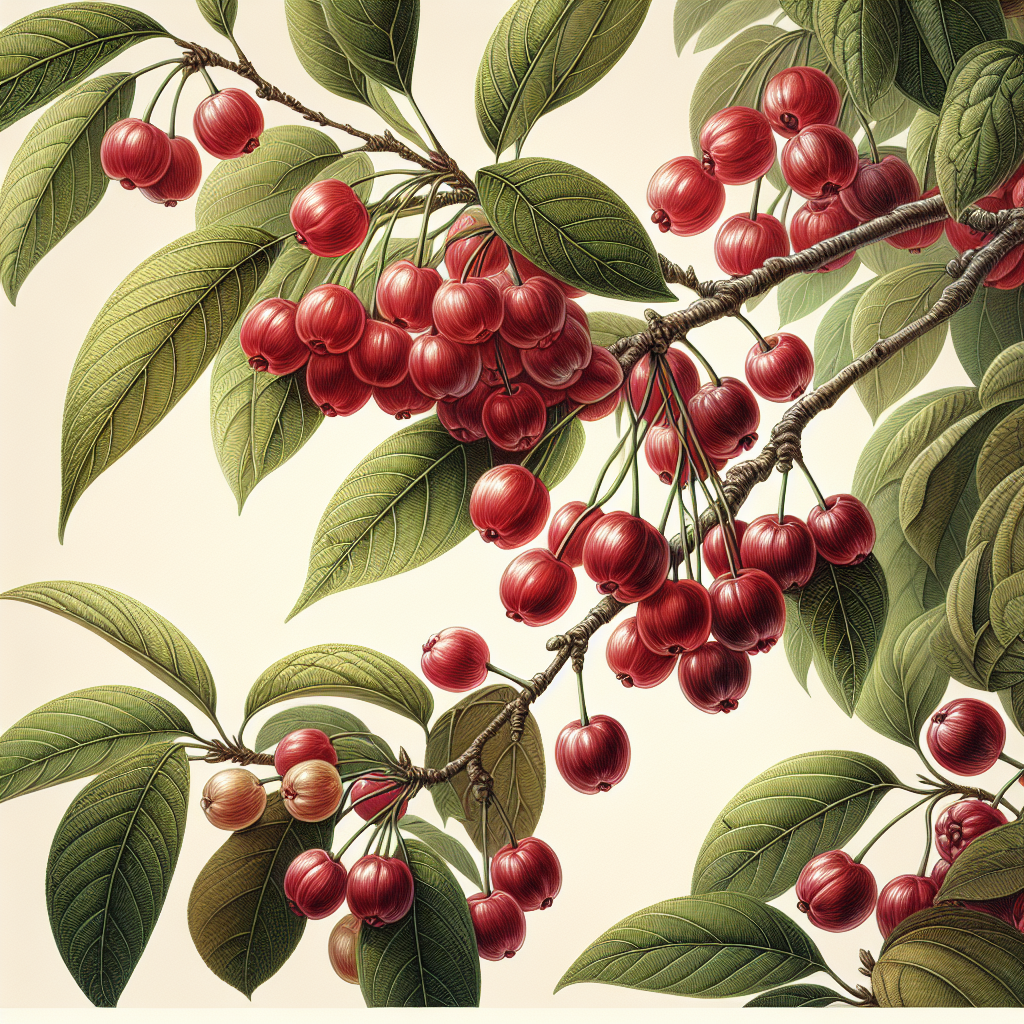
Jamaican Cherry (Muntingia calabura), often called Singapore Cherry, Panama Berry, or Strawberry Tree, is a versatile tropical tree native to the Americas but widely naturalized in tropical regions worldwide. This fast-growing, small to medium-sized tree reaches 10-40 feet (3-12 meters) in height, producing clusters of tiny, bright red, cherry-like fruits year-round in ideal conditions. Each fruit, about 1 cm in diameter, bursts with sweet, juicy flesh reminiscent of cotton candy, making it a favorite for fresh eating, desserts, jams, juices, and even wines.
Renowned for its resilience, Jamaican Cherry tolerates poor soils, drought, and neglect while attracting pollinators like bees and birds with its delicate white-pink flowers. Nutritionally, the fruits are packed with vitamin C, antioxidants, and anti-inflammatory compounds, positioning them as a superfood in modern diets. For small-scale farmers and home gardeners in USDA zones 9-11 or equivalent tropical/subtropical climates, this tree offers low-maintenance abundance, potentially yielding 100+ pounds of fruit per mature tree annually. Its wood is lightweight for crafts, bark for cordage, and leaves for herbal teas, adding multi-purpose value. Whether as a hedge, shade tree, or fruit producer, Jamaican Cherry transforms underutilized spaces into productive orchards with minimal investment.
Botanical Profile of Jamaican Cherry (Muntingia calabura)
Belonging to the Muntingiaceae family (formerly Elaeocarpaceae), Muntingia calabura is a deciduous or semi-evergreen tree with a slender, upright growth habit and spreading canopy. Leaves are alternate, simple, ovate to elliptical, 3-12 cm long, serrated, with a glossy green upper surface and hairy underside, emitting a musky scent when crushed. Flowers emerge from leaf axils in clusters of 2-10, featuring five white petals with pink bases, numerous stamens, and blooming primarily in the morning for 12-24 hours.
Pollination is entomophilous, relying on bees, butterflies, and other insects, though self-fertile trees set fruit reliably. Fruits develop rapidly (2-3 months post-flowering), maturing from green to vivid red, each containing numerous tiny black seeds embedded in translucent, sugary pulp. Seeds are dispersed by birds, mammals, and gravity, contributing to its weedy invasiveness in some ecosystems. Roots are shallow and fibrous, aiding quick establishment but requiring mulch to conserve moisture.
Growth rate is explosive—up to 10 feet in the first year—making it suitable for agroforestry. Unlike true cherries (Cherry (crop)), it's not in the Prunus genus but shares superficial fruit similarities, distinguishing it from temperate stone fruits. Phenologically, it fruits continuously in tropics, peaking in wet seasons, with wood density around 0.3 g/cm³ ideal for tool handles or fuel.
Soil, pH, and Climate Requirements for Jamaican Cherry (Muntingia calabura)
Jamaican Cherry excels in a wide range of soils, from sandy loams to heavy clays, but thrives in well-draining, fertile loam enriched with organic matter. It tolerates poor, compacted, or even saline soils (up to 4 dS/m EC), though yields suffer below pH 5.5 or above 8.0—optimal range is 6.0-7.5 for nutrient uptake. Amend acidic soils with lime (1-2 kg/tree annually) and alkaline with sulfur or compost; test soil yearly for micronutrients like zinc and iron, common deficiencies in tropics.
Climatically, it demands frost-free environments with average temperatures 68-95°F (20-35°C), tolerating brief dips to 28°F (-2°C) but dying below 25°F (-4°C). Full sun (6+ hours daily) promotes fruiting; partial shade reduces yields by 30-50%. Rainfall needs 40-100 inches (1000-2500 mm) annually, evenly distributed, but it endures 3-6 months dry spells via deep taproots. High humidity (60-90%) enhances flowering, while windbreaks protect young trees from desiccation. In marginal areas, use containers or espaliers for microclimate control. For heatwave resilience, see Why Summer Heatwaves Are Silently Killing Small Farm Yields - And 7 Organic Strategies to Fight Back.
Step-by-Step Planting & Propagation
Propagation Methods: Seeds germinate in 7-14 days at 77-86°F (25-30°C); scarify by rubbing on sandpaper, soak 24 hours in water, sow 0.25 inches deep in seed trays with 1:1:1 peat-perlite-vermiculite mix. Expect 80-90% success; transplant at 4-6 inches. Cuttings (6-8 inches semi-hardwood, dipped in 0.1% IBA) root in 4-6 weeks under mist. Air-layering mature branches yields 100% success in 6-8 weeks.
Site Selection: Choose sunny, sheltered spots 15-20 feet apart for trees, 8-10 feet for hedges. Dig holes 2x root ball width, 18 inches deep, filling with 30% compost-amended soil.
Planting Steps: 1) Plant in early wet season; water deeply post-planting. 2) Stake young trees against wind. 3) Mulch 4-6 inches thick with organic matter to 3 feet radius, keeping off trunk. 4) Initial fertilizer: 10-10-10 NPK at 1 oz/tree, monthly for first 3 months. Survival rate exceeds 95% with irrigation. Grafted cultivars (rare) improve uniformity.
Care & Maintenance regimes for Jamaican Cherry (Muntingia calabura)
Water young trees weekly (1-2 gallons) until established (6-12 months), then drought-tolerant; mature trees need supplemental during prolonged dry spells (every 2-3 weeks). Fertilize biannually with balanced 10-10-10 (1 lb/tree) in spring/fall, shifting to high-potassium 5-10-20 during fruiting for size/sweetness. Micronutrient foliar sprays (Fe, Zn, Mn) every 3 months prevent chlorosis.
Prune lightly post-harvest: remove dead/crossing branches, shape canopy for light penetration, tip-prune to encourage bushiness. Thin crowded fruit clusters for larger berries. Mulch annually to suppress weeds, retain moisture, and feed soil microbes. For hedges, shear 2-3 times yearly. Monitor for nutrient imbalances—yellow leaves signal nitrogen lack; apply compost tea. In containers (15-25 gal), repot every 2 years; use Guava (crop) as a companion for similar needs. Yields peak at 5-7 years, sustainable for 20+.
Pests, Diseases & Organic Management
Common pests include aphids, scale insects, and fruit flies; scout weekly, blast with water, apply neem oil (2% solution) weekly, or introduce ladybugs. Birds ravage fruits—use netting. Mealybugs controlled with alcohol-soap sprays. Fungal issues like anthracnose or powdery mildew arise in wet conditions; ensure airflow, apply copper fungicide or baking soda solution (1 tbsp/gal water + 1 tsp soap). Root rot from overwatering prevented by drainage; use biofungicides like Trichoderma.
Organic IPM: Companion plant with marigold to deter nematodes; mulch with neem cake. For detailed strategies, explore Why 90% of Small Farms Fail at Pest Management - And 8 Organic Fixes That Actually Work. Resistance is high, minimizing interventions.
Harvesting, Curing & Optimal Storage
Harvest when fruits turn fully red and soften (daily checks needed due to ripeness asynchrony); twist or clip clusters, yielding 1-5 quarts/tree weekly. Peak season: wet months. Avoid unripe greens (astringent). No curing needed; consume fresh within 2-3 days.
Storage: Refrigerate at 45-50°F (7-10°C), 85-90% humidity for 7-10 days; freeze pulp for smoothies (up to 6 months). Dry slices at 135°F for leathers/snacks (store airtight, cool/dark, 6-12 months). Juice yields 60-70%; pasteurize for shelf-life. Process promptly to avoid fermentation.
Companion Planting for Jamaican Cherry (Muntingia calabura)
Pair with nitrogen-fixers like pigeon pea for soil enrichment, thai basil for pest repulsion, and groundcovers like clover for moisture retention. Avoid deep-rooted competitors like mango. Beneficials: nasturtium traps aphids; yarrow attracts pollinators. Intercrop with short papaya for shade tolerance synergy. Learn more in Why Companion Planting Feels Like Guesswork for Small Farms - And How AI Makes It Foolproof. Enhances biodiversity, yields 20-30%.