Introduction to Jaboticaba (Red Hybrid)
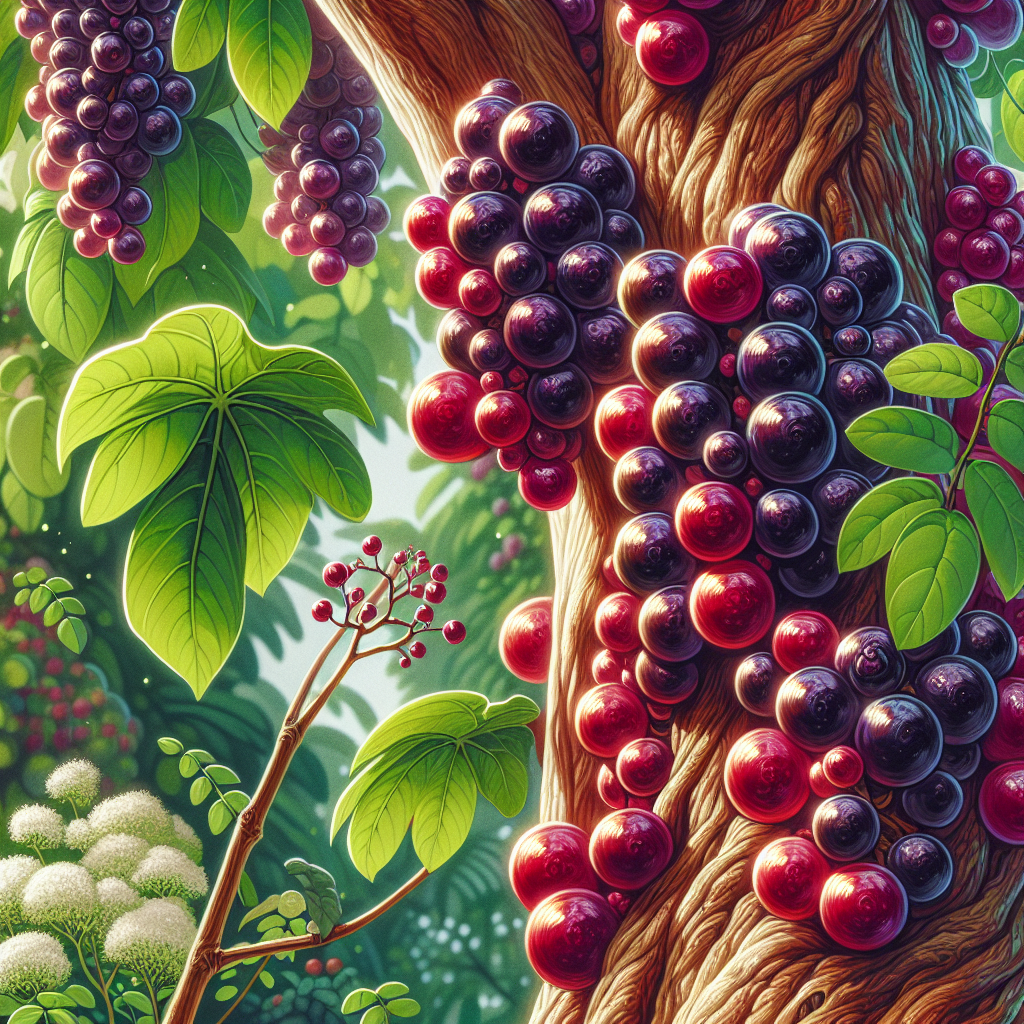
Jaboticaba, known scientifically as Myrciaria cauliflora 'Red Hybrid', is an exotic fruit tree native to the Atlantic Forest of Brazil, celebrated for its extraordinary growth habit called cauliflory—where fruits emerge directly from the trunk and larger branches rather than twigs. The Red Hybrid cultivar stands out with its vibrant, deep crimson to purple-black berries, larger fruit size (up to 2 cm in diameter), and a sweeter, less astringent flavor profile than standard green jaboticaba varieties. This makes it a premium choice for growers seeking both ornamental appeal and high-yield production.
Thriving in USDA zones 9b-11, the Red Hybrid jaboticaba adapts well to container culture, patios, and small-scale orchards, producing multiple harvests annually under optimal conditions. Fruits resemble juicy muscadine grapes in texture but boast a thicker skin and grape-like pulp bursting with antioxidants, vitamin C, and ellagic acid. Home growers appreciate its manageable size (typically 4-8 meters tall) and low-maintenance requirements once established. Commercially, it's gaining traction in niche markets for fresh sales, jellies, wines, and liqueurs due to its short shelf life encouraging local consumption.
This comprehensive guide draws from decades of botanical research and field trials, offering professional-grade advice for maximizing yields. Whether you're a backyard enthusiast or scaling for profit, mastering Jaboticaba Red Hybrid unlocks a reliable, subtropical superfruit. For small farms battling erratic weather, check this insightful piece on Why 80% of Small Farms Battle Weather Disasters - And How Hyper-Local AI Forecasts Can Save Your Harvest.
Botanical Profile of Jaboticaba (Red Hybrid)
Belonging to the Myrtaceae family alongside guava and pitanga, Jaboticaba Red Hybrid (Myrciaria cauliflora 'Red Hybrid') is an evergreen tree with glossy, elliptical leaves (5-10 cm long) arranged oppositely on smooth, cinnamon-brown bark. Young branches are quadrangular, maturing to rounded with striking lenticels. The tree's hallmark is cauliflory: white, fragrant flowers (pinhead-sized) bloom profusely on woody surfaces in clusters, giving way to fruits in 1-2 months.
Fruits are globose, 1.5-2 cm diameter, with tough, dark red-purple skin (thicker in hybrids for better shipping resilience) enclosing 1-4 white, gelatinous seeds in sweet-tart, juicy pulp. Seedlings exhibit variable traits, but grafted Red Hybrid clones ensure uniformity: higher sugar content (18-22° Brix), reduced tannins, and vivid coloration. Mature trees reach 10-15 meters in native habitats but are dwarfed to 4-6 meters via pruning or container growth.
Root system is fibrous and shallow, extending 2-3 times canopy width, sensitive to waterlogging. Pollination is primarily self-fertile, though cross-pollination boosts yields by 20-30%. Flowering responds to mild drought stress, triggering 2-4 crops yearly. Nutritionally, 100g fruit provides 45 kcal, 12g carbs, 200mg vitamin C—superior to many berries like blueberry. Hybrids like Red Hybrid stem from selections by Brazilian breeders, enhancing cold hardiness to 26°F (-3°C) brief dips.
Soil, pH, and Climate Requirements for Jaboticaba (Red Hybrid)
Jaboticaba Red Hybrid demands well-draining, fertile soils rich in organic matter—sandy loam or volcanic red earths mimic native habitats. Avoid heavy clays prone to root rot; amend with 30-50% pine bark, perlite, or compost for pots. Optimal pH is 5.5-6.5 (acidic), where iron and micronutrients remain available; test and adjust with sulfur if above 7.0.
Climate-wise, it's subtropical: 65-85°F (18-29°C) daytime averages, no prolonged freezes. Thrives in 40-60 inches annual rainfall, evenly distributed, but tolerates dry seasons with irrigation. High humidity (60-80%) aids flowering; full sun (6-8 hours) promotes fruiting, though light shade curbs leaf scorch in intense heat. Wind protection is crucial—gales dry out shallow roots and scar fruits. In marginal zones, mulch heavily (6-8 inches organic) and use frost blankets. For heatwave strategies, explore Why Summer Heatwaves Are Silently Killing Small Farm Yields - And 7 Organic Strategies to Fight Back. Elevations up to 3000 ft suit cooler microclimates.
Step-by-Step Planting & Propagation
Propagation: Grafted trees (preferred for Red Hybrid traits) root fastest; air-layering yields 80% success in 8-12 weeks. Seeds germinate in 20-30 days at 75-85°F on damp sphagnum, but take 8-10 years to fruit—stratify in moist peat 30 days for vigor. Cuttings hormone-treated (IBA 3000 ppm) under mist succeed 50-60%.
Site Prep: Dig holes 2x root ball width, 18 inches deep; mix 40% compost, 20% sand. Plant at soil grade; stake loosely. Spacing: 15-20 ft orchards, 8-10 ft hedges.
Planting Steps: 1. Water nursery stock day prior. 2. Trim circling roots, prune top 1/3. 3. Place in hole, backfill firmly sans air pockets. 4. Water deeply (10 gal/tree), mulch 4-6 inches (no trunk contact). 5. Apply micronutrient drench (Fe, Zn, Mn chelates).
Transplant potted trees anytime; bare-root winter dormant. Initial growth spurts demand consistent moisture—drip irrigate to field capacity weekly first year.
Care & Maintenance regimes for Jaboticaba (Red Hybrid)
Watering: Deep, infrequent—1-2 inches/week establishment, then drought-tolerant. Deficit irrigate mildly pre-bloom for flower induction. Mulch conserves 30% moisture.
Fertilization: Slow-release 12-6-6 (high Mg) spring/fall; foliar micronutrients monthly growth phase. Avoid excess N post-fruit set to prevent drop.
Pruning: Annual post-harvest: thin trunk clusters, remove watersprouts, open canopy for light penetration. Cauliflorous scars heal rapidly; dwarf via root pruning pots.
Training: Central leader or vase shape; espalier for small spaces. Monitor pH yearly; lime only if <5.0. Expect 10-20 kg yield/tree by year 5.
Pests, Diseases & Organic Management
Pests: Fruit flies puncture skins—bag clusters or use kaolin clay. Scale insects on branches: hort oil/neem rotations. Mealybugs: alcohol swabs, ladybugs. Birds ravage ripe fruit—netting essential.
Diseases: Phytophthora root rot from overwatering: solarize soil, phosphite drenches. Anthracnose on humid fruits: copper sprays pre-bloom, improve airflow. Fungal leaf spots rare; remove debris.
Organic IPM: Beneficials (predatory mites, parasitic wasps), companion herbs. Monitor weekly; thresholds low due to fruit value. See Why 90% of Small Farms Fail at Pest Management - And 8 Organic Fixes That Actually Work for advanced tactics.
Harvesting, Curing & Optimal Storage
Harvest when fruits blacken, 1-2 months post-flower; twist-pull or clip clusters. Yields peak March-June, September-November (hemisphere-dependent). Handle gently—skins tough but pulp bruises.
Curing: Air-dry 1-3 days for sweetness; ferment for wine (7-10% ABV). Fresh: refrigerate 2-4°C up to 7 days; freeze pulp pureed. Process promptly—splits in 3-5 days room temp. Dry skins for snacks; juice yields 60% by weight.
Companion Planting for Jaboticaba (Red Hybrid)
Pair with nitrogen-fixers like pigeon pea for soil enrichment, marigold against nematodes. Underplant thyme or nasturtium for pest repulsion. Avoid water-hogging avocado competitors. Yarrow attracts pollinators, boosting set 15%. Shade-tolerant ginger beneath utilizes microclimate. Learn more in Why Companion Planting Feels Like Guesswork for Small Farms - And How AI Makes It Foolproof.