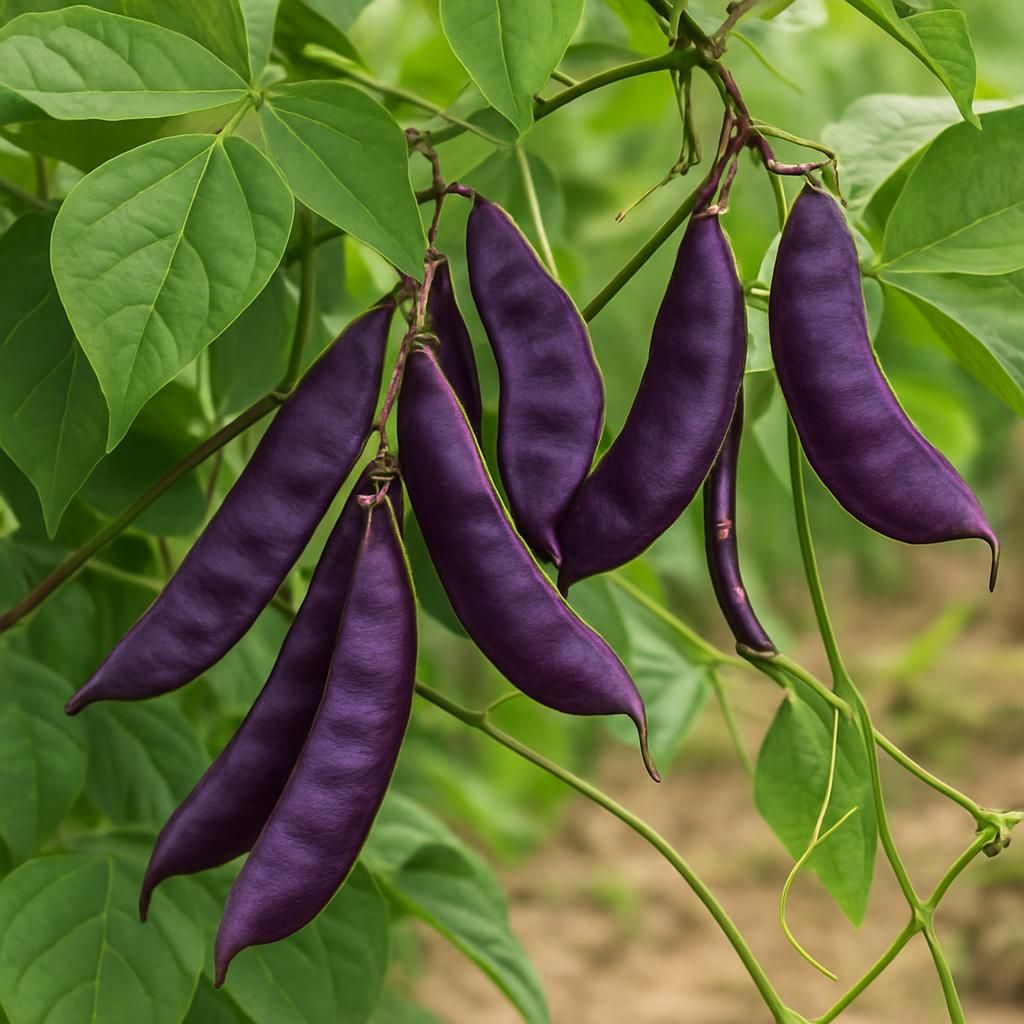
Introduction to hyacinth bean
Hyacinth bean (Lablab purpureus), also known as lablab bean or Indian bean, is a versatile annual or short-lived perennial legume originating from Africa and widely grown across Asia, Africa, and the Americas. It serves as a high-protein food source, livestock forage, cover crop, and ornamental climber. Farmers appreciate its rapid growth, drought tolerance once established, and ability to improve soil fertility through nitrogen fixation. The plant produces attractive purple or white flowers followed by flat, curved pods that range from green to deep purple depending on the cultivar.
Botanical Profile of hyacinth bean
Lablab purpureus belongs to the Fabaceae family and exhibits a twining or bushy growth habit reaching 1.5–6 meters in length. Leaves are trifoliate with broad, ovate leaflets that may show purple pigmentation. Flowers appear in axillary racemes and are typically violet, white, or pink. Pods are 5–15 cm long, flat, and contain 3–6 seeds that vary in color from white to dark brown or black. The species is highly polymorphic, with both determinate and indeterminate types available for different production systems.
Soil, pH, and Climate Requirements for hyacinth bean (MUST INCLUDE A MARKDOWN TABLE OF IDEAL CONDITIONS)
Hyacinth bean performs best in well-drained sandy loam to loam soils with good organic matter content. It tolerates a wide pH range but yields optimally under slightly acidic to neutral conditions. The crop requires full sun and warm temperatures for rapid vegetative growth and pod set. It is sensitive to frost but exhibits excellent heat and moderate drought tolerance once roots are established.
| Parameter | Ideal Range | Notes |
|---|---|---|
| Soil Type | Sandy loam to loam | Well-drained; avoid waterlogging |
| Soil pH | 6.0–7.5 | Tolerates 5.5–8.0; liming recommended below 5.5 |
| Temperature (Day) | 25–35 °C | Optimal growth and flowering |
| Temperature (Night) | 18–25 °C | Avoid prolonged exposure below 15 °C |
| Annual Rainfall | 600–1500 mm | Supplemental irrigation needed in dry spells |
| Altitude | 0–2000 m | Performs well across tropical lowlands to mid-hills |
Step-by-Step Planting & Propagation
- Select disease-free seed from reputable sources and test germination (minimum 80 %).
- Sow directly in the field after the last frost when soil temperature reaches 20 °C or higher.
- Prepare raised beds or ridges 30 cm high to ensure drainage; incorporate 5–10 t/ha well-rotted compost.
- Space plants 30–45 cm apart in rows 60–90 cm apart for bush types; use 1 m × 1 m spacing for vigorous climbing cultivars on trellises.
- Sow seeds 2–3 cm deep at 2–3 seeds per hill, thinning to one strong seedling after emergence.
- Provide support structures (bamboo poles, strings, or netting) for climbing varieties within 10–14 days of emergence.
Care & Maintenance regimes for hyacinth bean (MUST INCLUDE A MARKDOWN TABLE OF WATER, FERTILIZER, AND PRUNING SCHEDULES)
Consistent moisture during flowering and pod development is critical for high yields. Apply balanced nutrition emphasizing phosphorus and potassium while limiting excess nitrogen. Regular pruning encourages lateral branching and continuous pod production.
| Growth Stage | Irrigation Schedule | Fertilizer Application | Pruning / Training Schedule |
|---|---|---|---|
| Seedling (0–3 weeks) | Light watering every 2–3 days | 20 kg N, 40 kg P₂O₅, 20 kg K₂O per ha at sowing | None; install trellis |
| Vegetative (3–6 weeks) | 25–30 mm/week; maintain even moisture | Side-dress 20 kg N at 4 weeks | Pinch growing tip at 30 cm to promote branching |
| Flowering & Pod Set | 35–40 mm/week; avoid water stress | 30 kg K₂O at first flowering | Remove old leaves and spent racemes weekly |
| Pod Maturation | Reduce to 20 mm/week | Optional foliar K if deficiency symptoms appear | Harvest pods regularly to stimulate new set |
Pests, Diseases & Organic Management
Common pests include aphids, bean leaf beetles, and pod borers. Diseases such as powdery mildew, anthracnose, and root rot can reduce yields. Implement integrated pest management using neem-based sprays, yellow sticky traps, and crop rotation. Encourage beneficial insects by planting flowering borders and avoiding broad-spectrum insecticides.
Harvesting, Curing & Optimal Storage
Harvest green pods 60–90 days after sowing when they reach full size but before seeds bulge. For dry seed, allow pods to mature and turn brown on the plant. Sun-dry seeds to 12 % moisture and store in airtight containers with desiccants. Properly stored seed remains viable for 2–3 years. Fresh pods can be refrigerated at 7–10 °C for up to 7 days.
Companion Planting for hyacinth bean
Pair hyacinth bean with corn and squash in the traditional Three Sisters system to maximize space and soil nutrients. It also benefits from proximity to marigold and nasturtium for natural pest deterrence. Avoid planting near onion or garlic as alliums may inhibit legume nodulation. Rotate with cereals or brassicas every two seasons to break pest and disease cycles. For additional organic soil-building strategies, see The Hidden Power of Mulching: 8 Organic Strategies to Transform Small Farm Soil.