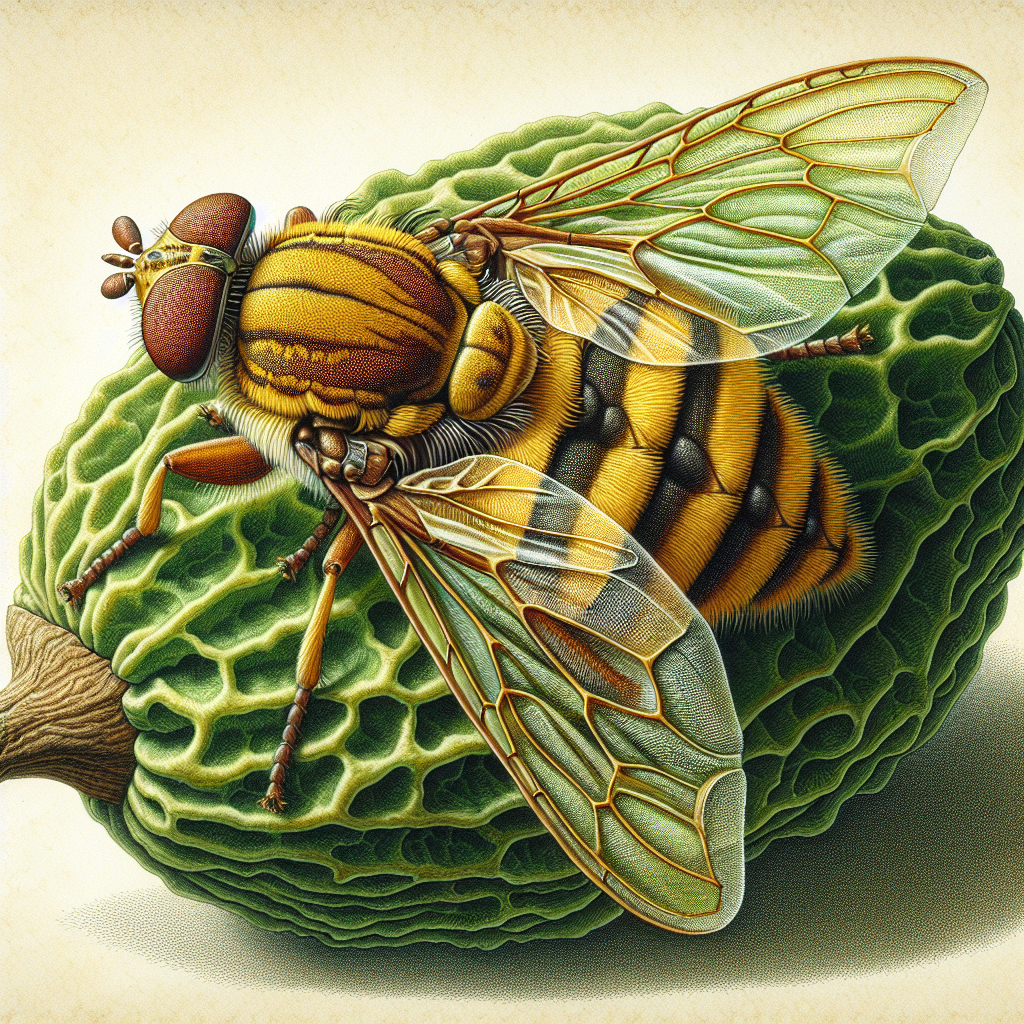
Introduction to Husk fly
The husk fly (Rhagoletis completa) represents a significant threat to walnut orchards worldwide, particularly in regions like California, the Pacific Northwest, and parts of Europe where walnut production is prominent. Adult flies emerge in late summer, laying eggs into the soft green husks of developing walnuts, leading to larval feeding that causes husks to blacken, split, and drop prematurely. This not only results in substantial yield losses—often 20-50% in unmanaged orchards—but also complicates harvest and increases post-harvest processing costs due to stained or wormy nuts. As a professional agricultural expert, understanding this pest's biology is crucial for implementing timely interventions. Unlike broader fruit flies Fruit flies, husk flies are highly specialized, focusing exclusively on walnut husks, making targeted management highly effective when applied correctly.
Husk fly infestations can escalate rapidly under favorable conditions, turning a promising harvest into a financial setback for growers. Early detection through visual scouting and trap monitoring is key, allowing for integrated pest management (IPM) strategies that minimize chemical use while maximizing nut quality. This guide draws from entomological research and field trials to deliver actionable advice for commercial and small-scale growers alike.
Identifying Symptoms & Damage
Recognizing husk fly damage early is essential for effective control. Adult flies are small (4-6 mm), yellow-brown with black bands and clear wings, often seen resting on husks or foliage. However, symptoms from larval activity are more diagnostic: infested husks develop dark, sunken spots where eggs were laid, progressing to blackening and softening within 1-2 weeks. Larvae—white, legless maggots (up to 8 mm)—tunnel through the husk, creating meandering galleries filled with frass, causing husks to split open and exude a foul-smelling liquid.
Premature husk drop is a hallmark sign, with affected nuts falling while still green. On the ground, husks appear shriveled, blackened, and riddled with exit holes (1-2 mm) from maturing larvae. Kernel damage is indirect but severe: stained shells and shriveled nuts reduce market grade, while secondary infections from fungal leaf spots or bacteria enter through wounds. Differentiate from walnut blight by the presence of maggots or pupae in husks—dissect suspect husks under magnification to confirm. Yield impacts peak in late-season varieties, with economic thresholds at 5-10% infested husks.
Scout weekly from July, checking 100 husks per tree across 20 trees. Use a knife to slice husks; active larvae are C-shaped and visible. Damage severity correlates with fly density: light (1-5% drop), moderate (6-20%), heavy (>20%). Photograph samples for records to track progression and evaluate control efficacy.
Lifecycle and Progression of Husk fly
Husk flies complete one generation per year, with lifecycle tightly synced to walnut development. Overwintering pupae (3-5 mm, barrel-shaped, brown) reside 5-20 cm deep in orchard soil, emerging as adults from mid-July to September when soil temperatures exceed 20°C (68°F). Adults live 2-4 weeks, feeding on husks, exudate, or honeydew before mating. Females lay 50-100 eggs singly under the husk epidermis using a sharp ovipositor, preferring husks 1-2 cm thick.
Eggs (0.5 mm, white) hatch in 3-7 days into larvae that feed for 3-5 weeks, molting twice. Mature third-instar larvae exit via 'J'-shaped tunnels, drop to soil, and pupate within hours. Pupation lasts 10-12 months, with diapause triggered by shortening days. Peak egg-laying coincides with hullsplit in early varieties, extending into late-maturing cultivars like Chandler Walnut—though not listed, analogous to listed nuts.
Degree-day models (base 10°C) predict emergence: 800-1200 DD from January 1. Trap captures spike 1-2 weeks pre-oviposition. Multiple broods rare but possible in warm climates, prolonging risk. Lifecycle knowledge enables precise timing: monitor adults July-August, treat at 10 flies/trap/week.
Environmental Triggers & Risk Factors
Husk fly thrives in warm, dry summers with irrigation maintaining high humidity around trees—ideal for adult activity and egg survival. Soil temperatures >25°C hasten pupal development, while prolonged husk softness (from excess water or N fertilizer) extends vulnerability. Overripe or cull walnuts left on ground serve as reservoirs, with pupae surviving tillage.
Risk escalates in neglected orchards, abandoned blocks, or near wild walnut stands. High fly populations build from prior years' poor sanitation. Drought stress weakens trees, making husks more susceptible, while windy conditions disperse adults up to 1 km. Climate change extends seasons, overlapping with codling moth for compounded pressure. Assess risk via trap networks; elevate monitoring in blocks >5 years old or with >2% prior damage.
Organic Control & Treatment Plans
Organic management emphasizes IPM: sanitation, monitoring, and biologicals. Deploy yellow sticky traps or McPhail bait traps (with torula yeast) at 1-2/tree, 1.5 m high, from bloom end. Threshold: 1 fly/trap/day triggers action. Remove and destroy dropped husks weekly post-hullsplit, disk into soil >20 cm deep, or shred/mulch to kill >90% pupae.
Kaolin clay (Surround WP) at 50-100 kg/ha creates a protective film, deterring oviposition by 70-80%. Apply at 50% hull development, reapply post-rain. Spinosad (Entrust) targets larvae if applied to eggs <3 days old; 2-3 apps at 7-10 day intervals, rates 0.2-0.4 L/ha. Neem oil or pyrethrins offer repellency but lower efficacy (40-60%). Release parasitoids like Aphids natural enemies, but specific Trichogramma for eggs show promise.
For small farms, hand-pick infested husks and solarize soil post-harvest. Integrate with Spring Pest Patrol for timing. Rotate with non-hosts like clover. Track via apps for degree-days.
Preventing Husk fly in the Future
Prevention hinges on cultural practices: harvest promptly at hullsplit, shake/flail-hull to remove husks, and sanitize orchard floor immediately. Deep plow (30 cm) in fall buries pupae beyond emergence depth. Plant resistant rootstocks or early-maturing varieties less overlapped with peak fly activity. Maintain tree vigor with balanced nutrition—avoid excess N.
Border sprays or mass-trapping with ammonium acetate lures reduce influx. Cover crops suppress soil pupae; till minimally to preserve predators. Scout adjacent wild areas. Long-term: remove volunteer walnuts. Annual trap networks predict risk; zero-tolerance in young orchards. Combine with broad IPM for nuts.
Crops Most Affected by Husk fly
Husk fly primarily attacks English walnut (Juglans regia), with all cultivars susceptible but late types like Howard, Payne, and Chandler hit hardest due to prolonged husk exposure. No other major crops affected; host-specificity limits spread. Wild black walnut serves as reservoir. In mixed orchards, monitor near pecan but no crossover. Focus 100% effort on walnuts.