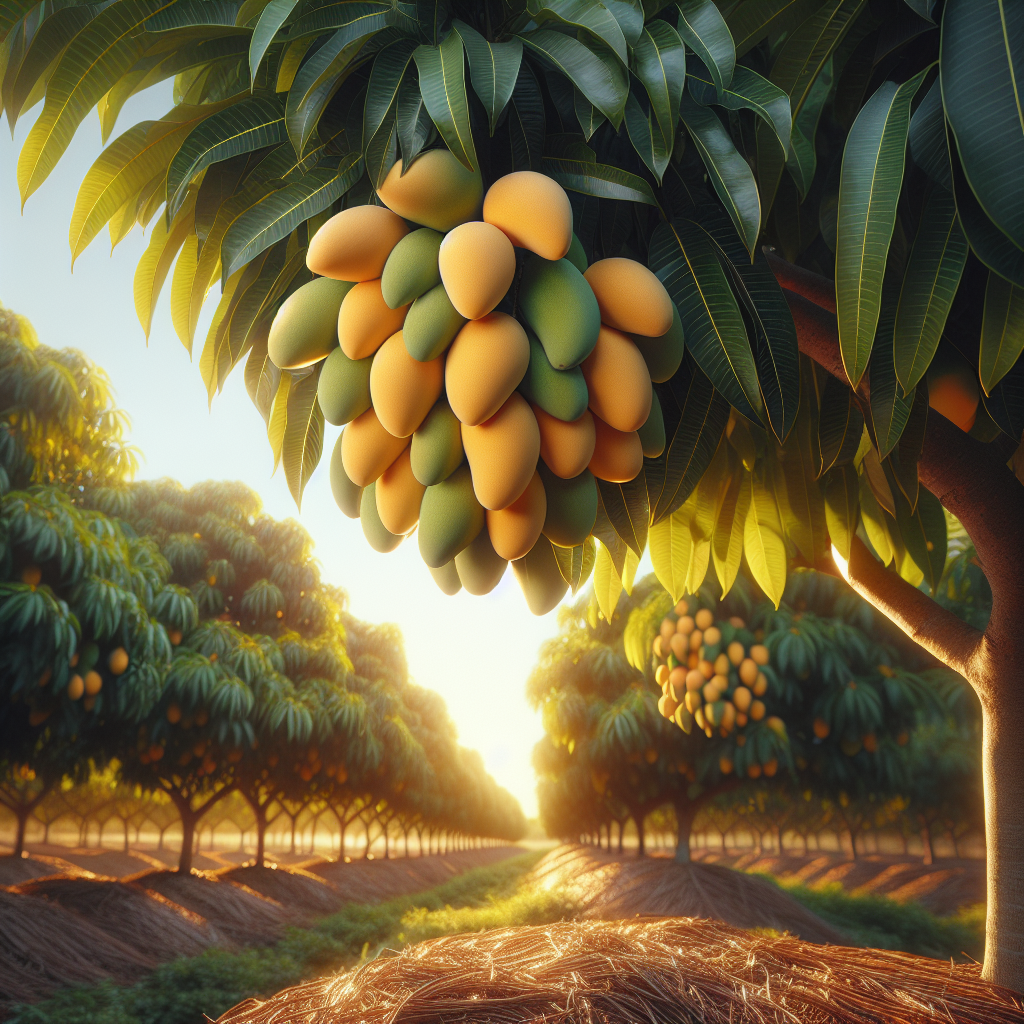
Introduction to Honey Mango
Known in many markets as a rich, buttery, highly sweet dessert mango, Honey Mango is generally sold under a commercial name rather than a strict botanical class, and in most cases refers to the Ataulfo type or closely related selections. The fruit is typically smaller than many large export mangoes, with a flattened to slightly sigmoid shape, thin yellow skin at maturity, and deep yellow flesh that is notably low in fiber. This low-fiber texture is one of its defining commercial advantages: it is easy to slice, attractive for fresh consumption, and highly desirable for puree, smoothies, and premium retail packs.
From a grower’s perspective, Honey Mango occupies an important niche between ornamental backyard mangoes and large-scale industrial cultivars bred mainly for shipping toughness. Its appeal comes from flavor first: high soluble solids, pronounced sweetness, and a floral-honey aroma when tree-ripened correctly. That same delicacy, however, means the crop can be less forgiving of rough handling, poor irrigation timing, and overfertilization that pushes excessive vegetative growth at the expense of flowering and fruit quality.
In warm subtropical and tropical zones, Honey Mango can be an excellent orchard crop if the grower understands three core principles: root health must never be compromised by waterlogging, flowering benefits from a relatively dry and cool induction period compared with active vegetative growth, and fruit quality is strongly influenced by harvest stage and postharvest handling. If you already grow standard Mango cultivars, you will find the same broad cultural framework applies, but Honey Mango demands a little more precision to produce the silky texture and concentrated sweetness for which it is famous.
For growers trying to build durable orchard fertility before planting, broad soil structure and biology management matter just as much as cultivar choice; see this practical piece on soil health.
Botanical Profile of Honey Mango
Honey Mango belongs to the Anacardiaceae family, the same family as cashew and pistachio. The species, Mangifera indica, is an evergreen tropical tree that can become very large on seedling rootstocks, though commercial trees are often managed by pruning to remain in the 3-5 m range for harvest efficiency and spray coverage. Unpruned trees may exceed 10 m and develop broad, dense canopies.
New vegetative flushes emerge bronze, copper, or reddish-green before hardening to dark glossy green. Leaves are simple, lanceolate, and leathery, usually 15-30 cm long depending on vigor and nutrition. Inflorescences are terminal panicles carrying hundreds to thousands of tiny flowers, but only a small fraction set fruit. Mango flowers are functionally complex: panicles contain both male and hermaphroditic flowers, and fruit set is influenced by temperature, humidity, carbohydrate reserves, pollinator activity, and disease pressure during bloom.
Honey Mango fruit is characteristically oblong to kidney-shaped, often with a slightly curved profile and a smooth skin that turns rich yellow at maturity. Average fruit weight commonly ranges from 170-350 g depending on climate, crop load, thinning effects, tree age, and nutrition. Flesh is deep yellow, melting, aromatic, and nearly fiberless compared with many polyembryonic market types. The seed is relatively thin, which increases edible flesh percentage and contributes to its favorable consumer reputation.
A botanical nuance worth noting is that trade names and cultivar identity can become blurred across regions. In North American retail, “Honey Mango” often refers to Ataulfo fruit imported from Mexico, where the cultivar became famous for flavor and texture. In production terms, you should verify whether your nursery stock is true Ataulfo, a local Honey-type selection, or a seedling type being marketed loosely under the Honey name. True-to-type propagation is essential because seed-grown mangoes may vary substantially in vigor, fruit size, bearing consistency, disease tolerance, and eating quality.
Soil, pH, and Climate Requirements for Honey Mango
This crop thrives in deep, well-drained soils with high aeration and moderate moisture-holding capacity. The ideal soil profile is a sandy loam to loam with at least 1-1.5 m of penetrable depth, low compaction, and no perched water table during the rainy season. Mango roots require oxygen. If soil remains saturated for more than 48-72 hours, feeder root decline begins quickly, predisposing the tree to nutrient deficiency, poor vigor, and root disease.
Optimal soil pH is 5.5-7.0, with best nutrient balance usually around pH 6.0-6.5. Below pH 5.2, calcium and magnesium deficiency risks rise and aluminum toxicity may impair root growth. Above pH 7.5, micronutrient lockout becomes more common, especially iron, zinc, and manganese, leading to interveinal chlorosis on new leaves. In calcareous soils, mango can survive but often needs careful micronutrient management and heavy organic matter integration around the root zone.
Drainage is more important than fertility in the first year. A moderately fertile, well-drained site will outperform a rich but heavy clay site. If planting in clay loam, use raised mounds or berms 30-60 cm high and 1-2 m wide to lift the root crown above seasonal wetness. Avoid low pockets where cold air settles or runoff accumulates.
Climatically, Honey Mango prefers tropical to warm subtropical conditions with a frost-free growing season. Ideal annual temperatures are 24-32°C during active growth, with flowering often favored by a cooler, drier period around 15-20°C at night and 20-28°C by day. Temperatures below 4°C can injure young trees, and a light frost may defoliate or kill new flushes. Mature trees may survive brief exposure near 0°C, but bloom and fruit set are often severely affected.
Rainfall of 750-2500 mm can support production, but distribution matters more than total amount. The best orchards often have a dry period before flowering and relatively drier weather during bloom. Persistent humidity and rain during flowering encourage Anthracnose and Powdery mildew, both of which can destroy the crop even when the trees appear healthy vegetatively.
Wind protection is another overlooked requirement. Strong hot winds desiccate flowers and young fruit; storm winds cause fruit scarring, branch breakage, and crooked tree form. Establish windbreaks at orchard margins, but maintain enough airflow to reduce disease pressure in the canopy.
Step-by-Step Planting & Propagation
Start with grafted nursery trees from a reputable source. Seed propagation is useful for rootstock production or breeding, but not for consistent commercial fruit quality. A grafted Honey Mango generally bears earlier, remains more predictable in canopy habit, and preserves the eating characteristics of the mother tree.
- Select the site carefully. Choose full sun with at least 8 hours of direct light daily. Avoid frost pockets, flood-prone soils, and sites with hardpan shallower than 75 cm.
- Test the soil before planting. Measure pH, electrical conductivity, organic matter, and key nutrients. If salinity is elevated, address it before planting; mango tolerates mild salinity but young trees are sensitive.
- Prepare the planting area. Clear aggressive perennial weeds in a 1-2 m circle. Incorporate compost only into the broader surface zone, not as a rich pocket inside the planting hole, which can create water-holding contrasts.
- Build a mound if drainage is marginal. In high-rainfall areas, this step is often the difference between success and chronic root stress.
- Plant at the correct depth. Set the tree so the graft union remains clearly above soil level, ideally 10-15 cm above the final grade. Planting too deep encourages collar problems and weak establishment.
- Backfill with native soil. Do not over-amend the hole. Firm gently to eliminate major air pockets without compacting.
- Water in thoroughly. Apply enough water to settle soil to root depth, usually 10-20 liters for a young container tree depending on rootball size.
- Mulch correctly. Apply 5-10 cm of coarse organic mulch over the root zone, but keep it 15-20 cm away from the trunk to prevent rot and rodent shelter.
- Stake only if necessary. In windy sites, use soft ties and remove supports once the trunk can stand independently.
Spacing depends on management style. Traditional orchards may use 7-10 m spacing, while intensive systems may plant 4-6 m apart with regular pruning. For home gardens, allow at least 5-6 m from buildings or competing trees.
For propagation, veneer grafting and cleft grafting are common on vigorous rootstocks. Graft when rootstocks are actively growing and bark slips cleanly. Scion wood should be mature, disease-free, and taken from recently hardened shoots. Sanitize tools between trees to avoid spreading Bacterial black spot or fungal pathogens.
Care & Maintenance regimes for Honey Mango
Irrigation must follow the tree’s stage of growth. Newly planted trees need frequent but not constant moisture. During the first 2-3 months, irrigate when the top 3-5 cm of soil dries but before the rootball becomes dusty or hydrophobic. In sandy soils, that may mean 2-3 waterings per week; in loams, once every 5-7 days may be enough. A practical target is moist but aerated soil in the top 20-30 cm, never muddy for days.
Signs of underwatering include limp new flushes, marginal leaf scorch, reduced leaf size, fruit drop, and slow canopy establishment. Signs of overwatering include persistently pale leaves, sour-smelling soil, algae growth, leaf yellowing starting from the lower canopy, and weak new growth despite adequate fertilizer. Chronic overwatering is especially dangerous because it often mimics nutrient deficiency while the real problem is root suffocation.
Mature trees should be watered deeply and less frequently. During vegetative growth and fruit enlargement, irrigate to wet the root zone to 45-90 cm depth depending on soil type. Then allow partial drying between cycles. During floral induction, excessive irrigation can suppress bloom and stimulate leafy flushes. In many production systems, irrigation is reduced or strategically withheld before flowering, then resumed once fruit set is established.
Nutrition should be balanced, not aggressive. Young trees benefit from small, repeated doses rather than heavy feedings. Excess nitrogen produces lanky growth, delays bearing, and can worsen disease pressure. Use a program that supplies nitrogen, potassium, magnesium, calcium, sulfur, and trace elements. Potassium becomes especially important for fruit fill, sugar accumulation, and skin finish.
As a general framework:
- Year 1-2: light, split applications every 6-8 weeks during warm growth periods.
- Bearing trees: modest nitrogen after harvest and during early vegetative recovery, then higher potassium leading into fruit development.
- Micronutrients: foliar zinc, boron, and manganese may be useful where deficiencies are documented, especially pre-bloom and postharvest.
Pruning should focus on structure, light distribution, and height control. After planting, pinch or head back only if necessary to encourage low scaffold formation. Aim for 3-4 well-spaced main branches. After harvest, remove dead wood, crossing branches, narrow crotches, and excessively upright shoots. Keep tree height low enough for safe harvest and full spray penetration. Dense canopies trap humidity and increase Anthracnose pressure.
Flowering management depends heavily on region. In climates with a natural cool-dry induction period, trees usually bloom reliably if nitrogen and irrigation are not excessive. In more tropical lowland environments, irregular flowering can occur, and orchard practices must emphasize moderate stress before the bloom window. Avoid pruning too close to flowering season because fresh vegetative flushes are less likely to flower.
Fruit load should be observed closely. Very heavy crops on young trees stunt framework development and can induce alternate bearing. Removing some fruit in the first bearing years helps balance future productivity and branch strength.
Pests, Diseases & Organic Management
Fruit flies are among the most economically important pests. Adults lay eggs beneath the skin, and larvae ruin the pulp. Use sanitation relentlessly: collect and destroy fallen fruit at least twice weekly during the season. Protein bait traps, methyl eugenol or species-specific lures, orchard hygiene, and timely harvest are the foundation of control.
Mango hoppers, Scale insects, Mealybugs, and Thrips can also reduce vigor and damage flowers or fruit. Mealybugs often flare where ants protect them, so ant control is part of mealybug control. Sticky trunk barriers, pruning to prevent branch contact with the ground, and removal of weedy bridges can help. Horticultural soaps and neem-based products can suppress soft-bodied pests when coverage is thorough and temperatures are not excessively hot.
Anthracnose, caused primarily by Colletotrichum species, is the signature disease problem in humid mango regions. It infects flowers, panicles, leaves, and fruit, often remaining latent until fruit ripening. Symptoms include black spotting, blossom blight, and postharvest fruit breakdown. Organic management depends on canopy openness, dry airflow, pruning after harvest, sanitation, and preventive copper applications timed before and during bloom where permitted.
Powdery mildew is favored by high humidity with relatively dry leaf surfaces and moderate temperatures. It appears as white-gray powder on flowers and young tissue and can destroy fruit set rapidly. Sulfur products can be useful in organic systems, but should be applied with care to avoid phytotoxicity under high heat.
Bacterial black spot causes raised dark lesions on fruit and cracking on twigs and leaves. Reduce wind injury, sanitize pruning tools, and avoid overhead irrigation. Copper can help reduce spread, but prevention through orchard design and handling is more reliable than cure.
Root rot risk increases sharply in poorly drained soils. No spray program compensates for anaerobic root conditions. If trees repeatedly show decline after rain, improve drainage first.
Biological diversity in the orchard helps moderate pest populations. Groundcovers such as Clover, flowering insectaries like Yarrow, and aromatic borders such as Thai Basil can support predators and parasitoids while improving soil cover and reducing bare-ground heat stress.
Harvesting, Curing & Optimal Storage
Honey Mango should be harvested at physiological maturity, not when fully soft on the tree. Fruit picked too immature may color externally without developing full sugar, aroma, or texture. Mature fruit usually shows fuller shoulders near the stem end, a slight background color change from green toward yellow-green, and a firm but developed shape with seed maturity advanced enough to allow proper ripening off the tree.
Use clippers rather than pulling fruit by hand. Leave a short pedicel initially to reduce sap burn, then de-sap carefully. Mango latex can stain and damage the peel, especially on premium yellow-skinned fruit where blemishes are obvious. A common professional method is to place freshly picked fruit stem-end down on racks or absorbent surfaces for 20-30 minutes so sap drains away from the skin.
Handle fruit gently. Honey Mango bruises more easily than tougher shipping cultivars. Harvest into padded crates, avoid overstacking, and keep fruit shaded immediately after picking. Field heat removal is important in hot climates; move fruit to a packing area promptly.
Curing in mango is less about drying, as with onions or garlic, and more about stabilizing latex flow and beginning controlled ripening. After harvest, clean fruit, sort by size and defect, and maintain good airflow. For ripening, 20-24°C is generally ideal. At this range, flavor develops well and chilling injury is avoided. Temperatures below about 10-13°C can cause uneven ripening, grayish flesh, surface pitting, and poor aroma, especially in less mature fruit.
For short-term storage of mature-green fruit, 13-15°C with 85-90% relative humidity is a practical target. Fully ripe fruit is best held only briefly, often 2-5 days depending on ripeness at harvest. Ethylene exposure accelerates ripening, so keep mangoes away from high-ethylene produce if you need to delay softening.
A properly harvested Honey Mango should ripen to a rich yellow color with slight give under gentle pressure, a sweet floral aroma at the stem end, and smooth, custardy flesh. Overripe fruit becomes overly soft, fermented in aroma, and prone to skin wrinkling and internal breakdown.
Companion Planting for Honey Mango
Companion planting around mango should be understood as orchard-floor design rather than crowding the tree with competitive crops. The best companions suppress weeds, protect soil, support beneficial insects, and avoid aggressive root competition close to the trunk.
Clover is one of the most useful companions in wider alleyways or outer root zones because it acts as a living mulch, reduces erosion, supports pollinators, and contributes biologically fixed nitrogen over time. Keep it mowed and do not allow it to form a dense, moisture-trapping mat directly against young trunks.
Thai Basil works well in diversified plantings or kitchen-garden settings around the orchard perimeter. Its flowers attract pollinators and beneficial insects, and its compact habit makes it easier to manage than sprawling companions. It should still be planted outside the immediate trunk zone so irrigation can be tailored primarily to the tree.
Yarrow is especially valuable in ecological orchards because its umbels attract lacewings, hoverflies, and parasitoid wasps. It is drought tolerant once established and can be used in sunny strips where traffic is low.
A fourth good option in tropical mixed systems is low, carefully managed Peanuts, which can function as a groundcover on well-drained sites. They help shade soil and reduce erosion, but they should not be used where humidity is already excessive or rodent pressure is high.
Avoid tall, fast-growing companions close to the canopy drip line, especially ones that compete strongly for water or create dense shade. Also avoid plants requiring frequent overhead irrigation, since wet foliage and elevated humidity in the mango canopy increase disease pressure. The best mango companions are service plants, not competitors.