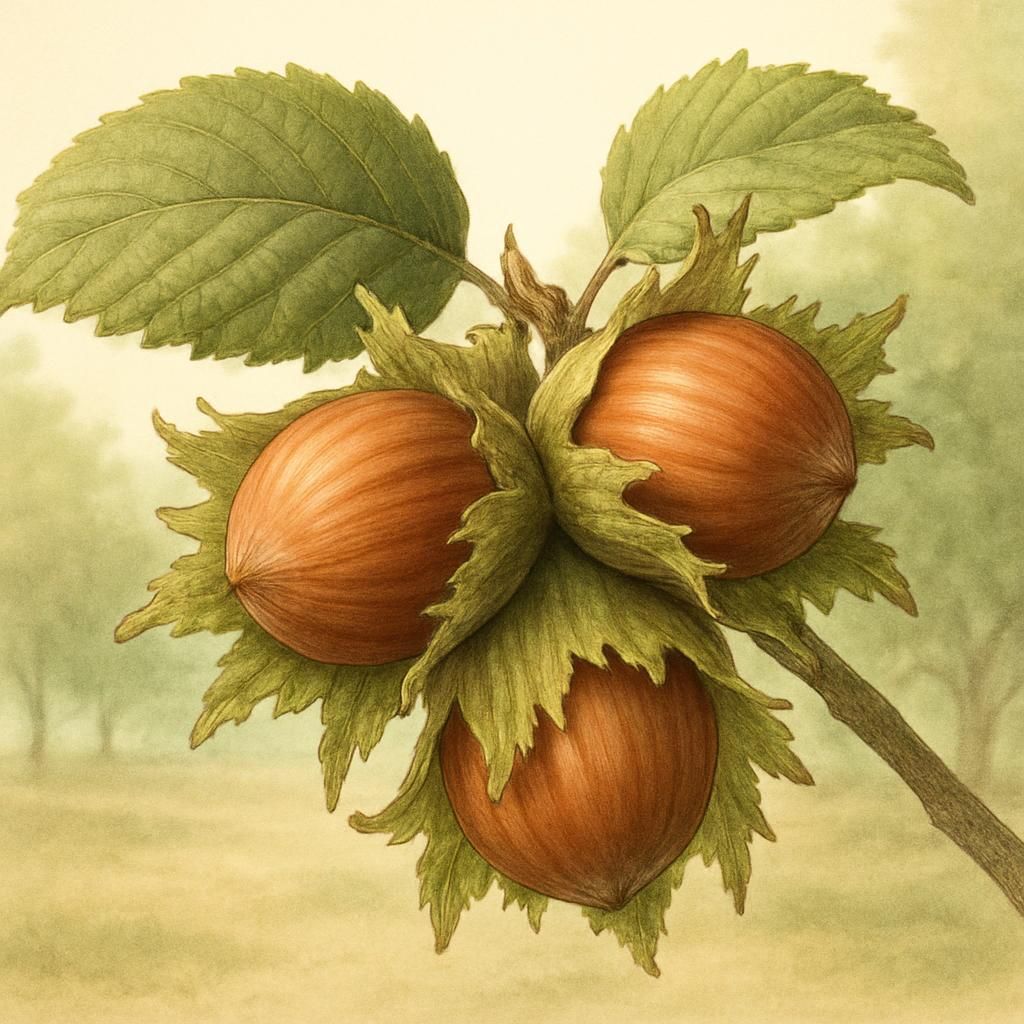
Introduction to Hazelnut (Santiam)
Hazelnut (Santiam) is a modern hybrid cultivar developed by Oregon State University to meet the demands of commercial growers seeking improved disease resistance and consistent yields. Released in the early 2000s, Santiam combines the vigor of European hazelnut genetics with enhanced tolerance to Eastern Filbert Blight, the most serious disease threat to hazelnut production in North America. Growers value Santiam for its reliable nut set, attractive kernel color, and strong market acceptance for both fresh and processing channels.
The cultivar performs exceptionally well in the mild, maritime climates of the Willamette Valley and similar regions worldwide. Santiam trees exhibit moderate vigor, semi-upright growth, and precocious bearing, often producing commercial crops by year four or five. Because of its balanced traits, Santiam has become a preferred choice for both new plantings and as a pollenizer in mixed orchards.
Botanical Profile of Hazelnut (Santiam)
Santiam belongs to the genus Corylus within the birch family, Betulaceae. Like other hazelnuts, it is a multi-stemmed deciduous shrub or small tree that typically reaches 4–6 meters in height at maturity. The plant produces separate male catkins and inconspicuous female flowers on the same tree, relying primarily on wind for pollination. Santiam is self-incompatible and requires a compatible pollinizer such as Barcelona Hazelnut or Ennis for optimal nut set.
Leaves are broadly ovate with doubly serrate margins and prominent venation. Nuts develop inside a leafy involucre (husk) that opens at maturity, allowing clean harvest. The kernel is plump, light-colored, and has a high oil content, making it suitable for roasting, confectionery, and oil extraction.
Soil, pH, and Climate Requirements for Hazelnut (Santiam)
Successful Santiam orchards begin with careful site selection. The cultivar thrives in deep, well-drained soils with good water-holding capacity and moderate fertility. Avoid heavy clays or sites with seasonal waterlogging, as root health is critical for long-term productivity.
| Parameter | Ideal Range | Notes |
|---|---|---|
| Soil Texture | Loam to sandy loam | Avoid compacted or heavy clay soils |
| Soil pH | 6.0 – 7.0 | Slightly acidic to neutral; lime if below 5.8 |
| Organic Matter | 3 – 5 % | Maintain with compost or cover crops |
| Annual Rainfall | 750 – 1200 mm | Supplemental irrigation needed in dry summers |
| USDA Hardiness Zones | 5 – 8 | Tolerates winter lows to -20 °C |
| Growing Season Temp. | 15 – 25 °C daytime | Cool nights improve kernel quality |
| Chill Hours | 800 – 1200 hours below 7 °C | Required for uniform bud break |
Step-by-Step Planting & Propagation
- Site Preparation: Conduct soil tests and amend pH and nutrients 6–12 months before planting. Rip or subsoil to 60 cm depth if compaction is present.
- Pollinizer Layout: Plant Santiam at 5 × 5 m spacing with compatible pollinizers every third row or every ninth tree within the row.
- Planting Window: Install bare-root or container-grown trees in late fall or early spring when soils are workable and temperatures are above freezing.
- Planting Depth: Set trees so the graft union or root collar sits 5 cm above final soil grade. Backfill with native soil and water thoroughly.
- Initial Pruning: Remove 30–50 % of top growth at planting to balance the root-to-shoot ratio and encourage strong scaffold development.
Care & Maintenance regimes for Hazelnut (Santiam)
Consistent cultural practices are essential for maximizing Santiam yields and nut quality. Focus on balanced nutrition, timely irrigation, and annual pruning to maintain an open canopy.
| Practice | Schedule | Details |
|---|---|---|
| Water | April–September: 25–40 mm/week | Drip irrigation preferred; reduce in late summer to encourage nut fill |
| Fertilizer | Early spring (March) + post-harvest (October) | Apply 50–80 kg N/ha split; maintain leaf K >1.5 % and B >30 ppm |
| Pruning | Dormant season (December–February) | Remove dead wood, crossing branches, and low suckers; thin to 6–8 main stems |
Young orchards benefit from annual legume cover crops such as clover to supply nitrogen and improve soil structure. Monitor leaf nutrient levels every two years and adjust programs accordingly.
Pests, Diseases & Organic Management
Santiam’s primary disease advantage is its partial resistance to Eastern Filbert Blight caused by Anisogramma anomala. However, regular scouting remains necessary. Filbertworm is the key insect pest; monitor with pheromone traps and apply organic-approved spinosad or granulosis virus when thresholds are exceeded.
Other occasional issues include aphids, leafrollers, and nut weevils. Maintain orchard floor vegetation to support beneficial insects and reduce dust that favors spider mites. Copper sprays applied at bud swell provide early-season bacterial and fungal suppression when needed.
Harvesting, Curing & Optimal Storage
Santiam nuts typically mature in late September to early October in the Pacific Northwest. Harvest when 50–70 % of husks have opened and nuts have dropped or can be easily shaken from the tree. Use mechanical sweepers or hand raking followed by immediate cleaning to remove debris.
Cure nuts at 20–25 °C with good airflow for 2–4 weeks until kernel moisture reaches 8–10 %. Store in breathable bins or bulk bags at 0–5 °C and 60–70 % relative humidity. Under these conditions, Santiam kernels retain quality for 12–18 months.
Companion Planting for Hazelnut (Santiam)
Strategic companions improve biodiversity and reduce pest pressure. Low-growing legumes such as clover or hairy vetch fix nitrogen and provide habitat for predatory insects. Aromatic herbs including thyme and rosemary can mask host odors and deter certain beetles.
Avoid planting tall competitors such as walnut or chestnut directly adjacent, as they compete for light and may harbor shared pests. Maintain a 2–3 m grass or legume strip between tree rows to facilitate equipment movement while supporting beneficial fauna.