Introduction to Anisogramma anomala
Anisogramma anomala, widely recognized as eastern filbert blight (EFB), is a fungal pathogen that poses a serious threat to hazelnut (filbert) orchards across North America, particularly in the eastern United States and parts of Canada. First identified in the late 19th century, this disease has become a primary limiting factor in commercial hazelnut production, capable of reducing yields by up to 90% in unmanaged orchards. The fungus infects through wounds or natural openings on young branches, forming characteristic stroma-embedded cankers that disrupt nutrient and water flow, ultimately leading to branch dieback and tree decline.
As a professional botanist and agricultural expert, understanding EFB is crucial for growers aiming to sustain healthy orchards. Unlike many foliar diseases, Anisogramma anomala targets woody tissues, making it particularly insidious and challenging to control once established. This guide provides definitive diagnostic criteria, lifecycle insights, and proven organic management strategies to help farmers protect their crops. With climate change extending favorable conditions for fungal sporulation, proactive monitoring is more important than ever. Successful management integrates resistant cultivars, sanitation, and environmental modifications to minimize spore dispersal. For small-scale and commercial operations alike, early detection through visual scouting and prompt intervention can preserve orchard productivity and prevent economic losses exceeding thousands per acre.
Identifying Symptoms & Damage
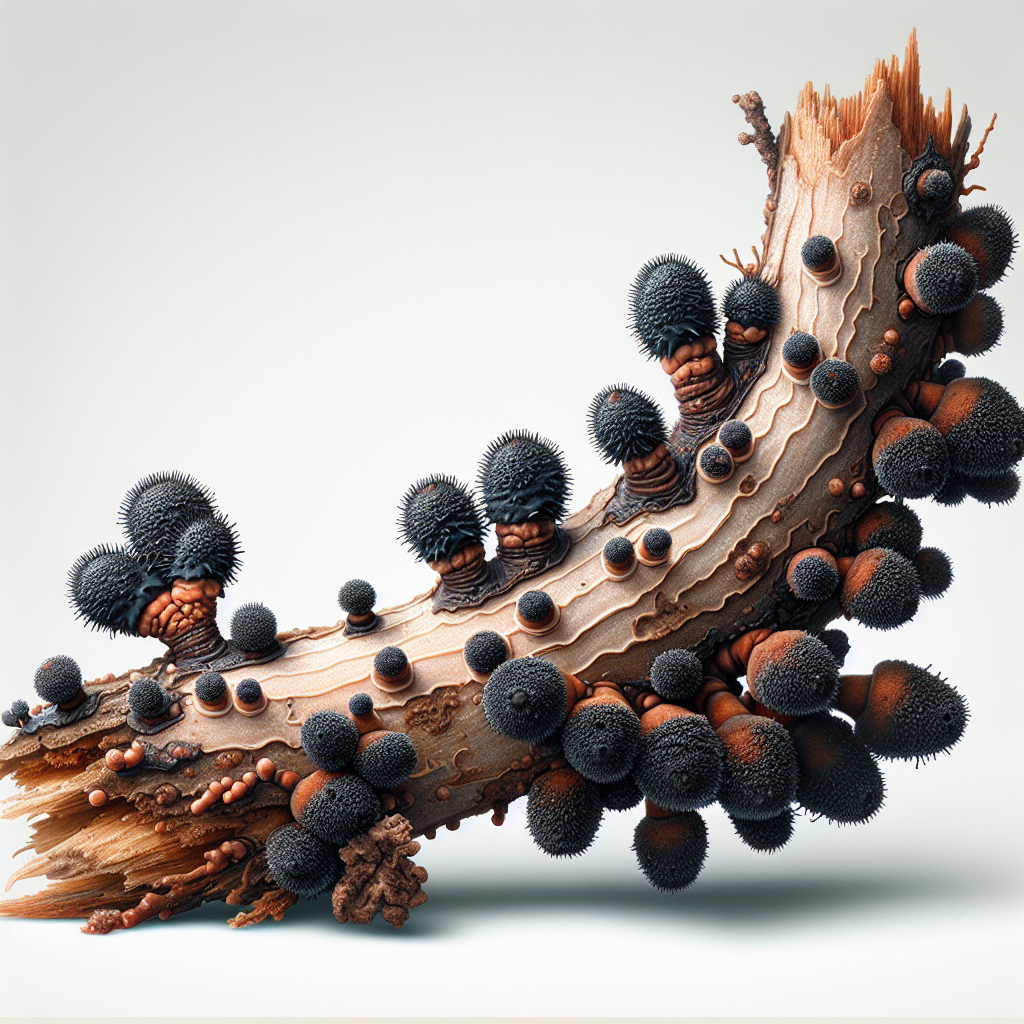
Accurate identification of Anisogramma anomala begins with recognizing its hallmark symptoms on hazelnut branches. The disease manifests primarily on one-year-old shoots, where elongated, sunken cankers develop, typically 1-4 inches long and slightly darker than surrounding bark. These cankers are often lens-shaped and may appear slightly raised at the edges. A defining feature is the presence of numerous black, stromatic bodies (fungal fruiting structures) embedded in the canker surface, resembling small black dots or pins, especially visible after bark peeling.
In advanced stages, cankers girdle the branch, causing wilting of distal leaves, shoot dieback, and sparse canopy development. Affected branches often show a flattened appearance above the canker, with reddish-brown discoloration beneath the bark. Severe infections lead to scaffold branch decline, bushy growth from lateral buds (witches' broom effect), and reduced nut production. Yield losses occur not just from direct branch death but also from weakened trees susceptible to secondary stressors like aphids or drought.
Damage assessment should include measuring canker prevalence: scout 100 branches per acre, noting girdled shoots. Economic thresholds vary, but >10% incidence warrants immediate action. Differentiate EFB from look-alikes like Cytospora canker (oozing sap, irregular margins) or bacterial canker (no stroma). Lab confirmation via culturing or PCR is recommended for borderline cases. In high-risk areas, symptoms peak in late winter to early spring, coinciding with bud swell.
Lifecycle and Progression of Anisogramma anomala
Anisogramma anomala follows a two-year lifecycle synchronized with hazelnut phenology. Primary infection occurs in spring when ascospores are forcibly discharged from mature stroma on two-year-old cankers during rain events (optimal: 50-70°F with >0.1 inch precipitation). Spores travel via wind or splash to young, succulent shoots, germinating through lenticels or wounds within 24-48 hours under moist conditions.
Latent infection persists through summer without visible symptoms. By fall, mycelium ramifies in the bark and cambium. Overwintering happens as stromata form in the first-year canker during the second winter. Mature stroma burst open the following spring, releasing 10^5-10^6 ascospores per canker. Disease progression accelerates in dense canopies with poor air circulation, where humidity remains >90% for extended periods. Secondary spread is limited, as conidia are not produced; all inoculum sources from prior-year cankers.
Understanding this biennial cycle informs timing: prune in dry summer periods to avoid spore release. Progression models predict epidemics based on shoot susceptibility (peaks 2-4 weeks post-budbreak) and weather data. In unmanaged orchards, canker density doubles every 2-3 years, leading to 50% scaffold loss within 5-7 years.
Environmental Triggers & Risk Factors
Anisogramma anomala thrives in cool, humid climates with frequent spring rains, common in the Pacific Northwest and eastern U.S. Key triggers include prolonged leaf wetness (>12 hours) during shoot elongation and temperatures of 55-65°F. High humidity (>85%) in dense plantings exacerbates sporulation and infection. Poor air drainage in valleys or low-lying orchards increases microclimate humidity, elevating risk by 3-5x.
Risk factors encompass susceptible varieties like 'Barcelona' hazelnut, high nitrogen fertilization promoting succulent growth, and mechanical injury from hedging or frost cracks. Overcrowded orchards (>300 trees/acre) foster humid canopies, while irrigation overhead promotes splash dispersal. Soil types with poor drainage indirectly contribute by stressing trees, reducing vigor. Climate models forecast expanded ranges with wetter springs; growers in transitional zones should monitor downy mildew trends as analogs. Integrated risk assessment scores (0-100) combine weather data, variety susceptibility, and orchard density for predictive scouting.
Organic Control & Treatment Plans
Organic management of Anisogramma anomala emphasizes cultural controls, as fungicides are limited. Core strategy: annual pruning of all cankers, removing 6-12 inches below visible infection during dry summer (July-August) to minimize spore production. Dispose of prunings by burning or deep burial (>2 ft). Maintain tree spacing at 15-20 ft for airflow; hedge annually to promote open canopies.
Plant resistant varieties like 'Yamhill', 'Jefferson', or 'McDonald' hybrids, which exhibit 70-90% fewer cankers. Companion planting with yarrow or thyme enhances biodiversity and airflow. Apply OMRI-listed potassium bicarbonate or sulfur-based fungicides at budbreak and shoot elongation (4-6 applications, 7-10 day intervals) during high-risk weather—efficacy ~50% in trials. Boost tree immunity with compost teas (vermicompost extracts, 5 gal/acre weekly) rich in Trichoderma antagonists.
Biological controls include spraying Clonostachys rosea at 10^9 CFU/L post-pruning. Integrated plans: Year 1 sanitation + resistance; Year 2 add biofungicides. Monitor via apps tracking spore models. For severe cases (>30% incidence), rogue entire rows. Success metrics: <5% new cankers/year. Check Spring Pest Patrol: Organic AI Strategies to Shield Your Crops from Common Invaders for tech-enhanced scouting.
Preventing Anisogramma anomala in the Future
Prevention hinges on exclusion and resilience-building. Source certified disease-free nursery stock tested negative for EFB. Establish buffer zones (100 ft) around wild Corylus hosts. Implement 3-year rotation of non-host cover crops like clover to disrupt inoculum. Enhance orchard microclimate via windbreaks on prevailing wind sides and contour planting for drainage.
Annual cultural checklist: Prune for 30% canopy openness; mulch to retain moisture without wetting trunks; fertigate balanced NPK (avoid excess N). Scout biweekly spring-fall, using 20x hand lens for early stroma. Vaccinate trees via silicon drenches (200 ppm, 3x/year) for structural defense. Long-term, breed/plant polyclonals with EFB-resistance genes. Track progress with GIS mapping of canker incidence. In new plantings, delay hedging until Year 3. Community efforts: regional quarantine compliance prevents spread. Future-proof with climate-resilient rootstocks.
Crops Most Affected by Anisogramma anomala
Anisogramma anomala is highly host-specific, primarily targeting Corylus species: commercial hazelnuts (C. avellana), native American hazelnut (C. americana), and beaked filbert (C. cornuta). Among cultivars, 'Barcelona', 'Ennis', and 'Daviana' suffer most, with susceptible orchards losing 20-50% yield annually. Wild hazels serve as reservoirs, complicating control.
No other major crops are affected, though minor reports exist on contorted filbert (C. avellana 'Contorta'). In mixed orchards near chestnut or walnut, EFB doesn't cross-infect but shares management with fungal cankers. Focus protection on hazelnut blocks, isolating from feral stands. Global impact centers on U.S. Willamette Valley (95% domestic supply) and emerging eastern plantings.