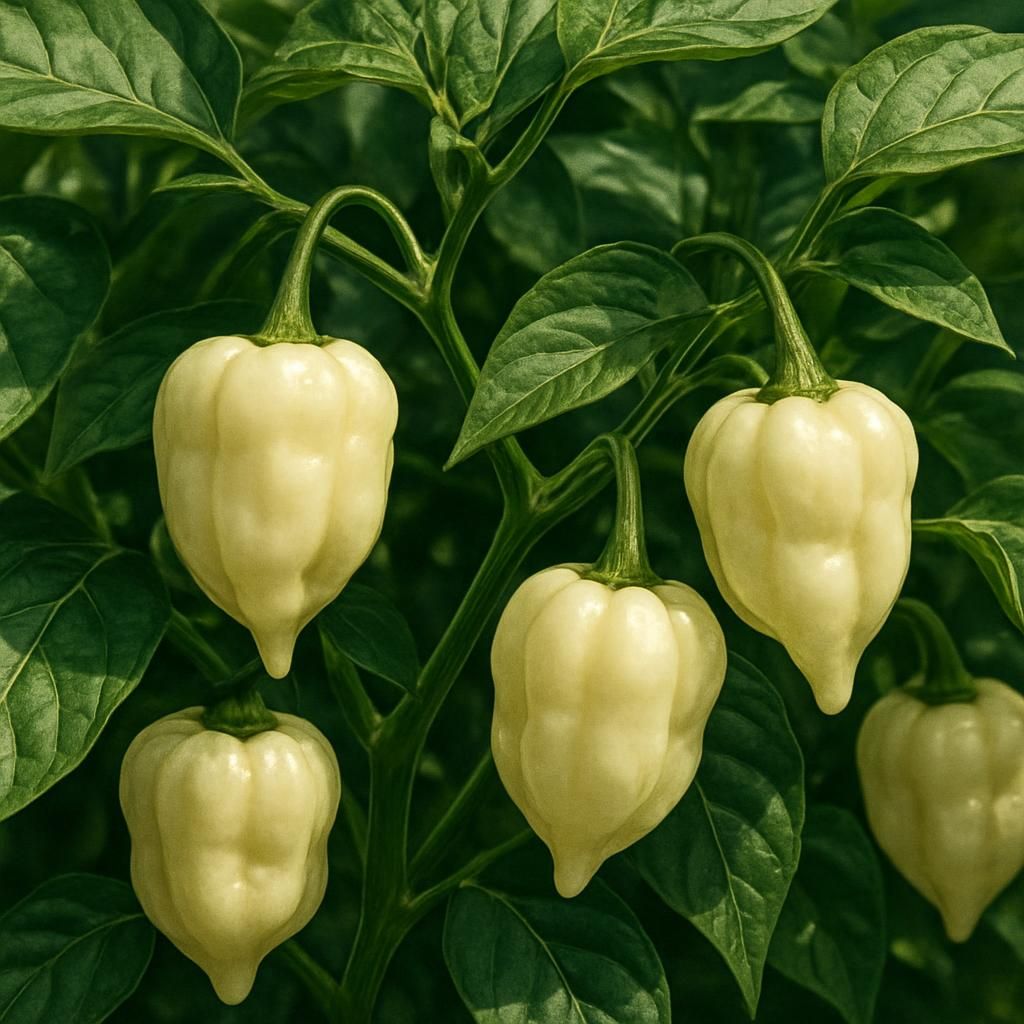
Introduction to Habanero White
Habanero White is a distinctive member of the Capsicum chinense species that produces ivory to pale-cream pods with exceptional capsaicin levels and a bright citrus-floral flavor. While most habaneros ripen to orange or red, this variety remains white at maturity, offering both ornamental and culinary value. Growers in subtropical and warm temperate regions can achieve commercial-grade yields with proper site selection, irrigation, and integrated pest management.
Botanical Profile of Habanero White
Habanero White plants form compact, upright bushes reaching 60–90 cm in height with dark-green, ovate leaves. Flowers are small, white, and self-pollinating. The pods are 3–5 cm long, lantern-shaped, and ripen from pale green to creamy white. Heat levels range from 300,000 to over 400,000 Scoville Heat Units, making it hotter than most standard habaneros but slightly milder than Carolina Reaper.
Soil, pH, and Climate Requirements for Habanero White
Optimal production requires well-drained sandy loam or loam soils with high organic matter. Heavy clay soils must be amended with compost and perlite to prevent root rot.
| Parameter | Ideal Range | Notes |
|---|---|---|
| Soil Type | Sandy loam to loam | Excellent drainage essential |
| Soil pH | 6.0–6.8 | Avoid below 5.8 or above 7.2 |
| Temperature (Day) | 24–32 °C | Optimal fruit set occurs at 26–30 °C |
| Temperature (Night) | 18–22 °C | Below 15 °C slows growth |
| USDA Zones | 9–11 (or greenhouse 7–8) | Protect from frost |
| Sun Exposure | Full sun, 8+ hours | Partial shade reduces capsaicin content |
| Soil EC | 1.5–2.5 mS/cm | Monitor to avoid salinity stress |
Step-by-Step Planting & Propagation
Start seeds indoors 8–10 weeks before the last frost. Sow 6 mm deep in sterile seed-starting mix at 26–28 °C. Germination occurs in 7–14 days. Transplant seedlings when they have 4–6 true leaves and nighttime temperatures remain above 18 °C. Space plants 45–60 cm apart in rows 75–90 cm wide. Use black plastic mulch or organic mulch to suppress weeds and maintain soil warmth.
Care & Maintenance regimes for Habanero White
Consistent moisture and balanced nutrition are critical during flowering and fruit development. Over-fertilization with nitrogen leads to lush foliage at the expense of fruit.
| Growth Stage | Watering Schedule | Fertilizer (NPK) | Pruning & Training |
|---|---|---|---|
| Seedling (0–4 weeks) | Keep evenly moist, never waterlogged | 10-10-10 at ¼ strength weekly | Pinch growing tip at 4th node |
| Vegetative (4–8 weeks) | 2.5–3.5 cm/week | 20-10-10 every 2 weeks | Remove lower leaves touching soil |
| Flowering & Fruit Set | 3.5–4.5 cm/week, drip irrigation | 10-20-20 or 5-10-10 every 10 days | Light tipping to encourage branching |
| Ripening (last 4 weeks) | Reduce to 2 cm/week to concentrate flavor | Switch to 0-10-20 or potassium sulfate | Remove damaged or diseased pods |
Pests, Diseases & Organic Management
Common threats include Aphids, Spider Mites, Thrips, and Whiteflies. Fungal risks include Powdery mildew and Phytophthora. Deploy yellow sticky traps, neem oil, and Bacillus thuringiensis as first-line controls. Maintain 30 cm spacing and good airflow to reduce humidity-related diseases.
Harvesting, Curing & Optimal Storage
Harvest pods when fully creamy white and firm, typically 90–110 days after transplant. Use clean pruners to cut stems 1 cm above the fruit. Air-dry at 25–30 °C with 50–60 % RH for 7–10 days or dehydrate at 50 °C until brittle. Store dried pods in airtight glass jars away from light. Fresh pods keep 2–3 weeks at 7–10 °C and 85–90 % humidity.
Companion Planting for Habanero White
Pair with Thai Basil, Marigold, and Nasturtium to repel pests and attract beneficial insects. Avoid planting near Fennel or other strong allelopathic herbs. Interplant with Cherry Tomato to maximize vertical space and improve microclimate humidity control.
For deeper seasonal planning insights, see The Overlooked Art of Seasonal Harvest Timing for Small Farm Profit.