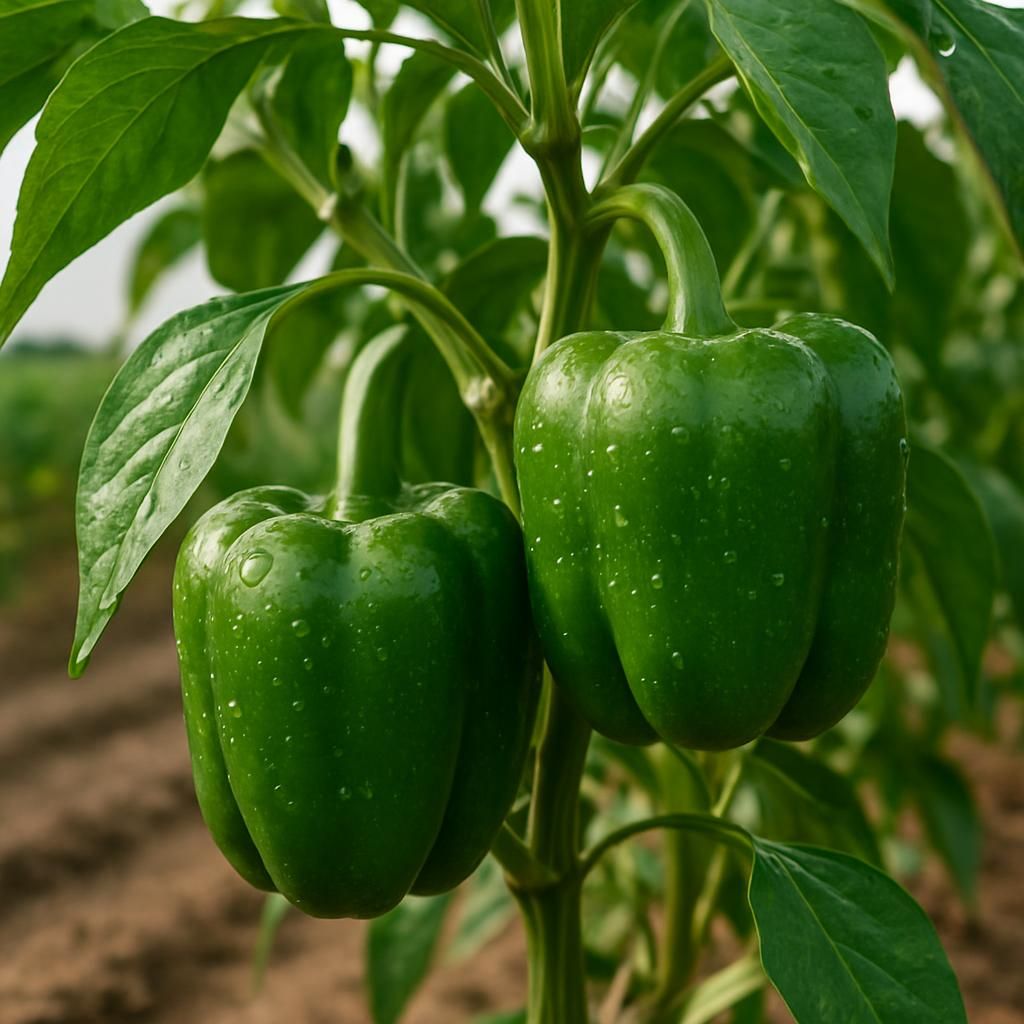
Introduction to Green Pepper (Brined)
Green Pepper (Brined) refers to the immature green fruit of bell pepper plants (Capsicum annuum) that are harvested early, then preserved through brining. The process locks in crisp texture and mild flavor, making the product essential for commercial food service, pickling operations, and export markets. Growing peppers specifically for brining requires attention to uniform size, thick walls, and disease-free fruit that withstands salt solutions without softening.
Commercial growers target varieties with consistent blocky shapes and firm pericarp to ensure high recovery rates after brining. The crop cycle is shorter than for red or yellow peppers because fruit is picked green, allowing multiple harvests per season in suitable climates. Success depends on precise irrigation, balanced nutrition, and timely harvest before color change begins.
Botanical Profile of Green Pepper (Brined)
Capsicum annuum belongs to the Solanaceae family. Green bell peppers develop from hermaphroditic flowers that self-pollinate, although bees improve fruit set. The plant produces indeterminate or semi-determinate growth depending on cultivar, with hollow, multi-lobed fruit containing numerous seeds. Brining targets fruit harvested at physiological immaturity (green stage) when chlorophyll content is high and capsaicin levels remain low.
The pericarp thickness directly affects brine penetration and final texture. Varieties selected for brining typically exhibit 6–8 mm wall thickness and average fruit weight of 180–250 g. Seed viability remains high, but commercial production often uses hybrid seed for uniformity and disease resistance.
Soil, pH, and Climate Requirements for Green Pepper (Brined)
Bell peppers thrive in well-drained sandy loam to loam soils with high organic matter. Avoid compacted or heavy clay soils that restrict root development and increase risk of root rot. Soil temperature at planting should exceed 18 °C for rapid establishment.
| Parameter | Ideal Range | Notes |
|---|---|---|
| Soil pH | 6.0–6.8 | Maintain with lime or sulfur adjustments |
| Soil Type | Sandy loam to loam | Good drainage prevents waterlogging |
| Organic Matter | 3–5 % | Improves water retention and fertility |
| Temperature (Day) | 21–29 °C | Optimal photosynthesis and fruit set |
| Temperature (Night) | 15–18 °C | Prevents blossom drop |
| Frost Tolerance | None | Plant after last frost or use protection |
| Growing Season Length | 90–120 days | From transplant to final green harvest |
Step-by-Step Planting & Propagation
- Start seeds indoors 8–10 weeks before the last frost date. Maintain soil temperature at 24–27 °C for 70–85 % germination within 7–10 days.
- Harden seedlings for 7–10 days by gradually exposing them to outdoor conditions before transplanting.
- Transplant when seedlings have 6–8 true leaves and soil has warmed to at least 18 °C. Space plants 45–60 cm apart in rows 75–90 cm apart for mechanical harvest compatibility.
- Apply starter fertilizer high in phosphorus at transplanting to encourage root establishment.
- Install drip irrigation immediately after transplanting to maintain consistent soil moisture without wetting foliage.
Care & Maintenance regimes for Green Pepper (Brined)
Consistent moisture and targeted nutrition are critical for producing thick-walled fruit suitable for brining. Avoid fluctuations that cause blossom-end rot or cracking.
| Growth Stage | Water Schedule | Fertilizer Schedule | Pruning/Maintenance Schedule |
|---|---|---|---|
| Transplant–Flowering | 2.5–3.8 cm/week via drip | 150 kg/ha N, 80 kg/ha P₂O₅, 150 kg/ha K₂O split | Remove lower leaves; stake indeterminate types |
| Flowering–Fruit Set | Maintain 70–80 % field capacity | Side-dress 50 kg/ha N at first fruit set | Pinch first flower on early transplants |
| Fruit Development | Increase to 4 cm/week during heat | Weekly fertigation 10–15 kg/ha N-K | Remove diseased fruit promptly |
| Pre-Harvest | Reduce slightly to firm fruit | Stop nitrogen 2 weeks before final harvest | Scout weekly for pests and disease |
Mulch with 5–7 cm of organic material to suppress weeds and stabilize soil temperature. Monitor leaf tissue every 3–4 weeks to adjust micronutrient levels, particularly calcium and magnesium.
Pests, Diseases & Organic Management
Major insect threats include aphids, thrips, and pepper weevil. Use yellow sticky traps and release beneficial insects such as lady beetles and lacewings for biological control. Reflective mulch reduces whitefly pressure.
Key diseases are bacterial spot, phytophthora blight, and powdery mildew. Rotate crops on a 3-year cycle and avoid planting after other solanaceous crops. Apply copper-based sprays and neem oil at first sign of infection. Remove and destroy infected plant material immediately to limit spread.
Harvesting, Curing & Optimal Storage
Harvest green fruit when they reach full size but remain firm and bright green. Pick every 4–7 days to encourage continuous production. Handle carefully to avoid bruising that reduces brining quality.
Immediately cool fruit to 7–10 °C within 4 hours of harvest. Sort for uniform size and discard any with sunscald or insect damage. For brining, submerge in 8–12 % salt solution with 0.5 % calcium chloride to maintain crispness. Store brined peppers at 4 °C for up to 12 months with minimal quality loss.
Companion Planting for Green Pepper (Brined)
Pair green peppers with basil and marigold to repel aphids and nematodes. Tomato and eggplant share similar requirements but increase disease risk if not rotated properly. Avoid planting near fennel which can inhibit growth. Nasturtium serves as a trap crop for aphids while adding beneficial insect habitat.