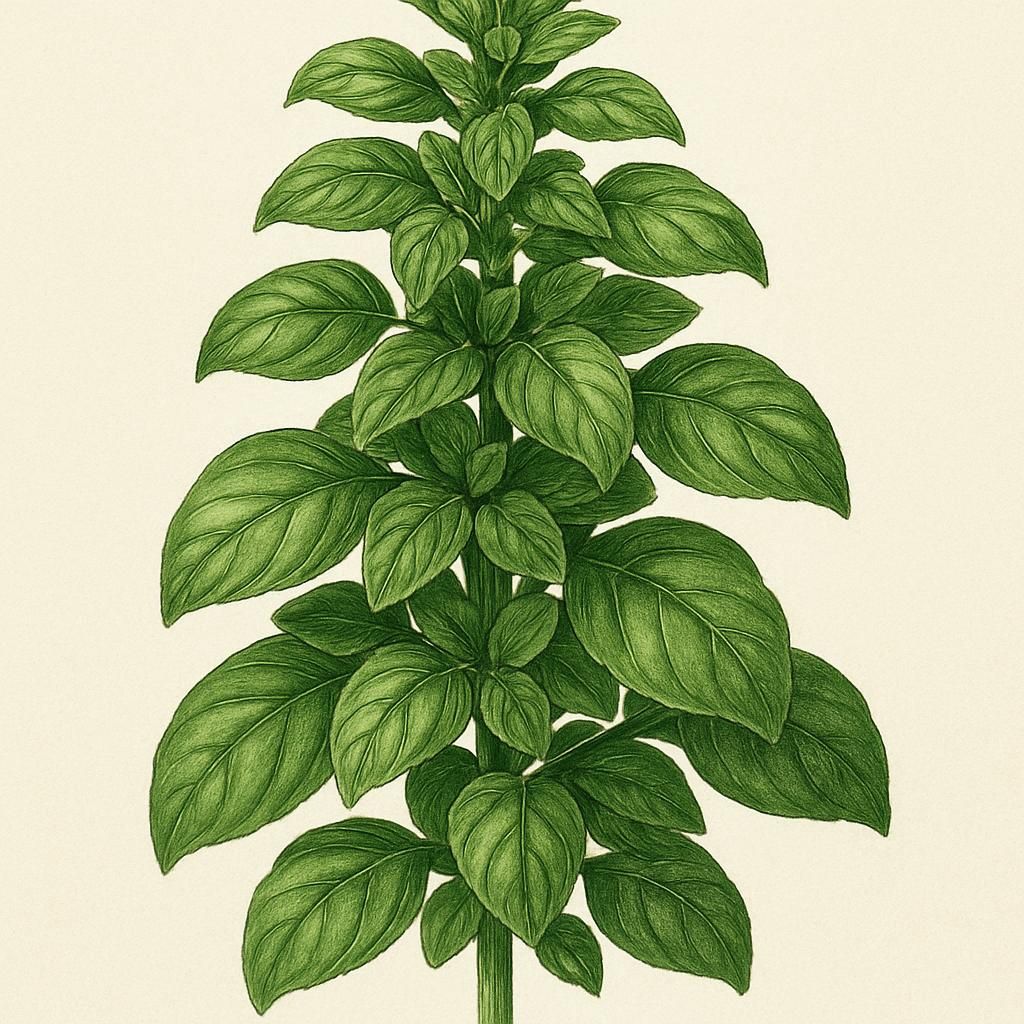
Introduction to Greek Columnar Basil
Greek Columnar Basil, also known as Ocimum basilicum var. Columnare, is a distinct cultivar of basil celebrated for its upright, column-like growth and fragrant leaves. Highly prized in culinary circles for its robust flavor, it is also a favorite among gardeners due to its compact form and ease of cultivation. This herb is ideal for individuals looking to maximize space, as it grows taller rather than wider, making it perfect for container gardening or small garden plots.
Botanical Profile of Greek Columnar Basil
Belonging to the Lamiaceae family, Greek Columnar Basil was developed for its unique vertical growth habit. It features dense clusters of bright green leaves that are larger than those of traditional basil varieties, allowing for continuous harvests throughout the growing season. The plant typically grows to a height of 18-24 inches, with a 10-inch spread, making it a suitable choice for culinary enthusiasts and garden designers alike.
Soil, pH, and Climate Requirements for Greek Columnar Basil
To ensure optimal growth, Greek Columnar Basil requires specific soil and climate conditions. Details of these requirements are outlined in the table below:
| Factor | Ideal Condition |
|---|---|
| Soil Type | Well-drained, loamy soil |
| pH Level | 6.0 - 7.5 |
| Sunlight | Full sun (6-8 hours daily) |
| Temperature | 24°C - 28°C (75°F - 82°F) |
| Humidity | Moderate |
Step-by-Step Planting & Propagation
- Seed Selection and Preparation: Select healthy, organic seeds from a reputable supplier. Start them indoors 6-8 weeks before the last expected frost date.
- Germination: Plant seeds 1/4 inch deep in seed-starting mix. Maintain a temperature of 21°C-24°C (70°F-75°F) until germination, which occurs within 7-14 days.
- Transplanting: Once seedlings have developed true leaves, transplant them outdoors into well-draining soil. Ensure spacing of 12 inches apart.
- Propagation by Cuttings: For quicker propagation, take 4-inch stem cuttings from mature plants. Remove leaves from the bottom half and place the cuttings in water until roots develop before planting them in soil.
Care & Maintenance Regimes for Greek Columnar Basil
Proper care is crucial for maintaining the health of Greek Columnar Basil. The following table provides an overview of essential care practices:
| Care Aspect | Schedule/Details |
|---|---|
| Watering | Deep watering once a week or more in dry conditions |
| Fertilizing | Use a balanced fertilizer every four weeks during growing season |
| Pruning/Pinching | Regular pinching promotes bushier plants and prevents flowering |
Pests, Diseases & Organic Management
Greek Columnar Basil is susceptible to aphids, spider mites, and whiteflies. Environmental control, such as maintaining good air circulation, can help prevent infestations. For organic control, practices like introducing beneficial insects (e.g., ladybugs), neem oil sprays, and insecticidal soap can be effective. Common diseases include downy mildew and Fusarium wilt, which can be minimized by ensuring well-drained soil and avoiding overhead watering.
Harvesting, Curing & Optimal Storage
Harvest Greek Columnar Basil regularly by pinching off the leaves from the top down, which encourages continued growth. Ideally, harvest in the morning when the oils are most concentrated. Fresh basil can be stored in a glass of water, like cut flowers, or preserved by drying in a shaded, well-ventilated area or by freezing in ice cube trays with olive oil.
Companion Planting for Greek Columnar Basil
Greek Columnar Basil thrives when planted alongside tomatoes, which are known to benefit from basil's pest-repellent properties. Other suitable companions include oregano, peppers, and marigolds. Avoid planting basil near cucumbers, which may compete for water and nutrients.
For more practical agricultural guidance, check out the blog post The Hidden Power of Mulching: 8 Organic Strategies to Transform Small Farm Soil and explore Thai Basil for comparative growth insights.