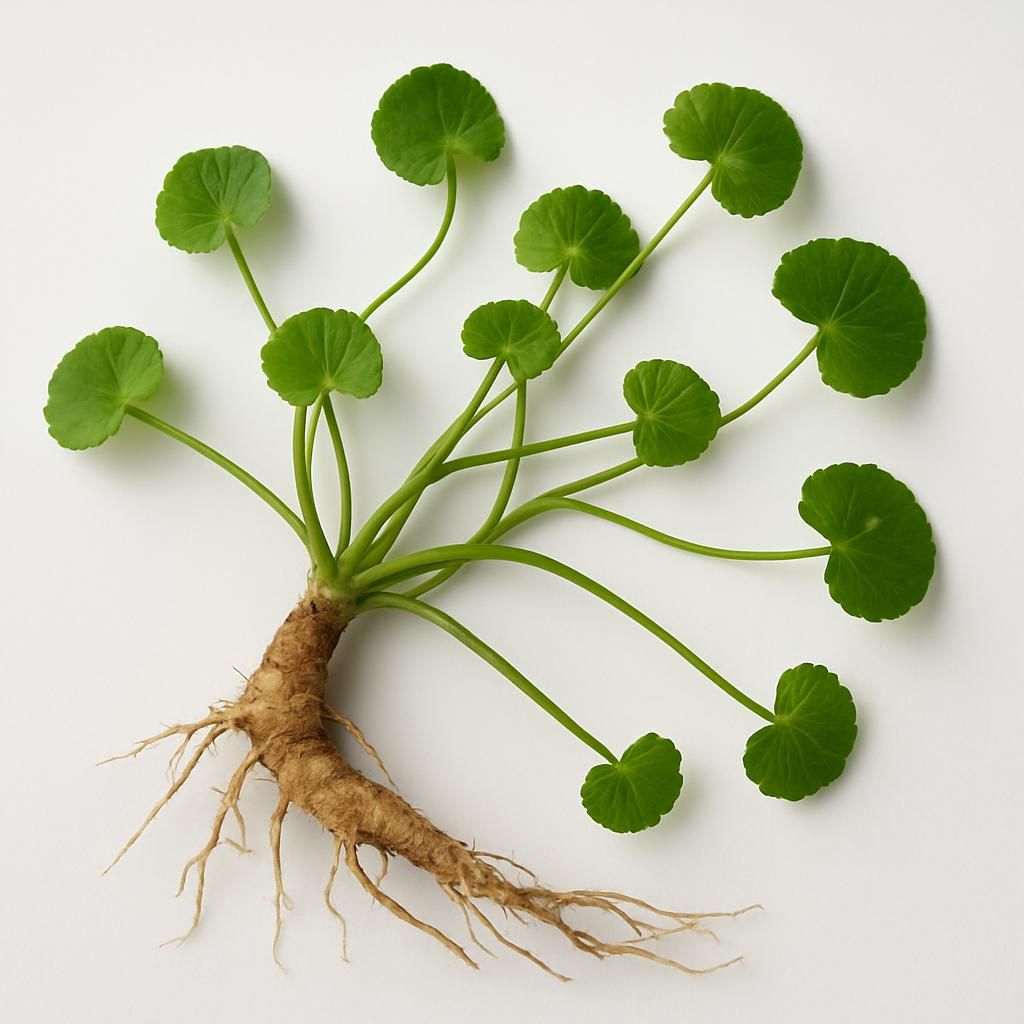
Introduction to Gotu Kola Root
Gotu Kola Root refers to the stoloniferous rhizomes of Centella asiatica, a low-growing herbaceous perennial in the Apiaceae family. Native to wetlands across Asia, Australia, and parts of Africa, this crop has gained global attention for its triterpenoid compounds, particularly asiaticoside and madecassoside, which support wound healing and cognitive function. Commercial cultivation focuses on both the aerial parts and the thickened underground runners that develop in consistently moist soils.
The plant spreads rapidly via stolons, forming dense mats that suppress weeds while producing harvestable roots within 4–6 months of establishment. In traditional systems of Rice paddies and shaded home gardens, Gotu Kola Root has been intercropped successfully for centuries. Modern production emphasizes organic practices, precise moisture management, and post-harvest curing to preserve bioactive compounds.
Botanical Profile of Gotu Kola Root
Centella asiatica produces slender, creeping stems that root at nodes, with orbicular, crenate leaves 2–5 cm across. The inflorescence consists of small, pinkish-white umbels, though commercial growers often remove flowers to redirect energy into rhizome development. The root system comprises fibrous laterals and thickened, fleshy rhizomes that store starch and secondary metabolites. Under optimal conditions, individual plants can spread 30–60 cm in diameter within one growing season.
Soil, pH, and Climate Requirements for Gotu Kola Root
Gotu Kola Root requires consistently moist, well-drained soils rich in organic matter. It performs best in tropical and subtropical climates with high humidity and partial shade. The following table summarizes ideal growing conditions:
| Parameter | Ideal Range | Notes |
|---|---|---|
| Soil Type | Loamy to sandy loam | High organic matter (5–8%) preferred |
| Soil pH | 5.5–7.0 | Slightly acidic to neutral |
| Temperature | 20–32 °C day / 15–22 °C night | Frost sensitive below 10 °C |
| Relative Humidity | 70–90% | Maintain with misting or shade cloth |
| Light | Partial shade (30–50%) | Full sun reduces leaf size and rhizome yield |
| Elevation | 0–1,500 m | Thrives in lowland wetlands to mid-hills |
Step-by-Step Planting & Propagation
Propagation is achieved primarily through stolon cuttings or division of established clumps. Select healthy mother plants free of Root rot symptoms. Cut 10–15 cm stolons with at least two nodes and root them in a moist sand-peat mix under 70% shade for 10–14 days. Once rooted, transplant into prepared beds at 20 × 20 cm spacing. For larger plantings, direct sowing of fresh rhizome segments into shallow furrows (3–5 cm deep) is effective during the onset of the rainy season.
Raised beds 20–30 cm high with 1 m width improve drainage while retaining surface moisture. Incorporate 10–15 t/ha well-rotted compost or aged manure prior to planting. Maintain 60–70% soil moisture during the first three weeks to ensure rapid establishment.
Care & Maintenance regimes for Gotu Kola Root
Consistent moisture is critical; allow the top 2 cm of soil to dry slightly between irrigations to prevent Pythium issues. The table below outlines recommended schedules:
| Activity | Frequency | Details |
|---|---|---|
| Irrigation | Every 2–3 days | Drip or overhead mist; keep soil at field capacity |
| Fertilizer | Monthly (weeks 4–20) | 10-10-10 NPK at 200 kg/ha or fish emulsion (1:10) |
| Mulching | At planting + top-up | 5 cm rice straw or coconut husk to retain moisture |
| Pruning | Every 4–6 weeks | Remove flowers and damaged leaves to promote rhizome growth |
| Weeding | Bi-weekly until canopy closure | Hand weeding preferred; avoid deep cultivation |
Pests, Diseases & Organic Management
Major pests include Aphids, Slugs, and Spider mites. Monitor weekly and release predatory mites or apply neem oil (0.5%) at the first sign of infestation. Common diseases are Root rot, Pythium, and Leaf spot diseases. Improve drainage, rotate with Ginger or Turmeric, and drench with Trichoderma harzianum (10^6 CFU/ml) at planting and monthly thereafter. Copper-based sprays may be used for bacterial leaf spots during prolonged wet periods.
Harvesting, Curing & Optimal Storage
Harvest begins 5–7 months after planting when rhizomes reach 8–12 mm diameter. Lift plants carefully with a fork to avoid breakage. Separate roots from stolons, wash gently in running water, and air-dry under shade for 24 hours. Cure at 28–32 °C and 65% RH for 5–7 days until moisture content drops to 10–12%. Store in breathable jute bags or perforated crates at 15–18 °C and 60% RH for up to 12 months. For maximum asiaticoside retention, avoid temperatures above 35 °C during curing.
Companion Planting for Gotu Kola Root
Gotu Kola Root pairs well with moisture-loving species that provide light shade. Recommended companions include Thai Basil, Ginger, and Turmeric in alternating rows. These combinations improve microclimate humidity, reduce weed pressure, and allow shared irrigation infrastructure. Avoid planting near heavy feeders such as Corn that may outcompete for surface moisture.