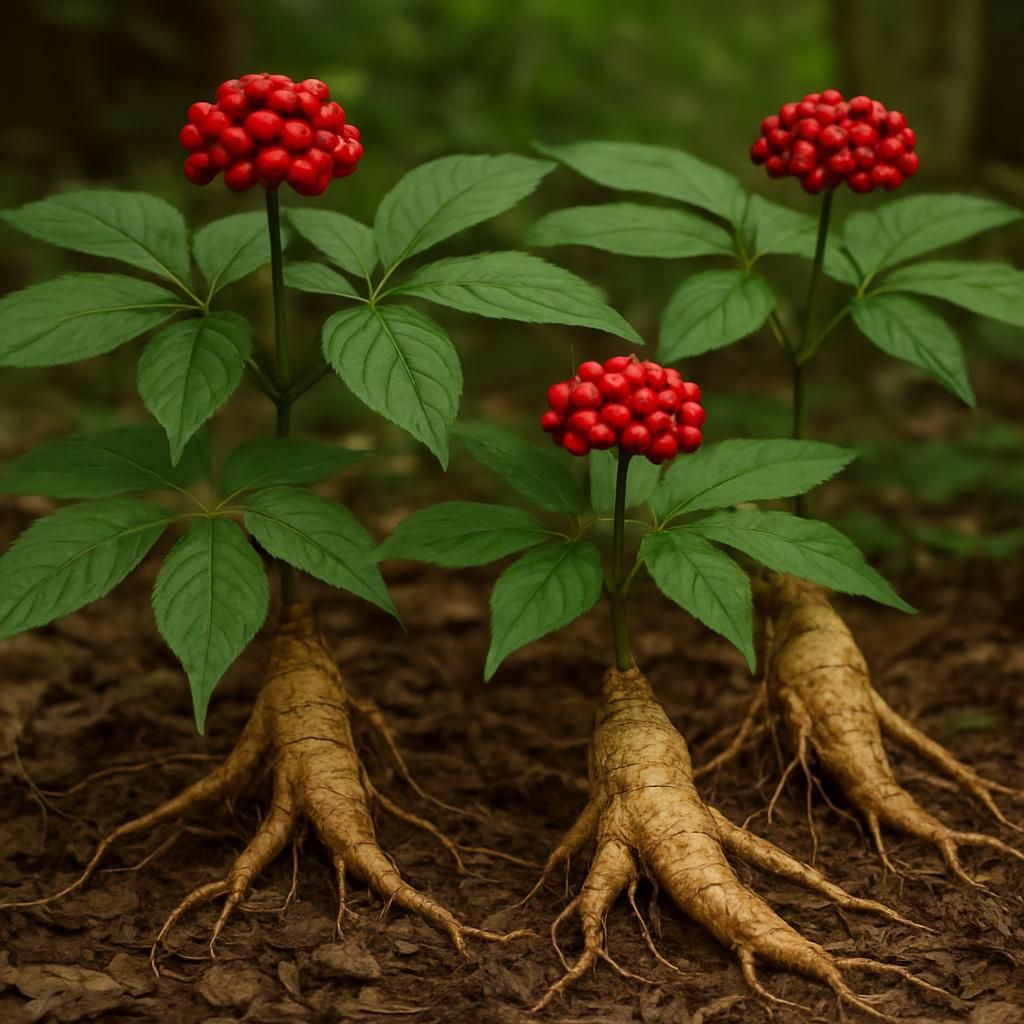
Introduction to Ginseng
American ginseng (Panax quinquefolius) is a shade-loving perennial herb native to eastern North American deciduous forests. It has been harvested for centuries for its fleshy roots, which are prized in traditional medicine for their adaptogenic properties. Commercial cultivation now occurs under artificial shade structures that replicate the cool, moist conditions of its natural habitat. Because the plant grows slowly and is highly sensitive to environmental stress, successful production demands patience, precise site preparation, and rigorous organic management.
Botanical Profile of Ginseng
Ginseng belongs to the Araliaceae family. Mature plants produce a single aerial stem 30–60 cm tall bearing three to five palmately compound leaves. Each leaf typically consists of three to five leaflets with serrated margins. In late spring, small greenish-white flowers form in an umbel at the stem apex, followed by bright red berries containing one to three seeds. The prized portion is the perennial taproot, which develops characteristic horizontal wrinkles and a forked shape after several years. Roots reach marketable size at 5–7 years of age under optimal conditions.
Soil, pH, and Climate Requirements for Ginseng
Ginseng demands well-drained, humus-rich soil with high organic matter content. The ideal pH range is slightly acidic. Temperature must remain cool, and humidity should stay moderate to high. The table below summarizes the optimal growing conditions.
| Parameter | Ideal Range | Notes |
|---|---|---|
| Soil Type | Loamy, high in organic matter | Forest duff or well-composted hardwood mulch |
| Soil pH | 5.5 – 6.5 | Avoid alkaline soils; test annually |
| Temperature | 15 – 24 °C daytime | Requires winter dormancy below 5 °C |
| Relative Humidity | 60 – 80 % | Maintain consistent moisture without waterlogging |
| Shade Requirement | 70 – 80 % | Use 70–80 % shade cloth or natural canopy |
| Annual Rainfall | 100 – 130 cm | Supplemental irrigation needed in dry spells |
Step-by-Step Planting & Propagation
Site selection begins two years before planting. Clear competing vegetation and incorporate 5–8 cm of well-aged hardwood leaf mold. Install shade structures or select a mature deciduous canopy. Stratify seeds for 18–22 months in moist sand at 1–5 °C to break dormancy. Sow stratified seeds 1–2 cm deep in late autumn at a density of 40–60 seeds per square meter. Alternatively, transplant one- or two-year-old rootlets in early spring at 15–20 cm spacing within rows 30 cm apart. Mulch immediately with 5 cm of shredded leaves or aged sawdust to retain moisture and suppress weeds.
Care & Maintenance regimes for Ginseng
Consistent moisture, balanced nutrition, and careful canopy management are essential. The following table outlines recommended schedules.
| Task | Frequency | Details |
|---|---|---|
| Watering | Weekly during active growth | Maintain 2.5 cm per week; avoid standing water |
| Fertilizer | Early spring & mid-summer | Apply aged compost tea or 5-5-5 organic blend at 1 kg per 10 m² |
| Pruning | As needed | Remove yellowing leaves and spent flower stalks to reduce disease pressure |
Monitor soil moisture with tensiometers and adjust irrigation based on rainfall. Replenish mulch annually to maintain 5–7 cm depth. Scout weekly for nutrient deficiencies, especially nitrogen and potassium, and correct with targeted organic amendments.
Pests, Diseases & Organic Management
Ginseng is susceptible to Alternaria leaf spot, Botrytis, and damping-off caused by Pythium. Slugs and snails can damage seedlings, while aphids and root-knot nematodes may attack roots. Implement strict sanitation by removing and destroying infected plant material. Apply copper-based fungicides or Bacillus subtilis products at the first sign of foliar disease. Use iron-phosphate slug baits and encourage predatory beetles through habitat diversity. Rotate planting sites every 10–15 years and maintain excellent drainage to prevent root rots.
Harvesting, Curing & Optimal Storage
Harvest roots in autumn of the fifth to seventh year when foliage begins to yellow. Carefully dig around plants with a garden fork to avoid root damage. Wash roots gently with low-pressure water and remove soil without scrubbing. Cure by spreading roots in single layers on screens in a shaded, well-ventilated area at 15–20 °C for 4–6 weeks. Once roots are dry and snap cleanly, store in breathable paper bags or cardboard boxes inside a cool (5–10 °C), dark room with 40–50 % relative humidity. Properly cured roots retain quality for up to two years.
Companion Planting for Ginseng
Ginseng benefits from association with native woodland species that improve soil structure and deter pests. Goldenseal and wild ginger share similar shade and moisture requirements while providing ground cover that reduces weed pressure. Mayapple and trillium help maintain biodiversity and support beneficial soil microbes. Avoid planting near tomato or potato because these solanaceous crops can harbor shared pathogens. Maintain at least a 3-meter buffer between ginseng beds and any brassica or allium crops to limit cross-contamination risks.