Introduction to Mayapple
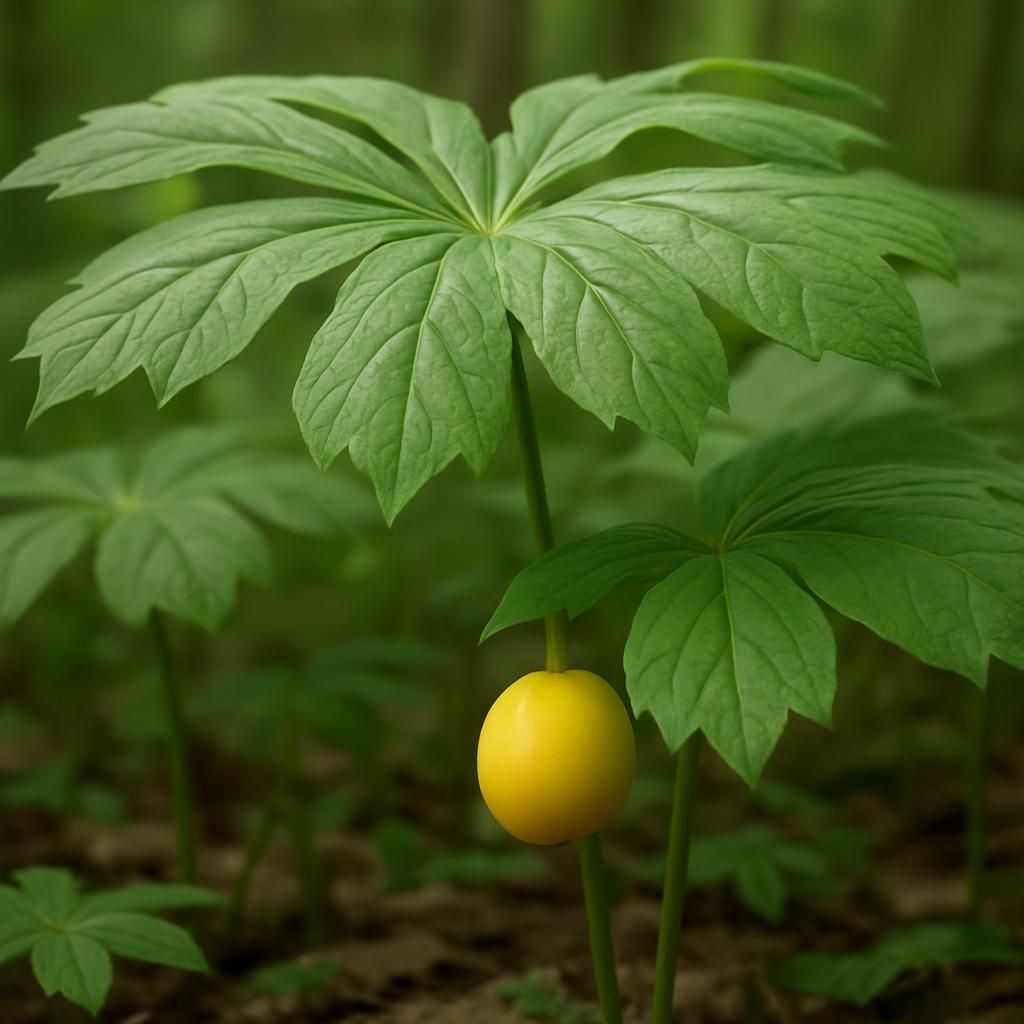
Mayapple (Podophyllum peltatum) is a shade-loving herbaceous perennial native to eastern North American deciduous forests. Gardeners and foragers prize the plant for its umbrella-like leaves and the sweet, lemon-scented fruit that ripens in early summer. While the unripe fruit and all other parts contain toxic podophyllotoxin, fully ripe berries are edible and have been used historically in traditional cuisine and medicine. Commercial interest remains limited, yet demand for native edibles and woodland medicinals continues to grow.
Botanical Profile of Mayapple
Mayapple spreads via thick, creeping rhizomes that produce one or two deeply lobed, peltate leaves per stem. In spring, nodding white flowers form beneath the foliage and are pollinated primarily by bumblebees. Each fertilized flower develops into a single fleshy berry that turns golden-yellow when ripe. The plant reaches 30–45 cm in height and goes dormant by midsummer in warmer climates.
Soil, pH, and Climate Requirements for Mayapple
Mayapple thrives in rich, moist, well-drained woodland soils with abundant organic matter. The following table summarizes ideal growing conditions:
| Parameter | Ideal Range | Notes |
|---|---|---|
| Soil Type | Loamy, high in humus | Avoid heavy clay without amendment |
| Soil pH | 5.5–7.0 | Slightly acidic to neutral |
| Temperature | 15–25 °C daytime | Hardy to USDA Zone 3; protect from late frost |
| Moisture | Consistently moist | Mulch helps retain humidity |
| Light | Partial to full shade | Dappled sunlight under deciduous canopy |
| Spacing | 30–45 cm between plants | Rows 60–90 cm apart |
Step-by-Step Planting & Propagation
- Select a shaded site with loose, organic-rich soil. Remove competing roots and weeds.
- Divide established rhizomes in early spring or fall. Each division should contain at least one bud and several feeder roots.
- Plant rhizomes horizontally 5–8 cm deep; space divisions 30–45 cm apart.
- Water thoroughly after planting and apply 5–8 cm of leaf-mold mulch.
- Maintain even moisture during the first growing season until new shoots emerge.
Care & Maintenance regimes for Mayapple
Consistent moisture and annual organic amendments keep plants vigorous. The schedule below outlines seasonal tasks:
| Season | Watering | Fertilizer | Pruning |
|---|---|---|---|
| Spring | 2.5 cm/week if rainfall low | Top-dress with 2 cm compost | Remove winter debris; no cutting |
| Summer | Maintain mulch moisture | Light fish-emulsion tea monthly | Deadhead spent flowers if desired |
| Fall | Reduce as plants senesce | Apply leaf mold or aged manure | Cut back yellow foliage at dormancy |
| Winter | Minimal; protect with mulch | None | None |
Pests, Diseases & Organic Management
Mayapple is relatively pest-resistant but can suffer from slugs and snails that chew foliage. Fungal leaf spots occasionally appear in overly wet conditions. Organic controls include hand-picking slugs, applying iron-phosphate baits, and improving air circulation through proper spacing. Avoid overhead irrigation to minimize leaf diseases.
Harvesting, Curing & Optimal Storage
Harvest only fully ripe, golden-yellow berries in early to mid-summer. Wear gloves when handling unripe fruit. Gently twist berries from stems. Refrigerate immediately and use within 3–5 days, or freeze for up to six months. Do not consume any green or partially ripe fruit.
Companion Planting for Mayapple
Pair Mayapple with other shade-tolerant natives such as Trillium species, ferns, and wild ginger to create a diverse woodland understory. These companions improve biodiversity, suppress weeds, and enhance soil microbial activity without competing for resources.