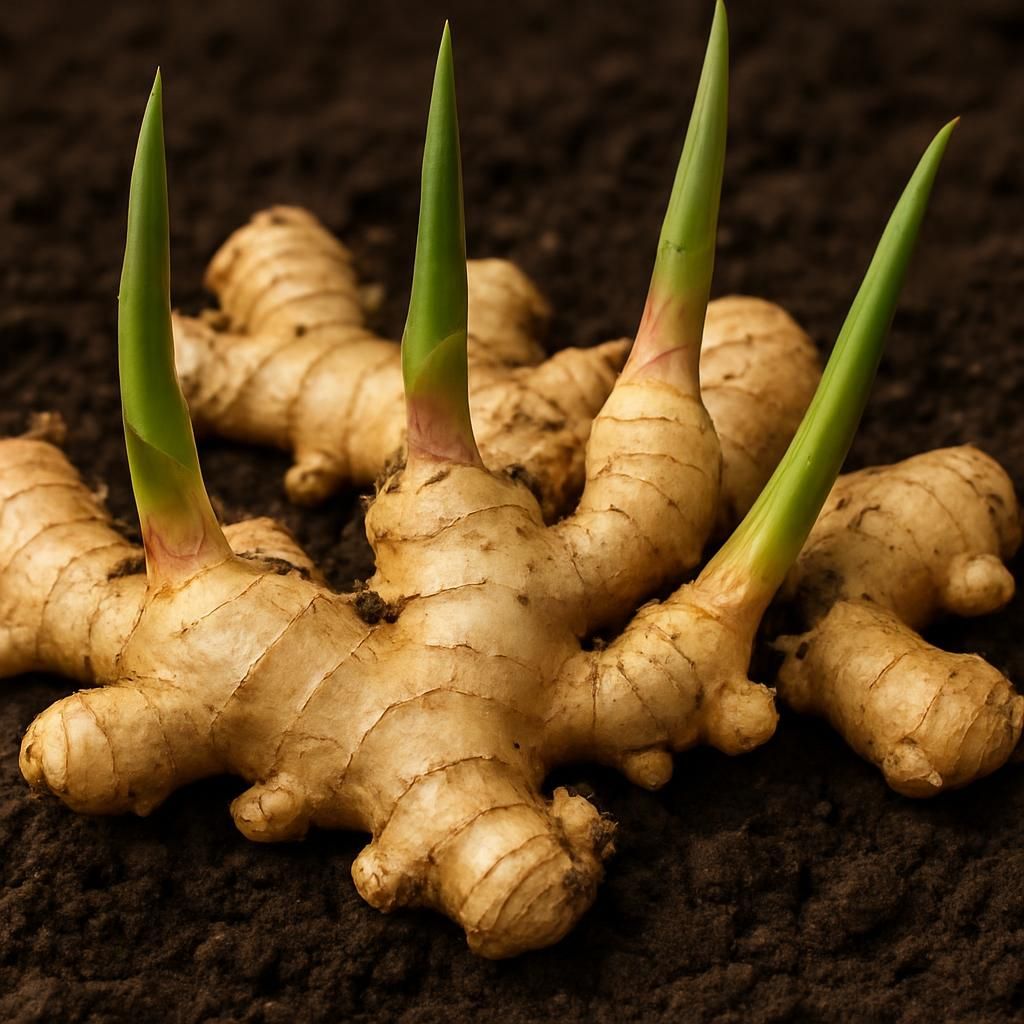
Introduction to Ginger (Zingiber officinale - Jamaican)
Ginger (Zingiber officinale - Jamaican) is a perennial herbaceous plant cultivated primarily for its aromatic, pungent rhizomes. Jamaican ginger is renowned worldwide for its superior pungency, clean citrus notes, and high essential oil content, making it a premium variety for both culinary and pharmaceutical markets. Successful cultivation requires warm temperatures, consistent moisture, and well-drained, fertile soil. This guide provides professional-grade, evidence-based practices for producing high-yielding, disease-free crops.
Botanical Profile of Ginger (Zingiber officinale - Jamaican)
Ginger belongs to the Zingiberaceae family and produces pseudostems up to 1.5 m tall from underground rhizomes. The plant features narrow, lanceolate leaves arranged alternately along the stem and produces cone-shaped inflorescences with pale yellow flowers. Jamaican ginger is distinguished by its high gingerol and shogaol concentrations, which contribute to its characteristic heat and aroma. The rhizomes develop segmented, finger-like structures that are harvested when mature but before fiber development increases.
Soil, pH, and Climate Requirements for Ginger (Zingiber officinale - Jamaican)
Ginger thrives in loose, well-aerated soils rich in organic matter. Heavy clay soils should be amended with compost or raised beds to prevent waterlogging. The crop performs best under partial shade during early growth stages and full sun once established.
| Parameter | Ideal Range | Notes |
|---|---|---|
| Soil Type | Sandy loam to loam | High organic matter (3-5%) |
| Soil pH | 5.5 - 6.5 | Slightly acidic; avoid alkaline soils |
| Temperature | 22–30 °C (72–86 °F) | Minimum 18 °C; frost sensitive |
| Annual Rainfall | 1500–2500 mm | Even distribution; supplemental irrigation |
| Relative Humidity | 70–90% | High humidity reduces transpiration stress |
| Elevation | 0–1500 m | Lower elevations preferred in tropics |
| Light | Partial shade to full sun | 30–50% shade cloth beneficial initially |
Step-by-Step Planting & Propagation
- Select disease-free rhizome pieces (seed ginger) weighing 30–60 g with at least one viable bud.
- Treat seed pieces with 0.2% mancozeb or hot water (50 °C for 20 min) to reduce pathogen load.
- Prepare raised beds 30 cm high and 1 m wide; incorporate 20–30 t/ha well-rotted manure or compost.
- Plant pieces 5–7 cm deep with buds facing upward at 20–25 cm spacing within rows and 30–40 cm between rows.
- Mulch immediately with 5–8 cm of straw or dried leaves to conserve moisture and suppress weeds.
- Maintain soil moisture at field capacity during the first 4–6 weeks until shoots emerge.
Care & Maintenance regimes for Ginger (Zingiber officinale - Jamaican)
Consistent water, balanced nutrition, and timely weeding are critical for rhizome development. Over-fertilization, especially with nitrogen late in the season, promotes excessive foliage at the expense of rhizome quality.
| Growth Stage | Watering Schedule | Fertilizer Application | Pruning / Other Maintenance |
|---|---|---|---|
| Planting–30 days | Light daily irrigation or 3×/week | 10-10-10 NPK at 200 kg/ha + 5 t/ha compost | Remove weeds; maintain mulch |
| 30–90 days | 25–30 mm/week; drip irrigation preferred | Side-dress 50 kg/ha urea + 40 kg/ha K₂O | Hill soil around stems; scout for pests |
| 90–150 days | Reduce to 20 mm/week | Apply 40 kg/ha K₂O only | Remove yellowing leaves; avoid over-watering |
| 150–240 days | Minimal irrigation; allow slight drying | No additional fertilizer | Cease weeding 4 weeks before harvest |
Pests, Diseases & Organic Management
Major threats include Root-knot nematodes, Rhizoctonia, and soft rot. Implement crop rotation with non-host crops and solarize soil prior to planting. Use neem-based sprays and beneficial nematodes for insect control. Remove and destroy infected plant material promptly. Maintain field sanitation and avoid overhead irrigation to reduce foliar disease pressure.
Harvesting, Curing & Optimal Storage
Harvest when leaves begin to yellow (8–10 months after planting). Lift rhizomes carefully to avoid bruising. Wash gently, trim roots and shoots, and cure in shaded, well-ventilated areas for 3–5 days. Store cured rhizomes at 10–12 °C and 70% RH for up to 6 months. For seed purposes, store at 15–18 °C in ventilated crates with periodic inspection.
Companion Planting for Ginger (Zingiber officinale - Jamaican)
Ginger benefits from association with Turmeric and Garlic, which help deter nematodes and improve soil microbial diversity. Avoid planting near Potato or Tomato due to shared pathogen risks. Interplant with Marigold or Coriander to attract beneficial insects and reduce pest incidence.