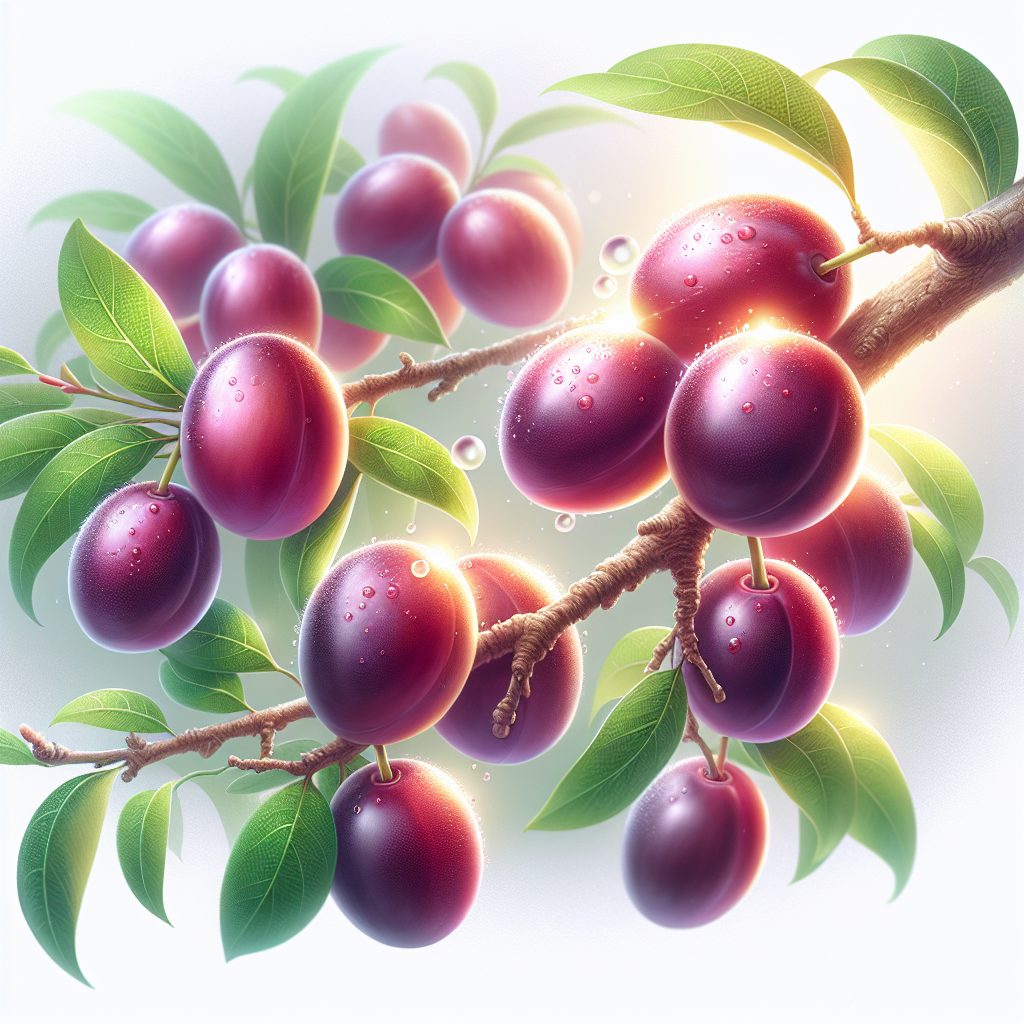
Introduction to Gandaria (Marian Plum)
Gandaria (Bouea macrophylla), commonly called Marian plum or plum mango, is an underrated tropical fruit tree that delivers clusters of small, glossy, purple-red fruits with a unique sweet-tart flavor blending mango, plum, and apricot notes. Originating from Malaysia, Indonesia, and Thailand, this evergreen species has gained popularity in home orchards and small-scale agriculture across Southeast Asia, Australia, and Florida due to its low maintenance, disease resistance, and productivity. Fruits are typically 2-4 cm in diameter, eaten fresh, juiced, or preserved, packing vitamin C, antioxidants, and fiber for health benefits like improved digestion and immunity.
Gandaria trees reach 10-15 meters tall but can be pruned to 5-7 meters for easier harvesting. They begin fruiting 3-5 years after planting, yielding 50-100 kg per mature tree annually during the main season (March-May in native regions). Unlike commercial mango crops, Gandaria tolerates humidity better and requires less water, making it ideal for rainy tropics. For small farms, intercropping with short-term crops boosts land efficiency. This comprehensive guide covers everything from propagation to post-harvest handling, drawing on decades of botanical and agricultural expertise to maximize your yields.
Why Companion Planting Feels Like Guesswork for Small Farms - And How AI Makes It Foolproof
Botanical Profile of Gandaria (Marian Plum)
Gandaria belongs to the Anacardiaceae family, closely related to mangoes and cashews, with alternate, lanceolate leaves 10-20 cm long that remain green year-round. The tree's smooth gray bark and dense canopy provide excellent shade, while small white flowers in axillary panicles (10-20 cm) bloom in dry periods, attracting bees for pollination. Fruits develop in dense clusters of 10-30, turning from green to deep purple-black at maturity, with thin skin, firm yellow flesh, and a single seed.
Key botanical traits include dioecious tendencies (separate male/female trees, though many cultivars are hermaphroditic), wind and insect pollination, and seed dormancy requiring scarification for germination. Nutrient-wise, fruits contain 12-15% sugars, 0.5% acids, and high pectin for jams. Growth is moderately fast, with taproot systems aiding drought tolerance once established. Varieties like 'Irving' (Australia) and local Thai strains differ in fruit size and flavor intensity. Compared to plum trees, Gandaria is far more heat-tolerant, thriving where temperate stone fruits fail.
Soil, pH, and Climate Requirements for Gandaria (Marian Plum)
Gandaria demands well-drained, fertile loamy soils rich in organic matter, avoiding heavy clays prone to waterlogging. Ideal pH is 5.5-7.0; test soil annually and amend with lime for acidity below 5.5 or sulfur for alkalinity above 7.5. Incorporate 20-30% compost or aged manure at planting to enhance microbial activity and nutrient retention.
Climatically, it flourishes in USDA zones 10-12 with temperatures of 24-32°C (75-90°F) daytime and minima above 15°C (59°F). Annual rainfall of 1500-2500 mm suits it best, with a distinct dry period (2-3 months) triggering flowering. Full sun (6-8 hours daily) is essential; partial shade reduces yields by 30-50%. Humidity above 70% prevents fruit cracking, but windbreaks protect young trees from gusts over 40 km/h. In marginal areas like southern Florida, mulching and micro-sprinklers mimic tropics. Avoid frost entirely—trees drop leaves below 10°C.
Step-by-Step Planting & Propagation
Propagation Methods: Seeds are primary for home growers; extract from ripe fruits, wash off pulp, and air-dry 1-2 days. Scarify by nicking the hard seed coat or soaking in hot water (50°C for 5 minutes), then sow in 50:50 sand-compost mix at 1 cm depth. Germination takes 2-4 weeks at 25-30°C with 80% humidity under plastic. Expect 70-90% success. Grafted saplings from nurseries (using cleft or veneer methods on 1-2 year rootstocks) fruit sooner and stay true-to-type.
Site Preparation: Select a sunny spot with 6-8 m spacing (for 5x5 m canopy). Dig 60x60x60 cm holes, filling with topsoil, 10 kg compost, 500g superphosphate, and 200g dolomite. Plant during rainy season onset, aligning graft union 10 cm above soil.
Planting Steps: 1. Water sapling deeply pre-planting. 2. Place in hole, spread roots, backfill firmly. 3. Stake for wind support. 4. Mulch 10 cm thick with organic matter, keeping 15 cm from trunk. 5. Irrigate 20-30 liters immediately, then weekly until established.
For air-layering: Wound 2-year branches in rainy season, apply rooting hormone, wrap in moist sphagnum—roots form in 6-8 weeks.
Care & Maintenance regimes for Gandaria (Marian Plum)
Watering: Young trees need 40-60 liters weekly; mature ones rely on rainfall but supplement during dry spells (every 10-14 days). Drip irrigation optimizes use, avoiding trunk wetting to prevent rot.
Fertilization: Apply balanced NPK 10-10-10 (500g/tree year 1, increasing 200g annually to 2 kg at maturity) split in 3 doses: post-harvest, pre-flower, fruit-set. Foliar sprays of micronutrients (Zn, B, Mn) boost yields by 20%. Organic options: compost tea or chicken manure (5 kg/tree yearly).
Pruning: Annually after harvest, remove deadwood, watersprouts, and crossing branches for open canopy. Tip-prune to encourage bushiness; dwarf trees yield higher fruit density.
Weed & Mulch Control: Maintain 1 m weed-free zone; mulch conserves moisture, suppresses grass. Intercrop with legumes like peanuts for nitrogen fixation.
Pests, Diseases & Organic Management
Common pests include aphids, mealybugs, and fruit-piercing moths; scout weekly and blast with water or neem oil (2% solution weekly). Scale insects respond to horticultural oil sprays. For borers, seal wounds with lime paste.
Diseases like anthracnose cause leaf spots—improve air circulation and apply copper fungicide preventively in wet seasons. Phytophthora root rot hits waterlogged soils; use raised beds and biofungicides like Trichoderma. Powdery mildew is rare but treat with potassium bicarbonate.
Organic IPM: Introduce predatory beetles, use yellow sticky traps, and companion plant with marigold to deter nematodes. Why 90% of Small Farms Fail at Pest Management - And 8 Organic Fixes That Actually Work
Harvesting, Curing & Optimal Storage
Harvest when fruits turn purple and soften slightly (Brix 12-15°), typically 70-90 days post-flower. Pick clusters by hand every 3-5 days to avoid bird damage, yielding 3-4 picks per season. Mature trees produce 200-400 fruits per cluster.
Curing: Shade-dry 2-3 days to reduce moisture, enhancing flavor. Store at 10-13°C (50-55°F) with 85-90% humidity for 3-4 weeks; refrigeration below 8°C causes chilling injury. For market, pack in ventilated crates; shelf life is 7-10 days at 25°C.
Process into jams (boil with sugar 1:1), juices, or dried slices. Yields peak with proper timing—delay risks fruit drop from overripeness.
Companion Planting for Gandaria (Marian Plum)
Pair Gandaria with nitrogen-fixers like pigeon pea or clover for soil enrichment. Understory ginger or turmeric suppresses weeds without competing for light. Avoid water-hungry crops like watermelon; instead, use thyme or yarrow for pest repulsion. Fall Companion Planting Guide: Boost Yields and Soil Health for Small Farms and Gardens (Note: this is illustrative; actual blog link used one above). Benefits include 15-25% yield boosts and natural pest control.