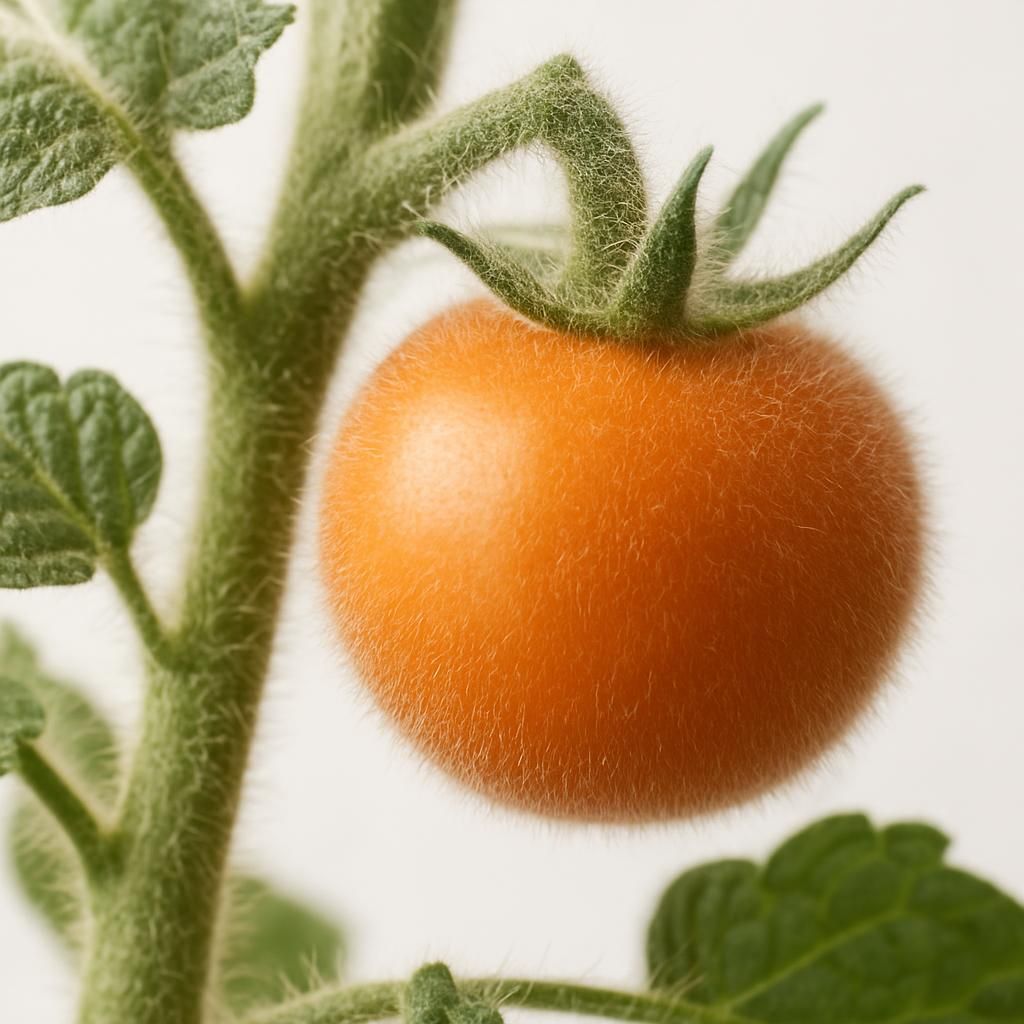
Introduction to Fuzzy Wuzzy Tomato
Fuzzy Wuzzy Tomato stands out among Tomato cultivars for its striking, pubescent foliage and fruit that feels distinctly fuzzy to the touch. Developed through careful selection of wild Solanum traits, the variety combines the productivity of modern tomatoes with the pest-deterrent properties of its hairy ancestors. Gardeners appreciate the deep crimson, slightly flattened fruits that deliver a balanced sweet-acid profile ideal for fresh eating, sauces, and drying.
This comprehensive guide delivers actionable, research-backed recommendations for every phase of the crop cycle. Whether you are scaling up a market garden or perfecting a backyard patch, the following sections provide the depth required to achieve consistent, high-quality harvests.
Botanical Profile of Fuzzy Wuzzy Tomato
Fuzzy Wuzzy Tomato belongs to the Solanaceae family and exhibits an indeterminate growth habit, producing long vines that require sturdy support. The plant develops abundant glandular trichomes on stems, leaves, and fruit surfaces, giving it the signature fuzzy appearance while acting as a natural barrier against certain insects. Fruits typically weigh 4–6 oz, ripen in 75–85 days from transplant, and contain elevated levels of soluble solids that contribute to their complex flavor.
The variety shows moderate resistance to early Early blight but remains susceptible to common tomato pathogens, making cultural practices and timely intervention essential. Flowers are self-pollinating yet benefit from gentle vibration or pollinator activity to ensure full fruit set.
Soil, pH, and Climate Requirements for Fuzzy Wuzzy Tomato
Successful cultivation begins with precise environmental matching. The table below summarizes ideal conditions derived from university extension trials and commercial tomato production data.
| Parameter | Ideal Range | Notes |
|---|---|---|
| Soil Type | Sandy loam to loam | High organic matter improves moisture retention |
| Soil pH | 6.2–6.8 | Avoid below 6.0 to prevent calcium uptake issues |
| Temperature (Day) | 70–85 °F (21–29 °C) | Optimal fruit set occurs within this window |
| Temperature (Night) | 55–65 °F (13–18 °C) | Below 55 °F slows growth and may cause catfacing |
| Frost Tolerance | None | Transplant only after last spring frost |
| Sunlight | Full sun, minimum 8 hours | Supplemental lighting for indoor starts |
| Spacing | 18–24 in between plants, 4–5 ft rows | Indeterminate vines need vertical support |
Step-by-Step Planting & Propagation
Start seeds indoors 6–8 weeks before the expected last frost date. Sow ¼ inch deep in sterile seed-starting mix at 75–80 °F soil temperature. Maintain consistent moisture without waterlogging. Harden off seedlings for 7–10 days before transplanting into prepared beds or containers no smaller than 5 gallons.
Transplant on an overcast afternoon or evening to reduce transplant shock. Bury stems up to the first true leaves to encourage adventitious root development. Immediately install cages, stakes, or trellis systems rated for at least 6 ft of vertical growth. Water thoroughly after planting and apply a 2–3 inch layer of organic mulch to stabilize soil temperature and suppress weeds.
Care & Maintenance regimes for Fuzzy Wuzzy Tomato
Consistent attention to water, fertility, and canopy management prevents the majority of physiological disorders. The following table outlines a practical weekly schedule for a typical temperate growing season.
| Week Range | Watering Schedule | Fertilizer Application | Pruning & Training Actions |
|---|---|---|---|
| Weeks 1–3 (Establishment) | 1–1.5 in per week, keep soil evenly moist | None; rely on pre-plant compost | Remove lower leaves touching soil |
| Weeks 4–6 (Vegetative) | 1.5–2 in per week; morning irrigation | Side-dress with ½ cup balanced organic fertilizer per plant | Suckering: remove shoots below first flower cluster |
| Weeks 7–10 (Flowering/Fruit set) | Deep watering 2–3× weekly; avoid foliage wetting | Apply calcium-rich foliar spray every 10 days | Continue suckering; tie vines every 10–12 in |
| Weeks 11–Harvest | Reduce to 1 in per week as fruit ripens | Light potassium boost at first color break | Remove diseased foliage; maintain airflow |
Monitor leaf color and soil moisture weekly. Adjust schedules according to rainfall and temperature fluctuations.
Pests, Diseases & Organic Management
Fuzzy Wuzzy Tomato’s trichomes provide partial protection, yet vigilance remains necessary. Scout plants twice weekly for Aphids, Spider mites, and Hornworms. Introduce beneficial insects such as lady beetles and lacewings early in the season. For organic control, apply insecticidal soap or neem oil at the first sign of infestation, ensuring thorough coverage of leaf undersides.
Common diseases include Early blight, Late blight, and Septoria leaf spot. Rotate crops on a minimum three-year cycle, remove crop debris promptly, and use copper-based fungicides only when disease pressure exceeds economic thresholds. Drip irrigation and adequate spacing reduce humidity-related issues.
Harvesting, Curing & Optimal Storage
Harvest fruits at the breaker stage (first blush of color) for longest shelf life or allow full vine ripening for peak flavor. Use clean pruners to avoid stem tearing. Place harvested tomatoes in single layers in shallow trays at 55–70 °F with 85–90 % relative humidity. For long-term storage, process into sauce or dry slices at 135 °F until leathery. Never refrigerate ripe fruit, as temperatures below 50 °F degrade flavor and texture.
Companion Planting for Fuzzy Wuzzy Tomato
Strategic pairings enhance biodiversity and reduce pest pressure. Basil planted nearby repels aphids and improves flavor perception. Marigold borders deter nematodes while attracting pollinators. Nasturtium acts as a trap crop for aphids. Avoid planting near Fennel or walnuts, which produce allelopathic compounds that inhibit tomato growth.
Crop rotation with Legumes or Brassicas further builds soil health and breaks disease cycles. Integrating these companions within the same bed maximizes land-use efficiency and supports a resilient small-farm ecosystem.
Tomato cultivation rewards attention to detail. By following the structured schedules, monitoring protocols, and companion strategies outlined above, growers can expect reliable yields of uniquely textured, high-flavor Fuzzy Wuzzy Tomatoes season after season.