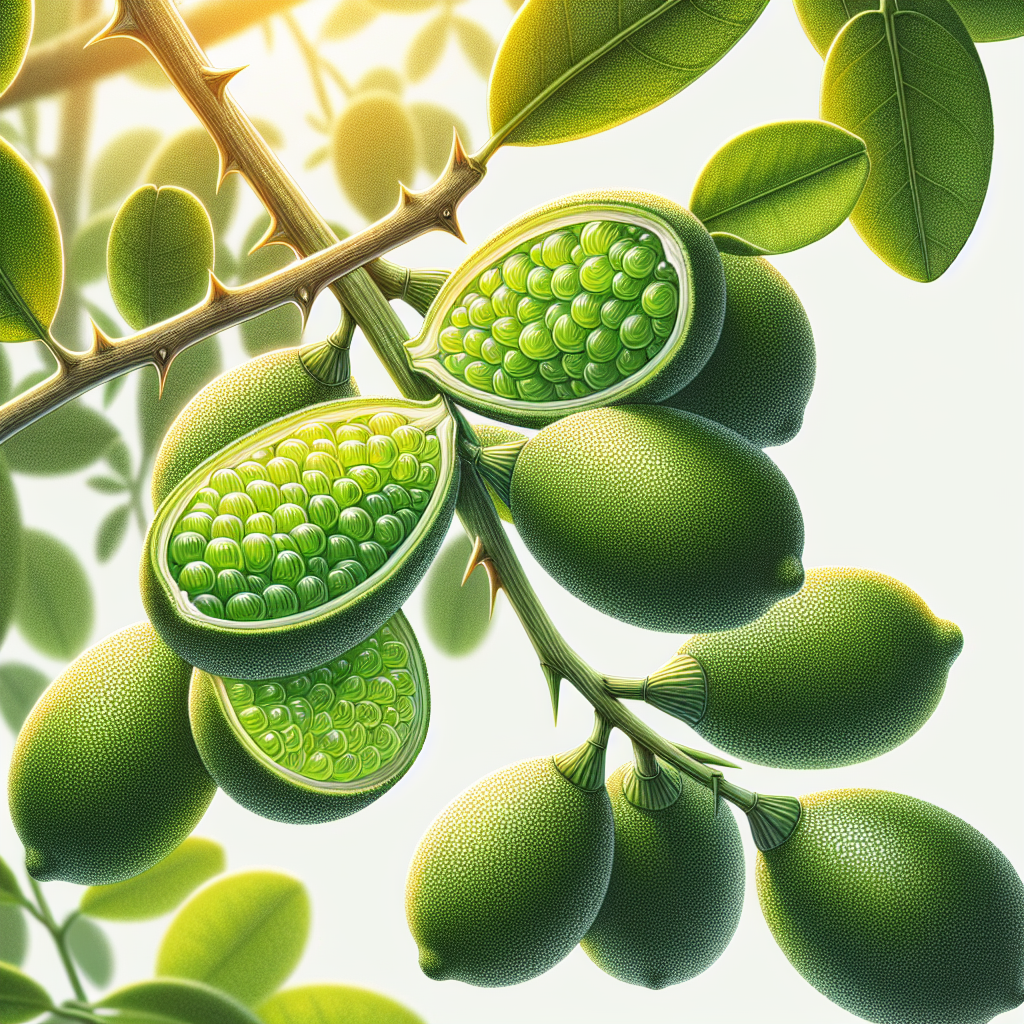
Introduction to Finger Lime (Alstonville)
Finger Lime (Alstonville), known scientifically as Citrus australasica 'Alstonville', stands out as one of the most sought-after gourmet crops in modern agriculture. Originating from the rainforests of Australia, this variety is named after Alstonville, New South Wales, where it was first selected for its exceptional fruit quality. Unlike traditional round limes like the Persian Lime (crop), Finger Lime produces elongated, finger-like fruits filled with vibrant, popping caviar pearls that deliver a burst of intense citrus flavor. These pearls, ranging from lime green to pinkish hues in Alstonville, have earned it the nickname "citrus caviar," commanding premium prices in high-end restaurants and specialty markets.
This deep-dive guide equips professional growers, small farmers, and home gardeners with everything needed to cultivate Finger Lime (Alstonville) successfully. From propagation to harvest, we'll cover optimal conditions, pest management, and yield-boosting techniques. With proper care, trees can produce 20-50 kg of fruit per mature plant annually, making it a profitable niche crop. Its adaptability to containers and subtropical zones expands its appeal beyond native regions. For small farms battling Why 90% of Small Farms Fail at Pest Management - And 8 Organic Fixes That Actually Work, Finger Lime's resilience offers a low-risk entry into premium citrus.
Alstonville excels in flavor intensity and shelf life, with pearls retaining texture for weeks post-harvest. Its thorny branches deter pests naturally, while glossy leaves provide year-round aesthetics. Whether hedging orchards or potting patios, this crop blends productivity with beauty.
Botanical Profile of Finger Lime (Alstonville)
Finger Lime (Alstonville) belongs to the Rutaceae family, genus Citrus australasica, a primitive citrus species distinct from hybrid round citrus. This evergreen shrub or small tree grows 3-6 meters tall in the wild but is often pruned to 2-3 meters in cultivation for easier harvesting. It features dense, thorny branches with lanceolate leaves (5-10 cm long) that emit a strong citrus aroma when crushed. Flowers are small, white, fragrant, and hermaphroditic, blooming in clusters during spring and summer.
Fruits are cylindrical, 6-12 cm long, 1-2 cm diameter, with thin, glossy skin in green, red, or yellow shades—Alstonville prized for its bright green exterior and pearl-like vesicles inside. These pearls are spherical, juicy sacs rich in citric acid, vitamin C (up to 100 mg/100g), and essential oils, offering a unique lime-lemon burst without bitterness. Maturity takes 2-3 years from planting, with peak production at 5-7 years.
Root system is shallow and fibrous, sensitive to waterlogging but drought-tolerant once established. Alstonville is self-fertile but benefits from cross-pollination with other finger lime varieties. It's diploid (2n=18), cold-hardy to -6°C, and phytophthora-resistant compared to commercial citrus. In botanical terms, its primitive traits make it a bridge between wild and domesticated citrus, ideal for breeding programs.
Soil, pH, and Climate Requirements for Finger Lime (Alstonville)
Finger Lime (Alstonville) demands well-draining, slightly acidic soils with pH 5.5-6.5 to prevent nutrient lockout and root issues. Native to sandy loam rainforest soils, it thrives in loamy sand or clay loam amended with 20-30% organic matter like composted pine bark or coco coir for aeration. Avoid heavy clays; raised beds (30-50 cm high) mitigate waterlogging risks. Test soil annually, amending with sulfur for pH adjustment or dolomite lime if below 5.5.
Optimal climate is subtropical USDA zones 9b-11, with temperatures 15-35°C daytime and no prolonged freezes below -4°C. It tolerates light frosts better than true citrus, but protect young plants with frost cloth. Rainfall of 1000-1500 mm/year suits it, supplemented by drip irrigation during dry spells (20-30 L/week per mature tree). High humidity (60-80%) promotes flowering, but excellent drainage prevents Phytophthora (disease). Full sun (6-8 hours) is essential; partial shade reduces yields by 30-50%.
Mulch with 10 cm pine needles or eucalyptus bark to retain moisture, suppress weeds, and acidify soil gradually. In cooler zones, use greenhouses or microclimates near south-facing walls. Salinity tolerance is moderate (EC <2 dS/m); flush soils if irrigated with brackish water.
Step-by-Step Planting & Propagation
Propagation: Seed propagation is unreliable due to variability; use semi-hardwood cuttings (10-15 cm) in summer. Dip basal ends in 3000 ppm IBA rooting hormone, plant in perlite:peat (1:1), mist under poly tunnel at 25-28°C. Roots form in 6-8 weeks, 80% success rate. Grafting onto trifoliate rootstock boosts vigor and cold tolerance; cleft or bud graft in spring.
Site Preparation: Select wind-sheltered spots with full sun. Dig holes 50x50x50 cm, fill with 40% native soil, 40% compost, 20% perlite. Space trees 3-4 m apart for orchards, 1.5 m for hedges.
Planting: Plant in early spring or fall. Soak bare-root stock 24 hours pre-planting. Position graft union 5 cm above soil, backfill firmly, water deeply. Stake young trees against wind. Apply 10-4-10 fertilizer (100 g/tree) post-planting.
Initial Care: Water every 3-4 days for first 3 months, then taper. Mulch immediately. Expect 30-50 cm growth year one.
Care & Maintenance regimes for Finger Lime (Alstonville)
Watering: Deep, infrequent irrigation mimics rainfall—weekly 30 L/mature tree, less in rain. Drought stress enhances flavor but reduces yield; monitor with tensiometer (field capacity -10 kPa).
Fertilization: Balanced NPK 10-4-10 slow-release March and September (200 g/tree/year, increasing 50 g annually). Foliar micronutrients (Fe, Zn, Mn) quarterly prevent deficiencies. Organic option: compost tea + fish emulsion.
Pruning: Annual winter prune to open canopy, remove deadwood, thin crowded branches. Maintain vase shape for light penetration; tip-prune post-harvest for bushiness. Thorns require gloves.
Weed Control: Mulch + shallow cultivation; avoid herbicides near roots.
Pollination: Hand-vibrate flowers if bee activity low; yields double with pollinators.
Pests, Diseases & Organic Management
Common pests include citrus leafminer (pest), aphids (pest), and scale insects (pest). Scout weekly; blast with water jet or apply neem oil (2 ml/L) weekly. Introduce ladybugs for aphids. Mealybugs (pest) controlled with alcohol swabs or insecticidal soap.
Diseases: Watch for root rot (disease) from overwatering—ensure drainage. Phytophthora root rot (disease) managed with phosphite drenches (3 g/L quarterly). Fungal leaf spots rare; copper sprays preventatively.
Organic IPM: Reflective mulches deter leafminers; companion herbs like thyme (crop) repel aphids. Monitor via sticky traps; prune infested tips.
Harvesting, Curing & Optimal Storage
Harvest when fruits fill out and change color (green to yellowish), November-March. Twist-pick or clip with secateurs to avoid skin tears. Yields peak at 50 fruits/tree year 3+. Pearls pop easily from halved fruits; no curing needed.
Store whole fruits at 8-12°C, 90% RH for 4-6 weeks. Pearls refrigerate 2-3 weeks in airtight containers. For markets, cool-chain from tree to shelf prevents desiccation. Process excess into pastes or infusions.
Companion Planting for Finger Lime (Alstonville)
Pair with nitrogen-fixers like clover (crop) for soil health, and pest-repellents such as marigold (crop) against nematodes. Underplant with nasturtium (crop) to trap aphids. Avoid water-hungry crops like watermelon (crop). Why Companion Planting Feels Like Guesswork for Small Farms - And How AI Makes It Foolproof highlights synergies boosting yields 20-30%. Yarrow (crop) attracts beneficials; space 1 m from trunks.