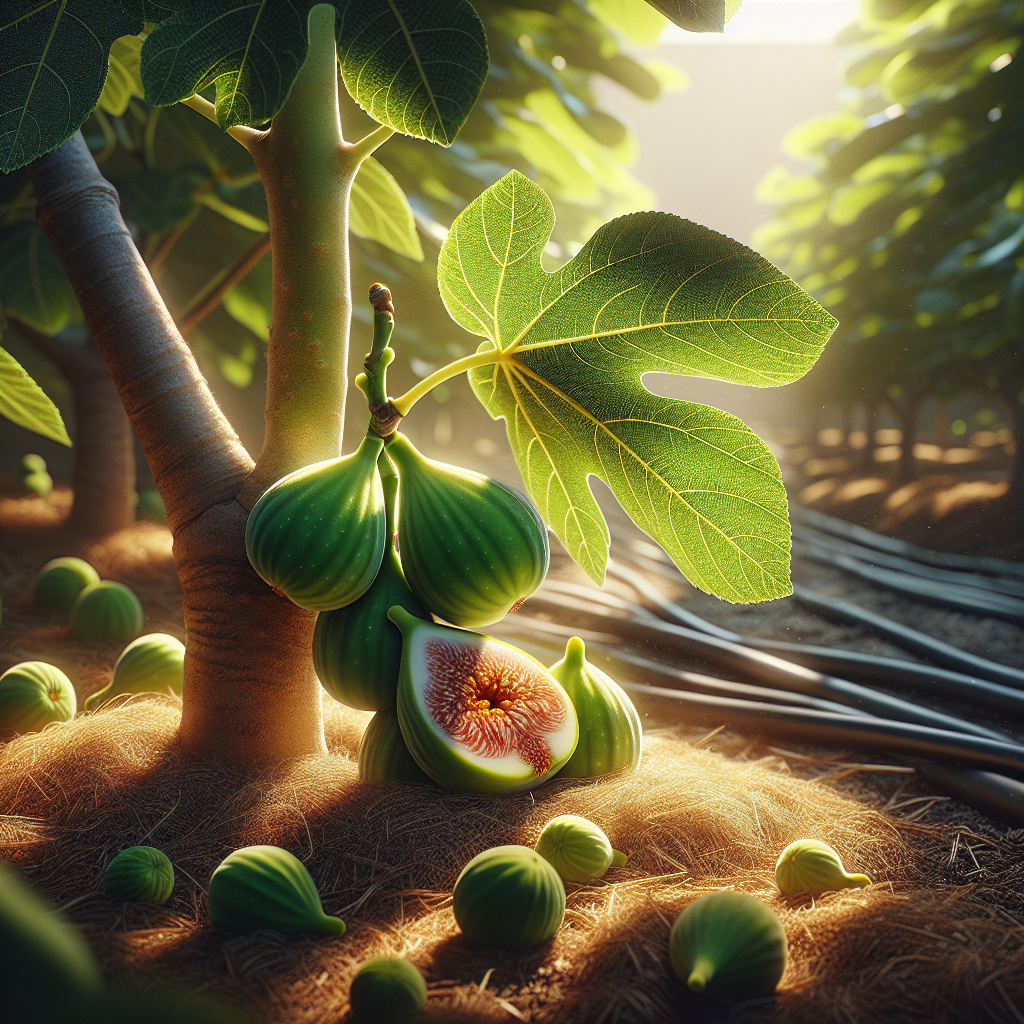
Introduction to Fig (Kadota)
Kadota is one of the best-known light-skinned fig cultivars in commercial and home orchard culture. It is a selection of the common fig, a species domesticated for thousands of years around the Mediterranean basin and later spread through California and other warm temperate regions. Unlike dark-skinned figs grown mainly for rich berry notes, Kadota is prized for its mild honeyed sweetness, thick greenish-yellow skin, and amber to strawberry-tinged pulp depending on maturity and environment. That thicker skin gives it better handling tolerance than many delicate figs, which is one reason it became important for canning, drying, and fresh local sales.
As a common-type fig, Kadota is parthenocarpic in most production settings, meaning it can set edible fruit without pollination. This simplifies management compared with Smyrna-type figs that require fig wasps. In practical terms, growers choose Kadota for reliable crops, adaptability to backyard and small-scale orchard systems, and its ability to bear heavily once established. The tradeoff is that flavor can be disappointing if trees are overirrigated, overfertilized with nitrogen, or harvested too early. Well-grown fruit should feel heavy for its size, soften slightly at the neck, and develop concentrated sugars rather than watery flesh.
Kadota trees are vigorous, broad-crowned, and often highly productive, so orchardists should think ahead about spacing, branch architecture, and netting or sanitation. In hot inland climates, the cultivar excels. In humid climates, fruit quality is more variable because the ostiole and dense interior sugars can attract spoilage organisms. For growers comparing types, see the broader Fig guide. Good orchard floor and biodiversity practices also improve long-term vigor; the soil-building principles in this soil health article are especially relevant for perennial fruit systems.
Botanical Profile of Fig (Kadota)
Kadota belongs to the mulberry family, Moraceae. The species, Ficus carica, is a deciduous subtropical fruit tree with milky latex in stems, leaves, and immature fruit. Leaves are typically large, rough-textured, and 3- to 5-lobed, though leaf shape varies by shoot vigor and age. The visible “fruit” is technically a syconium, a fleshy inverted inflorescence lined internally with many tiny flowers and later seedlike structures.
This cultivar typically produces medium to large fruit with green to yellow-green skin that may remain fairly pale even when fully ripe, making visual harvest cues less obvious than in black or brown figs. The flesh is usually amber, pink-amber, or light strawberry near the center. Skin is relatively thick and less likely to tear during handling, but if irrigation fluctuates sharply during final swell, fruit can still crack. Kadota may produce a breba crop on overwintered wood in some climates, but its main crop on current-season growth is generally more important and more consistent.
Tree habit is moderately vigorous to vigorous, with spreading scaffold branches if left untrained. Mature height can range from 10 to 25 feet depending on root restriction, pruning style, and site. Roots are extensive, opportunistic, and capable of penetrating deeply in well-drained soils, though a large proportion of feeding roots occupy the upper 12 to 24 inches where oxygen and nutrients are best available. This shallow-active rooting zone explains why mulch, irrigation uniformity, and avoidance of cultivation close to the trunk are so important.
Kadota is self-fruitful and does not require a pollinizer. Chill needs are modest compared with pome fruits, but some winter dormancy improves regularity and pruning response. Heat accumulation during the growing season is more decisive than winter chill for fruit sweetness. In cool coastal regions the crop may mature late and remain bland. In hot interior valleys, the same genetics can produce dense, syrupy fruit.
Soil, pH, and Climate Requirements for Fig (Kadota)
Kadota prefers a deep, well-drained loam or sandy loam with moderate water-holding capacity and excellent aeration. It tolerates poorer soils better than many fruit trees, but tolerance should not be confused with optimal performance. In compacted clay with perched water, roots lose oxygen, fine root turnover increases, nutrient uptake becomes erratic, and the tree is more vulnerable to root pathogens and fruit quality problems. Ideal soil depth is at least 3 feet, though trees can survive in shallower ground if irrigation and nutrition are managed precisely.
Target soil pH is 6.0 to 7.5, with best nutrient balance often seen around 6.2 to 6.8. Kadota can tolerate mildly alkaline conditions better than acid-loving fruit crops, but once pH rises above about 7.8, iron and zinc deficiencies become more likely, especially on calcareous soils. Iron chlorosis appears first as yellowing between veins on young leaves while veins remain green. Correct by improving drainage, avoiding excess phosphorus, and using chelated micronutrients where needed rather than blindly adding more nitrogen.
Organic matter in the 3% to 5% range is highly beneficial. Too little organic matter leads to rapid drying and nutrient leaching in sandy sites; too much undecomposed material packed into the planting hole can create settling and poor root-soil contact. Before planting, incorporate well-finished compost across a broad area rather than heavily amending only the hole. A mature perennial orchard floor should gradually build a biologically active topsoil under mulch and cover vegetation.
Climate suitability is best described as Mediterranean to warm temperate: hot, dry summers and cool, relatively mild winters. Optimal growing temperatures for canopy growth are roughly 70 to 90°F (21 to 32°C). Fruit ripening and sugar accumulation are strongest under warm days, low summer rainfall, and good sun exposure. High humidity near harvest increases souring, splitting, and mold risk.
Dormant wood can be injured below about 15°F (-9°C), with severe damage possible lower than that depending on acclimation and duration. Young trees are less cold-hardy than mature ones. Late spring frost can destroy tender new shoots and breba figs. In marginal climates, plant on a south- or southwest-facing slope, avoid low frost pockets, and keep trees somewhat smaller for easier winter protection.
Water demand changes by stage. Newly planted trees need consistently moist but not saturated soil in the root zone. A useful field target is moist soil 6 to 12 inches deep for new trees and 12 to 24 inches deep for bearing trees after irrigation. Soil should feel cool and friable, not sticky and airless. Overwatering signs include persistent lush soft shoots, yellowing lower leaves, little improvement after fertilization, sour-smelling soil, algae or moss around emitters, and bland fruit with diluted sweetness. Underwatering signs include leaf cupping during morning hours, premature fruit drop, tough skin, small fruit, and hard dry soil that does not accept water evenly.
Step-by-Step Planting & Propagation
Choose a site with full sun, ideally 8 or more hours daily. Avoid areas near septic systems, shallow foundations, or old drain lines because fig roots are vigorous and exploratory. If planting more than one tree, space Kadota 15 to 20 feet apart for standard open-grown trees, or 10 to 12 feet if maintaining them by annual pruning in a compact system.
- Test soil and drainage before planting. Dig a hole 18 inches deep and fill with water. If water remains after 24 hours, drainage is inadequate for figs without berming or site modification.
- Plant during dormancy or early spring before active growth. Bare-root and container plants both establish well, but avoid rootbound containers with circling roots.
- Dig a hole only as deep as the root system and 2 to 3 times as wide. Set the tree so the original nursery soil line sits level with or slightly above finished grade.
- Spread roots outward naturally. Cut damaged roots cleanly, but do not excessively prune healthy roots.
- Backfill with native soil. Do not create a heavily amended pocket that discourages roots from moving outward.
- Water thoroughly after planting to settle soil and eliminate air pockets.
- Mulch 2 to 4 inches deep over a broad circle, keeping mulch 4 to 6 inches away from the trunk.
- Head back the young tree if needed to balance root loss and encourage scaffold formation.
For propagation, hardwood cuttings are the simplest and most reliable method. Take pencil-thick dormant cuttings 8 to 12 inches long from healthy one-year wood. Each cutting should have at least 3 nodes. Store cool and slightly moist until rooting, then insert with one or two nodes below media and one above. Use a sterile, free-draining medium such as 50:50 perlite and peat or coco coir. Bottom heat around 70 to 75°F speeds rooting. Maintain moderate moisture; the medium should never be soggy because cuttings rot easily before roots form.
Air layering is also effective for preserving a mature branch genotype and often produces a larger initial plant than cuttings. Grafting is less common for home production because figs root easily on their own, but it can be used for top-working or correcting cultivar mix-ups.
Container culture is possible if root volume is managed and irrigation is precise. Use a large pot, at least 15 to 25 gallons for multi-year performance, with a sharply drained mix. Expect more frequent watering, more controlled pruning, and somewhat smaller crops.
Care & Maintenance regimes for Fig (Kadota)
In the establishment year, irrigate deeply enough to wet the root zone, then allow the upper inch or two of soil to begin drying before watering again. In a loam soil, this may mean once or twice weekly in warm weather; in sandy soil, more frequent irrigation may be needed. The goal is not constant wetness but rhythmic deep moisture with oxygen between cycles. Drip irrigation is ideal because it limits wet foliage and allows precise delivery.
For bearing trees, water management should change through the season. From bud break to early fruit set, maintain even moisture to support shoot growth and leaf area development. During fruit enlargement, avoid severe drought stress, but do not flood the tree with excess irrigation or fruit sugars will dilute. A moderate regulated deficit near final ripening can improve sweetness if the tree is otherwise healthy. In practice, slightly reduce frequency, not to the point of leaf wilt by midmorning. Severe stress causes fruit drop and sunburned leaves.
Fertilization should be restrained. Figs, especially vigorous cultivars like Kadota, often suffer more from overfeeding than underfeeding. Excess nitrogen creates rank vegetative growth, delayed ripening, larger ostioles, softer fruit, and greater susceptibility to splitting and pests. In fertile soils, mature trees may need little annual fertilizer. If growth is weak, apply a modest nitrogen source in late winter or early spring. As a rough guide, young trees may receive 0.25 to 0.5 pound of actual nitrogen split into 2 to 3 applications during the first growing season, while mature trees often need only enough to sustain 12 to 18 inches of annual extension growth. Tissue or soil testing is preferable to routine guesswork.
Pruning strategy depends on climate and training goal. In colder regions, keep the framework low and multi-stemmed so winter-damaged wood can be renewed. In warm orchard systems, an open-center form with 3 to 5 main scaffolds works well. Remove dead, crossing, and inward-growing wood annually during dormancy. Thin dense interior growth enough to admit light and airflow, but avoid severe topping that stimulates watersprouts and delays cropping. Since main-crop figs form on current-season shoots, moderate renewal pruning can maintain productivity.
Summer pinching can improve branch structure in young trees. On mature trees, light summer pruning after harvest may help control size, but heavy cuts can trigger vulnerable late growth. Sanitize tools when removing diseased wood.
Mulching is highly valuable. Wood chips, leaf mold, or composted bark regulate soil temperature, reduce evaporation, and feed soil biology. Keep the trunk flare exposed. Weed competition is most damaging within the first 3 years; maintain a clean mulched ring at least 3 feet wide around each tree.
Fruit thinning is rarely required because figs naturally balance load better than many tree fruits, but extremely heavy sets on small young trees may justify removal of some fruit to preserve shoot growth and future framework.
Bird protection becomes essential as fruit sweetens. Netting is more reliable than scare devices. Harvest sanitation matters too: fallen fruit should be removed promptly so it does not attract ants, yellowjackets, vinegar flies, or rodents.
Pests, Diseases & Organic Management
Kadota is relatively rugged as a tree, but fruit quality can be compromised by several recurring problems. The most common pest issue in warm regions is birds feeding at peak ripeness. Because figs soften and sugar levels rise quickly, damage can escalate in just a few days. Use exclusion netting before the first fruit colors and softens.
ants often exploit split fruit and can protect sap-feeding insects such as scale. Organic ant management includes sanitation, sticky barriers on trunks where appropriate, pruning branches off fences, and reducing nearby nesting sites. yellowjackets and vinegar flies are secondary invaders that follow damaged or overripe fruit, so timely harvest is one of the strongest controls.
nematodes can be serious in sandy soils, causing reduced vigor, sparse canopy, and poor fruit size. Maintaining high organic matter and avoiding stressed sites reduces their impact. Some growers use heavy mulches and compost to support antagonistic soil biology.
scale insects and mealybugs may colonize stems and leaf undersides, especially in dusty or sheltered sites. Dormant oil sprays can suppress overwintering populations if temperatures are suitable and trees are fully dormant. During the season, encourage beneficial insects and avoid unnecessary broad-spectrum insecticides that disrupt natural control.
rust is one of the most recognizable fig diseases, especially in humid climates. It appears as small yellow spots on upper leaf surfaces and rusty brown pustules below, followed by premature leaf drop. Improve airflow, avoid overhead irrigation, remove badly infected fallen leaves, and keep tree vigor balanced. Organic copper products may help when used preventively and within label guidance, but cultural control is the foundation.
fruit souring is a major quality defect rather than a classic single-pathogen disease. It often results from yeasts and bacteria entering through the ostiole, particularly in humid conditions or after insect injury. Fruit may smell fermented, leak, collapse, or contain insect activity. Reduce by harvesting promptly, minimizing skin injury, excluding pests, and favoring dry ripening weather.
root rots are most likely in waterlogged soils. Leaves may yellow, growth stalls, and the tree declines despite wet ground. There is no easy rescue in a persistently saturated site; drainage correction is the real solution. Crown protection from mulch piled against the trunk is also important.
Sunburn can affect suddenly exposed fruit and bark after aggressive pruning. Keep enough canopy to shade scaffolds and paint exposed trunk sections with diluted white interior latex paint if needed in very hot climates.
Harvesting, Curing & Optimal Storage
Kadota fruit should be harvested only when physiologically ripe because figs do not significantly improve in sugar after picking. Unlike some dark cultivars, ripe color is subtle, so use combined indicators: the neck softens, the fruit droops downward, skin becomes slightly less taut, small sugar cracks may appear near the eye, and the fruit yields gently to pressure without feeling mushy. Fully ripe fruit often develops a richer yellow-green cast and may exude a tiny bead of nectar at the ostiole.
Harvest every 1 to 3 days during peak season. Pick in the cool morning after surface moisture has dried. Twist gently or clip with short stems to reduce tearing. Wear gloves if latex irritates your skin. Fruit picked underripe will remain starchy or bland; fruit left too long becomes vulnerable to souring, insects, and splitting.
For fresh market handling, place fruit in shallow single layers. Kadota stores slightly better than thinner-skinned figs, but it is still highly perishable. At room temperature, quality may hold only 1 to 2 days. Under refrigeration at 32 to 35°F (0 to 2°C) and high relative humidity around 85% to 90%, expect roughly 5 to 7 days of acceptable quality, sometimes slightly longer if fruit is very sound. Do not wash until just before use.
For drying, choose fully ripe but not fermented fruit. Split if desired for faster drying. Use dehydrator or warm dry-air curing until leathery but still pliable; final moisture should be low enough to prevent mold yet not so low that the fruit becomes brittle. Conditioning dried figs in jars for several days, shaking daily, helps equalize residual moisture. If condensation appears, dry further.
Kadota is especially valued for preserves, jams, and canning because its thick skin and mild flavor hold texture well. Freeze whole or halved fruit on trays before packing if long-term storage is preferred. For best flavor, process within hours of harvest.
Companion Planting for Fig (Kadota)
Companion planting around figs should be guided less by folklore and more by orchard floor function. The best companions suppress weeds, attract beneficial insects, protect soil, and avoid aggressive root competition directly at the trunk. Keep a competition-free mulch ring close to the tree, then establish beneficial companions beyond that inner zone.
Thyme is excellent along the sunny orchard edge. It forms a low aromatic mat, tolerates dry conditions once established, and supports pollinators and beneficial insects without creating heavy competition. Clover works well in alleys or outer drip-line zones as a living mulch and nitrogen-contributing cover, though it should be mowed or managed so it does not create excessive humidity against the trunk. Yarrow is a strong insectary plant that attracts predatory wasps, hoverflies, and other beneficials while tolerating lean soils. Nasturtium can serve as a sacrificial attractant for aphids in mixed gardens and provides quick seasonal groundcover, though it is less drought-tolerant than the others.
Avoid planting thirsty annual vegetables immediately under the canopy because they compete for shallow feeder roots and complicate irrigation scheduling. Also avoid tall, dense companions that shade the trunk zone or trap humidity in humid climates. The best fig companion scheme is usually zoned: mulch near the trunk, low-growing beneficials beyond, and mowed cover crops in drive rows or alleys.