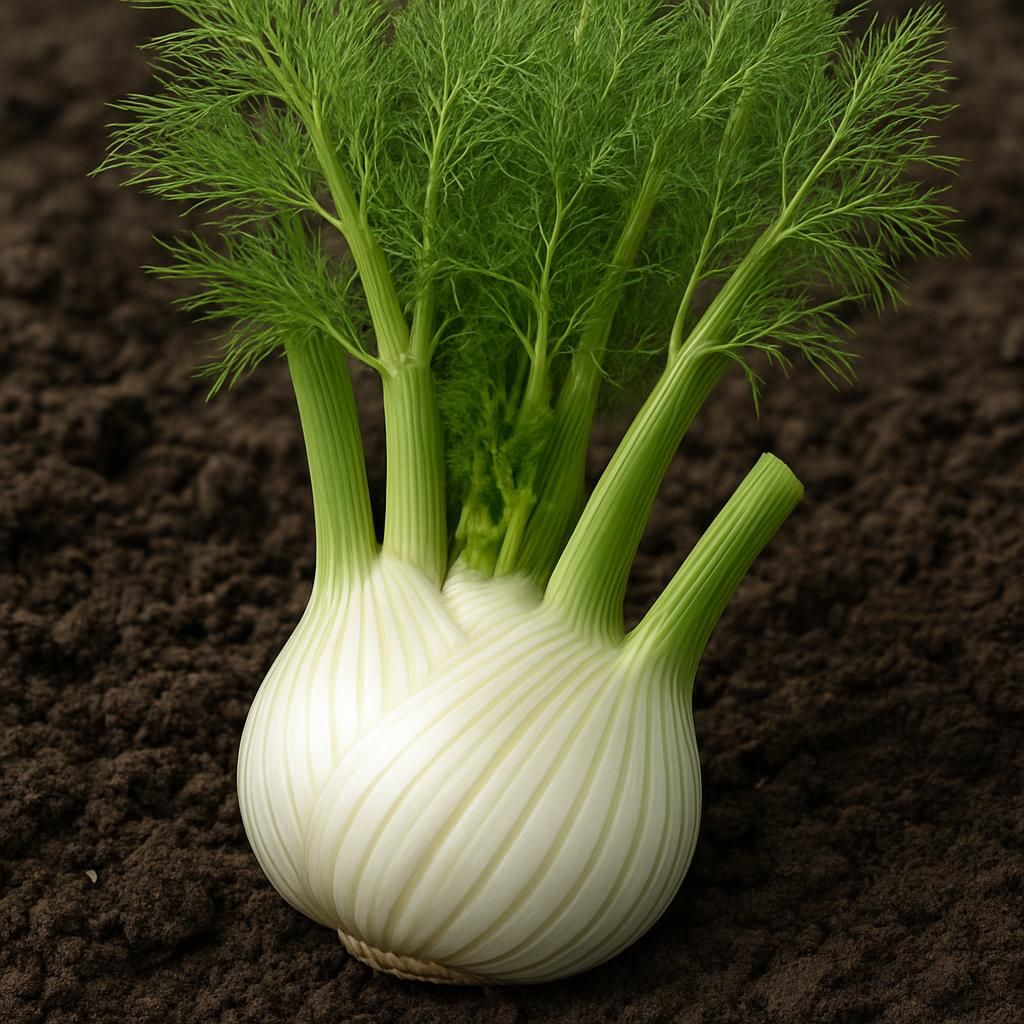
Introduction to Fennel (Florence - Zefa Fino)
Florence fennel 'Zefa Fino' is a refined selection of the bulb-forming fennel that has gained popularity among market gardeners and home growers for its reliable performance and mild, sweet flavor. Unlike herb fennel, this variety produces a tender, edible base that is harvested when swollen and crisp. 'Zefa Fino' is particularly valued for its early maturity, typically ready in 75–85 days, and its resistance to premature bolting under fluctuating spring temperatures.
The crop originated from selections made in northern Europe and has been improved for uniformity and market quality. Growers appreciate the variety's ability to form dense, rounded bulbs with minimal internal voiding. The feathery fronds are also edible and can be used as a fresh herb or garnish, providing an additional harvest stream from the same planting.
In commercial production, 'Zefa Fino' is favored for its compact growth habit that allows higher planting densities. The bulbs store well after harvest, maintaining crispness for up to three weeks under proper refrigeration. This combination of earliness, flavor, and post-harvest performance makes it an excellent choice for both direct-to-consumer sales and restaurant supply.
Botanical Profile of Fennel (Florence - Zefa Fino)
Florence fennel belongs to the Apiaceae family and is botanically classified as Foeniculum vulgare var. azoricum. The 'Zefa Fino' cultivar is an improved selection known for its compact stature, reaching 18–24 inches in height at maturity. The plant develops a swollen basal stem that forms the edible bulb, composed of tightly overlapping leaf bases.
The foliage consists of finely dissected, feathery leaves that are blue-green in color and aromatic when crushed. The plant produces umbels of small yellow flowers if allowed to bolt, though 'Zefa Fino' has been bred to delay flowering under long-day conditions. The root system is fibrous and relatively shallow, making the crop sensitive to moisture fluctuations.
Physiologically, fennel is a biennial that is grown as an annual for bulb production. The bulb enlargement is triggered by cool temperatures and adequate soil moisture. 'Zefa Fino' exhibits strong uniformity in bulb shape and size, reducing culling rates during harvest. The plant's essential oil profile includes anethole, which gives the characteristic licorice aroma and flavor.
Soil, pH, and Climate Requirements for Fennel (Florence - Zefa Fino)
Florence fennel performs best in well-drained, fertile soils with consistent moisture. The crop is sensitive to both waterlogging and drought stress, which can cause cracking or internal voids in the bulb. A slightly alkaline to neutral soil pH supports optimal nutrient uptake and reduces the risk of tip burn.
| Parameter | Ideal Range | Notes |
|---|---|---|
| Soil Type | Loamy to sandy loam | Good drainage essential; avoid heavy clays |
| Soil pH | 6.5 – 7.5 | Slightly alkaline preferred |
| Temperature (Day) | 15–21 °C (59–70 °F) | Cool conditions promote bulb formation |
| Temperature (Night) | 7–12 °C (45–54 °F) | Prevents bolting |
| Frost Tolerance | Light frost (-2 °C) | Seedlings tolerate light frost |
| Spacing | 20–30 cm between plants | Rows 45–60 cm apart |
| Sun Exposure | Full sun (6+ hours) | Partial shade reduces bulb size |
The crop thrives in temperate climates with cool springs and autumns. High temperatures above 25 °C during bulb development can induce bolting and produce fibrous, bitter bulbs. In regions with hot summers, succession planting in late summer for autumn harvest is recommended. Raised beds improve drainage in heavy soils and help maintain consistent soil temperature.
Step-by-Step Planting & Propagation
- Start seeds indoors 4–6 weeks before the last expected spring frost or direct sow when soil temperatures reach 10 °C. Use cell trays with a sterile seed-starting mix to prevent damping-off.
- Sow seeds 6 mm deep and maintain soil moisture at field capacity. Germination occurs in 7–14 days at 15–20 °C.
- Harden off seedlings for 7–10 days before transplanting. Choose a cloudy day or late afternoon to reduce transplant shock.
- Transplant seedlings at the 3–4 true leaf stage, spacing plants 20–30 cm apart in rows 45–60 cm wide. Firm soil gently around roots.
- For direct seeding, sow in shallow furrows and thin to final spacing when seedlings reach 5–7 cm tall. Retain the strongest seedlings during thinning.
- Mulch lightly with straw or shredded leaves after planting to conserve moisture and suppress weeds. Avoid covering the growing point.
- Successive plantings every 2–3 weeks extend the harvest window through autumn.
Care & Maintenance regimes for Fennel (Florence - Zefa Fino)
Consistent moisture is critical for bulb quality. Irrigate to maintain even soil moisture, especially during the final four weeks before harvest. Over-fertilization with nitrogen can produce excessive foliage at the expense of bulb development.
| Growth Stage | Watering Schedule | Fertilizer Application | Pruning/Maintenance |
|---|---|---|---|
| Seedling (0–3 wks) | Light daily misting or 5 mm/day | None; use starter fertilizer at transplant | Remove weeds; thin to final spacing |
| Vegetative (3–6 wks) | 15–20 mm/week; keep soil moist | Side-dress with balanced NPK (10-10-10) at 3 weeks | Remove lower yellow leaves |
| Bulb Swelling (6–10 wks) | 20–25 mm/week; avoid fluctuations | Light potassium boost (0-0-10) at 6 weeks | Hill soil around base for blanching |
| Pre-Harvest (10+ wks) | Maintain moisture; reduce 3 days before harvest | Stop nitrogen applications | Remove competing weeds |
Monitor for signs of nutrient deficiency, particularly magnesium, which manifests as interveinal chlorosis. Foliar sprays of Epsom salt can correct deficiencies quickly. Maintain weed-free rows to reduce competition for water and nutrients.
Pests, Diseases & Organic Management
Common pests of Florence fennel include aphids, slugs and snails, and cutworms. Aphids cluster on new growth and can transmit viruses; control with insecticidal soap or neem oil. Slugs are attracted to moist conditions around the bulb base and can be managed with beer traps or iron phosphate baits.
Diseases include powdery mildew, botrytis, and root rot. Powdery mildew appears as white powdery growth on leaves during warm, dry periods; improve air circulation and apply sulfur-based fungicides. Botrytis can cause gray mold on bulbs in cool, wet weather; remove infected tissue and avoid overhead irrigation. Root rot is prevented by ensuring good drainage and avoiding overwatering.
Organic management emphasizes prevention through crop rotation, resistant varieties, and beneficial insect habitat. Introduce lacewings and lady beetles to suppress aphid populations. Row covers protect young plants from cutworm damage. Regular scouting allows early intervention before populations reach damaging levels.
Harvesting, Curing & Optimal Storage
Harvest 'Zefa Fino' when bulbs reach 7–10 cm in diameter and feel firm. Cut the plant at soil level with a sharp knife, leaving a small portion of the root intact. Remove outer damaged leaves and trim long stalks, leaving 2–3 cm of foliage.
Curing is minimal; allow harvested bulbs to air-dry for 1–2 hours in shade to reduce surface moisture. For storage, place bulbs in perforated plastic bags in the refrigerator at 0–2 °C with 90–95% humidity. Bulbs maintain quality for 2–3 weeks under these conditions.
For longer storage, blanch and freeze or pickle the bulbs. The feathery fronds can be dried or frozen separately for culinary use. Avoid storing near ethylene-producing fruits, which can accelerate senescence.
Companion Planting for Fennel (Florence - Zefa Fino)
Florence fennel is generally considered a poor companion due to its allelopathic properties that can inhibit growth of nearby plants. However, it pairs well with dill when grown at a distance and can benefit from proximity to marigold for pest deterrence. Avoid planting near tomato, beans, or kohlrabi.
Fennel attracts beneficial insects such as parasitic wasps and hoverflies when allowed to flower. Interplanting with nasturtium can help repel aphids. In mixed vegetable systems, position fennel at the edges of beds to minimize competition with sensitive crops.