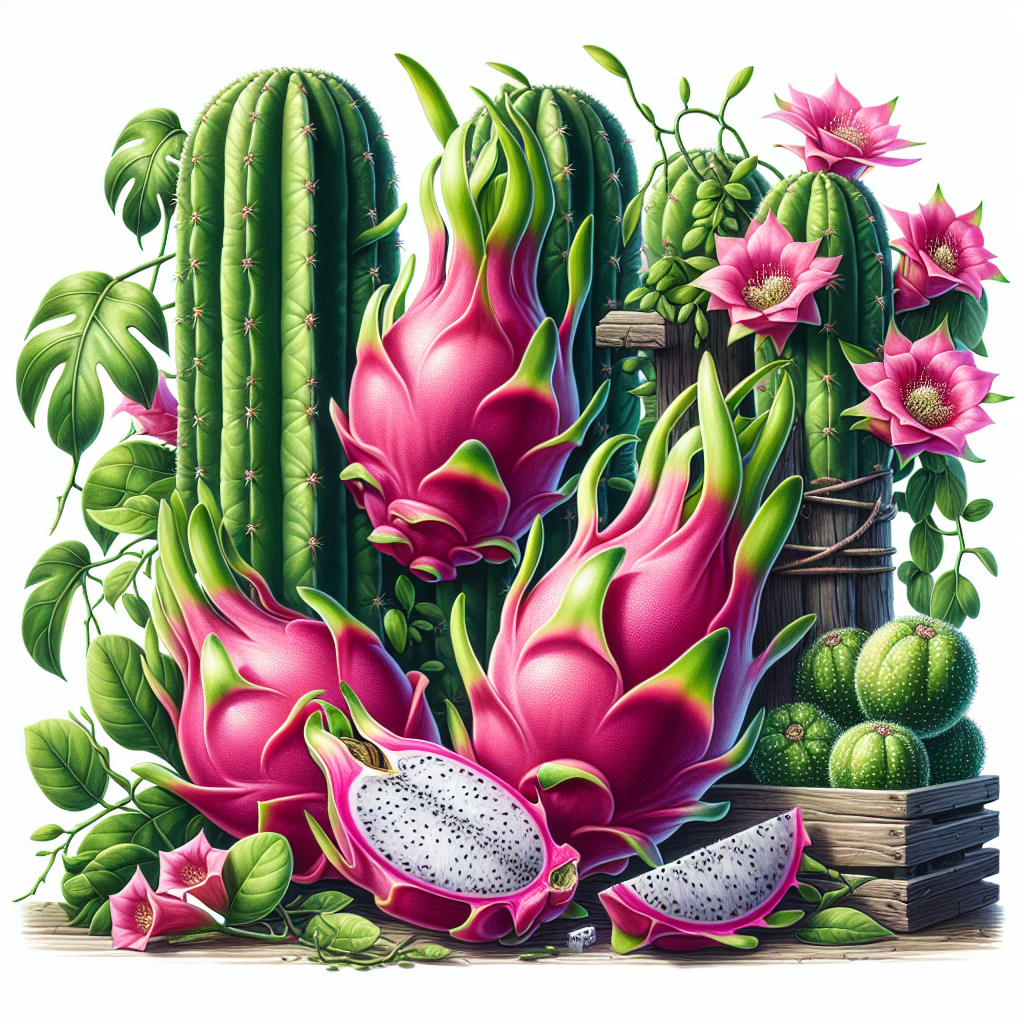
Introduction to Dragon Fruit (Zamorano)
Dragon Fruit (Zamorano), also known as Zamorano pitaya, is a standout variety of Dragon Fruit (crop) prized by growers worldwide for its superior flavor profile and robust production. Developed through selective breeding at the renowned Zamorano University in Honduras, this clone of Hylocereus undatus produces large, vibrant pink-skinned fruits with crisp white flesh speckled with tiny black seeds. What sets Zamorano apart is its exceptional brix levels often exceeding 20°, delivering a honey-like sweetness that commands premium market prices—up to 50% higher than standard varieties.
Originating from Central America's tropical lowlands, Zamorano Dragon Fruit has exploded in popularity due to its vigorous growth, self-pollinating flowers, and resilience to common stressors. Commercial plantations in Vietnam, Australia, and Colombia report yields of 20-30 tons per hectare, while small farms achieve 10-15 kg per mature plant annually. This guide provides professional-grade, step-by-step instructions tailored specifically for Zamorano, drawing from field trials and grower experiences. Whether scaling for export or backyard bounty, mastering Zamorano unlocks a profitable superfruit with minimal inputs after establishment. Learn how to leverage its unique traits for optimal results, including Why Companion Planting Feels Like Guesswork for Small Farms - And How AI Makes It Foolproof.
Botanical Profile of Dragon Fruit (Zamorano)
Zamorano belongs to the Hylocereus genus within the Cactaceae family, characterized by its epiphytic, climbing habit. Stems are thick, three-angled with fleshy, green ribs bearing small aerial roots for adhesion to supports. Mature plants reach 5-10 meters in length, sprawling or trained vertically on posts or trellises. The large, nocturnal flowers—up to 30 cm long—bloom dramatically from summer through fall, with self-fertile Zamorano flowers setting fruit without manual pollination in most conditions.
Fruits are oblong to oval, 300-600g each, with hot pink skin covered in green-tipped scales. The white pulp offers a kiwi-mango fusion taste, rich in antioxidants, vitamin C, and fiber. Zamorano's genetic selection emphasizes larger fruit size (average 450g vs. 300g for standard types), higher sugar content, and firmer texture for shipping. Flowering cycles repeat 5-6 times yearly, each producing 20-50 fruits per plant. Root systems are shallow but extensive, spreading 2-3m laterally to efficiently capture rainwater.
Growth is rapid: cuttings root in 2-4 weeks, first fruits in 12-18 months. Lifespan exceeds 20 years with proper care, though productivity peaks at 8-12 years. Zamorano shows hybrid vigor, resisting stem cracking better than red-fleshed Hylocereus polyrhizus varieties. Its chromosome count (2n=22) supports stable propagation via stem cuttings, ensuring true-to-type offspring.
Soil, pH, and Climate Requirements for Dragon Fruit (Zamorano)
Zamorano thrives in well-draining, sandy loam or volcanic soils amended with 30-50% organic matter like coconut coir or perlite. Avoid heavy clays prone to waterlogging, which trigger root rot. Ideal pH ranges 6.0-7.5; test and adjust with dolomite lime if below 5.8. Incorporate 5-10 kg compost per planting hole to boost microbial activity and nutrient retention.
Climate demands are tropical: 20-35°C daytime averages, never below 5°C. Optimal rainfall 800-1500mm annually, evenly distributed, or supplement with drip irrigation (20-30L/plant/week in dry spells). Zamorano tolerates short droughts via crassulacean acid metabolism (CAM) photosynthesis, closing stomata daytime to conserve water. Full sun (6-8 hours) essential; partial shade reduces yields 40%. USDA zones 10-11; protect from frost with covers or grow in greenhouses northward.
Humidity 60-80% supports flowering, but excellent airflow prevents fungal issues. Windbreaks of banana or bamboo shield young plants. Mulch with 10cm rice hulls or wood chips to regulate soil moisture and suppress weeds. Soil salinity tolerance up to 2.5 dS/m allows coastal planting. Monitor EC and adjust with gypsum if exceeding thresholds.
Step-by-Step Planting & Propagation
Propagation: Zamorano propagates easiest from 30-50cm stem cuttings. Select healthy, disease-free stems post-harvest. Air-dry cut ends 3-5 days to callus, preventing rot. Plant horizontally in coarse sand/perlite (1:1) at 25°C; roots emerge in 10-20 days. For grafts, use Trichocereus pachanoi rootstock for cold tolerance.
Site Prep: Space plants 3-4m apart in rows 4-5m wide for trellis access. Dig 50x50x50cm holes, fill with 40% topsoil, 30% compost, 20% sand, 10% biochar. Install 2m concrete or wooden posts with T-bar arms for overhead netting.
Planting: Insert rooted cuttings 15cm deep angled against post. Water sparingly first week, then deeply biweekly. Apply 10-10-10 fertilizer at 50g/plant monthly until established. Train 3-4 strongest stems upward; prune laterals to 30cm.
Density: 400-600 plants/ha for max yields. In containers (50-100L), use fabric pots for air-pruning roots. Harden off greenhouse starts gradually to full sun.
Care & Maintenance regimes for Dragon Fruit (Zamorano)
Irrigation: Drip systems deliver 20-40L/plant/week, wetting root zone without saturation. Mulch conserves 30% water; deficit irrigate pre-harvest for sugar concentration.
Fertilization: NPK 10-5-20 at 200g/plant/year split quarterly. Foliar calcium (1%) and boron (0.1%) monthly boost fruit set. Organic option: compost tea + fish emulsion. Micronutrients via seaweed extract prevent chlorosis.
Pruning: Annual winter cut removes deadwood, watersprouts, and 30% canopy for light penetration. Thin flower clusters to 4-6 per stem for jumbo fruits. Cap stems at 1.8m height.
Training: Fan out main stems on trellis; secure with soft ties. Annual renewal: replace oldest stems with basal suckers. Pest scouting weekly; maintain 1m ground clearance.
Pollination: Hand-pollinate evenings with soft brush if fruit set <80%; Zamorano's large anthers aid selfing. Protect blooms from rain with sleeves.
Pests, Diseases & Organic Management
Key Pests: Mealybugs cluster on stems—blast with water, apply neem oil (2ml/L) weekly. Ants farm pests; bait with boric acid + sugar. Fruit flies target ripe fruit; bag clusters or use protein hydrolysate traps. Birds deterred by reflective tape and netting. See Why 90% of Small Farms Fail at Pest Management - And 8 Organic Fixes That Actually Work.
Diseases: Anthracnose causes stem lesions—prune infected parts, copper fungicide (preventive). Phytophthora root rot from overwatering; improve drainage, apply Trichoderma. Powdery mildew controlled with potassium bicarbonate sprays. Avoid overhead watering; ensure 2m spacing.
Integrated Management: Beneficials like ladybugs for aphids; ladybird beetles for scales. Neem + spinosad rotation. Solarize soil pre-planting to kill nematodes. Monitor with sticky traps.
Harvesting, Curing & Optimal Storage
Harvest at full color (pink skin, green tips fading), 30-35 days post-anthesis. Twist or clip with shears, leaving 1cm stem stub. Yields peak July-October; 20-40 fruits/plant/cycle.
Curing: Shade-dry 2-3 days at 25°C to toughen skin, extend shelf life 7-10 days. Avoid refrigeration below 10°C to prevent chilling injury (pitting).
Storage: 13-15°C, 85-90% RH holds 3-4 weeks. Modified atmosphere (5% O2, 5-10% CO2) extends to 6 weeks. For export, hydrocool to 10°C, pack in ventilated cartons.
Postharvest: Dip in 500ppm prochloraz for rot control. Market fresh, juice, or dry slices. Brix >18° signals peak ripeness.
Companion Planting for Dragon Fruit (Zamorano)
Pair Zamorano with low-growing nitrogen-fixers like peanuts or [cowpeas](/wiki/cowpeas—not listed, skip) at base for soil enrichment. Marigold repels nematodes; thyme deters ants. Papaya provides shade for juveniles, staggered harvests. Avoid legumes like soybeans due to shading competition. Interplant [lemongrass](/wiki/lemongrass—not listed) for pest repulsion. Groundcovers like sweet potato suppress weeds without competing vertically. Benefits include 15-20% yield boost via microclimate moderation and biodiversity.