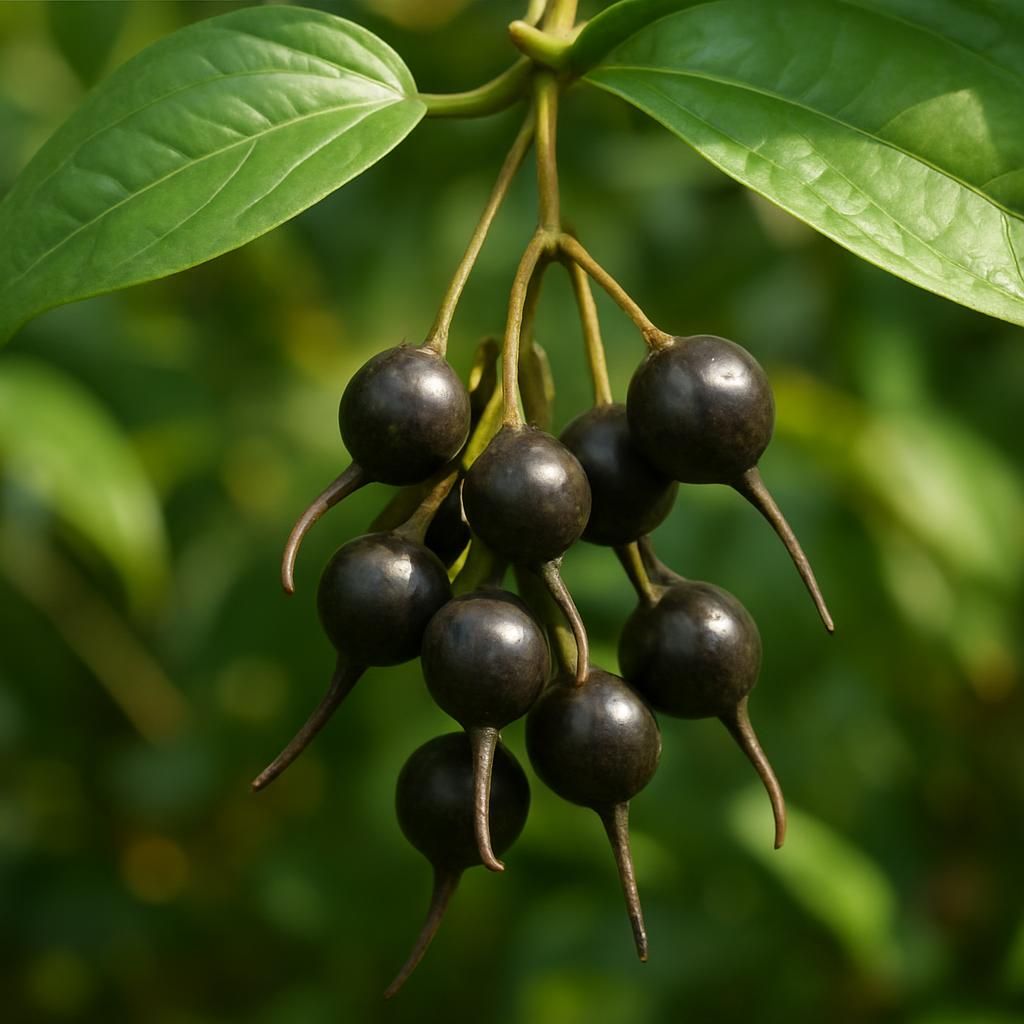
Introduction to Cubeb Pepper (Piper cubeba)
Cubeb pepper (Piper cubeba), also known as tailed pepper or Java pepper, is a woody perennial vine native to Indonesia and parts of tropical Asia. The plant produces small, round berries with a distinctive tail-like stem that are harvested, dried, and used as a pungent spice with notes of allspice, black pepper, and camphor. Cubeb pepper has been traded for centuries and remains important in both culinary applications and herbal traditions.
Today, commercial production is concentrated in Indonesia, with smaller plantings in India, Malaysia, and parts of East Africa. Home gardeners in USDA zones 10–12 or those with heated greenhouses can successfully grow cubeb pepper as an attractive climbing vine that also yields a unique spice. This guide provides professional, practical advice for establishing and maintaining healthy cubeb pepper vines.
Botanical Profile of Cubeb Pepper (Piper cubeba)
Cubeb pepper belongs to the Piperaceae family, the same family as Black Pepper. The vine produces heart-shaped, alternate leaves 8–15 cm long with prominent veins and a glossy surface. Stems are flexible and can climb 4–6 meters when supported by trellises or host trees. The plant is dioecious, with separate male and female vines; only female plants produce the characteristic berries.
Flowers are small, yellowish-green spikes that appear in the axils of leaves. Female spikes develop into clusters of 20–40 berries, each 4–6 mm in diameter with a persistent style that forms the "tail." Berries turn from green to reddish-brown when ripe. The plant’s root system is shallow and fibrous, making it sensitive to soil compaction and waterlogging.
Soil, pH, and Climate Requirements for Cubeb Pepper (Piper cubeba)
Cubeb pepper thrives in warm, humid tropical conditions with consistent moisture and filtered sunlight. It performs best when daytime temperatures remain between 24–32 °C and nighttime temperatures do not drop below 18 °C. High relative humidity (70–90 %) supports vigorous growth and berry development.
The vine prefers deep, well-drained loamy soils rich in organic matter. Heavy clay or waterlogged soils cause root rot, while very sandy soils require frequent irrigation and organic amendments. A slightly acidic to neutral pH range is ideal.
| Parameter | Ideal Range | Notes |
|---|---|---|
| Soil Type | Loamy, well-drained | Add compost or aged manure to improve structure |
| Soil pH | 5.5–6.8 | Test annually; lime only if below 5.5 |
| Temperature (Day) | 24–32 °C | Protect from frost; use shade cloth above 35 °C |
| Temperature (Night) | 18–24 °C | Minimum 15 °C for sustained growth |
| Relative Humidity | 70–90 % | Mist or use evaporative cooling in dry climates |
| Annual Rainfall | 1500–3000 mm | Even distribution preferred; supplement in dry seasons |
| Light | Partial shade (30–50 %) | Morning sun, afternoon shade ideal |
| Elevation | 0–800 m | Higher elevations slow growth |
Step-by-Step Planting & Propagation
Cubeb pepper is most reliably propagated from semi-hardwood cuttings taken from healthy female vines. Select 15–20 cm cuttings with 3–4 nodes in early spring. Remove lower leaves, dip the basal end in rooting hormone, and plant in a well-draining mix of perlite and coco coir. Maintain high humidity under a propagation dome or plastic bag until roots form in 4–6 weeks.
Once rooted, transplant cuttings into 15 cm pots and grow on until they reach 30–40 cm. Prepare the permanent site by installing sturdy trellises or training the vines onto shade trees such as Gliricidia. Dig planting holes 60 cm wide and 60 cm deep, spacing vines 2.5–3 m apart in rows 3 m apart. Incorporate 5–10 kg of well-rotted compost per hole. Plant at the same depth as the nursery container and water thoroughly.
Seed propagation is possible but slower and genetically variable. Fresh seeds should be soaked 24 hours, sown in sterile medium, and kept at 28 °C. Germination occurs in 3–5 weeks, but seedlings require 2–3 years to reach productive size.
Care & Maintenance regimes for Cubeb Pepper (Piper cubeba)
Consistent moisture, balanced nutrition, and regular pruning are essential for high berry yields. Mulch with 10 cm of organic material to conserve moisture and suppress weeds. Train the main stem vertically and pinch lateral shoots to encourage branching at 1–1.5 m height.
| Season | Watering Schedule | Fertilizer Application | Pruning Activity |
|---|---|---|---|
| Establishment (Year 1) | 2–3 times weekly, 10–15 L per vine | 10-10-10 NPK at 50 g/vine monthly; increase to 100 g by month 6 | Remove weak shoots; train to single leader |
| Vegetative Growth | Deep watering every 4–5 days | 15-15-15 NPK 150 g/vine every 8 weeks; add 2 kg compost quarterly | Tip prune laterals at 60 cm; remove diseased wood |
| Flowering & Fruiting | Maintain even moisture; avoid water stress | 12-12-17+2Mg 200 g/vine at flowering; repeat 6 weeks later | Light thinning of dense canopy for airflow |
| Post-Harvest | Reduce to 1–2 times weekly | 10-5-20 NPK 100 g/vine to support recovery | Remove spent fruiting spurs; shape vine |
Monitor leaf color and growth rate to adjust feeding. Yellowing older leaves often indicate nitrogen deficiency, while marginal burn may signal potassium shortage.
Pests, Diseases & Organic Management
Cubeb pepper is susceptible to several common tropical pests and diseases. Regular scouting and cultural controls are the first line of defense.
Common pests include Aphids, Mealybugs, and Spider Mites. These sap-sucking insects cause leaf curling and reduced vigor. Control with strong water sprays followed by neem oil or insecticidal soap applications every 7–10 days. Scale insects may colonize stems; prune heavily infested sections and apply horticultural oil.
Fungal diseases such as Phytophthora root rot and Fusarium wilt thrive in poorly drained soils. Prevent by ensuring excellent drainage and avoiding overwatering. Powdery mildew can appear in humid but poorly ventilated canopies; improve airflow through selective pruning. Root-knot nematodes may attack roots in sandy soils; rotate with nematode-suppressive cover crops such as Marigold and incorporate organic matter.
Harvesting, Curing & Optimal Storage
Berries are ready for harvest when they turn from green to reddish-brown and the tail begins to dry, typically 6–8 months after flowering. Harvest entire spikes by hand to avoid damaging the vine. Spread berries in a single layer on clean mats under partial shade for 3–5 days until moisture content drops to approximately 12 %.
Curing involves a light fermentation step: place partially dried berries in sealed containers for 24–48 hours to develop aroma, then finish drying in the sun or a dehydrator at 40 °C until brittle. Store cured cubeb pepper in airtight glass or food-grade plastic containers in a cool, dark place. Properly cured and stored berries retain flavor and pungency for 18–24 months.
Companion Planting for Cubeb Pepper (Piper cubeba)
Cubeb pepper benefits from strategic companion planting that improves soil fertility, provides shade, and repels pests. Nitrogen-fixing trees such as Gliricidia and Pigeon pea supply organic nitrogen while offering light dappled shade. Aromatic herbs including Thai Basil and Rosemary deter aphids and mealybugs when planted at the base of trellises.
Low-growing legumes such as Clover or Hairy vetch act as living mulch, reducing soil temperature and conserving moisture. Avoid planting heavy feeders such as Corn or Tomato nearby, as they compete for nutrients. Marigolds and nasturtiums provide additional pest-repellent properties and attract beneficial insects that help keep spider mite populations in check.