Introduction to Common asparagus beetle
The common asparagus beetle, scientifically known as Crioceris asparagi, is one of the most notorious pests targeting Asparagus (crop) crops worldwide. Native to Europe but now widespread in North America, this beetle poses a significant threat to both commercial asparagus fields and home gardens. Adults emerge in spring, feeding on tender spears and foliage, while their larvae cause the most extensive damage by skeletonizing leaves. A single infestation can reduce yields by up to 50% if left unchecked, making early detection and intervention critical.
This guide provides professional-grade diagnostic tools, lifecycle insights, and proven organic management strategies. Asparagus is a perennial crop harvested for 15-20 years, so long-term pest control is essential to maintain productivity. Understanding the beetle's behavior allows growers to implement targeted controls that minimize chemical use and preserve beneficial insects. For more on related threats, see the Spotted asparagus beetle (pest).
Identifying Symptoms & Damage
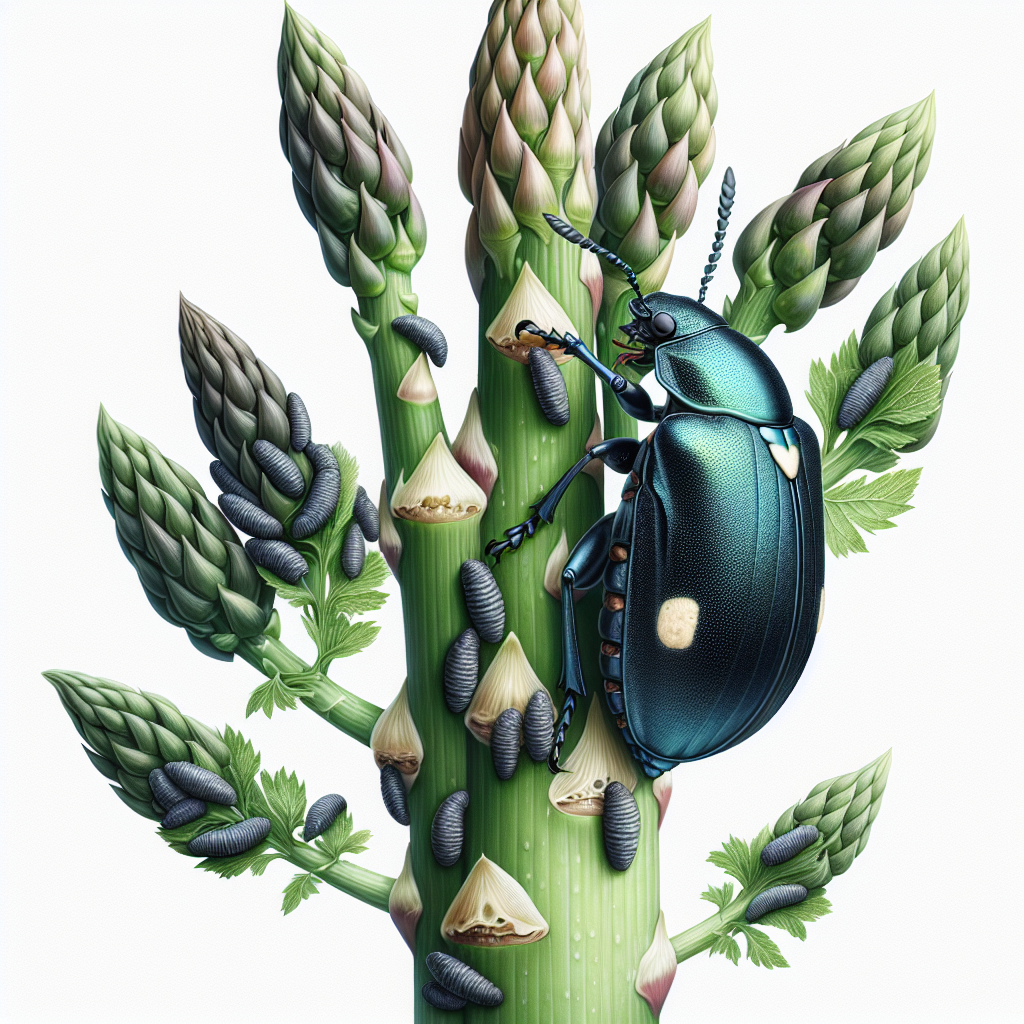
Recognizing common asparagus beetle damage early is key to preventing economic losses. Adult beetles, about 6-8 mm long, are shiny blue-black with three cream spots on each wing cover and reddish legs and antennae. They chew irregular notches in emerging spears, rendering them unmarketable. Look for clusters of 10-30 dark gray eggs laid in rows on spears or leaves—these hatch in 7-10 days.
Larvae are the primary culprits: 6-12 mm long, grayish with a black head and humped appearance, they devour foliage, leaving only veins behind (skeletonization). Heavy feeding causes rapid defoliation, weakening ferns and reducing next year's spear production. Droppings (frass) and shed larval skins are telltale signs. Differentiate from flea beetles (pest), which create smaller, round holes.
Secondary damage includes sooty mold from beetle excretions and increased susceptibility to Fusarium crown and root rot (disease). Inspect plants weekly from April to June; shake ferns over white paper to dislodge adults. Threshold: 1 beetle per 3 crowns or 20% defoliation warrants action. In severe cases, entire beds yellow prematurely, signaling yield drops of 20-40%.
Lifecycle and Progression of Common asparagus beetle
The common asparagus beetle completes 1-3 generations per year, depending on climate. Overwintering adults pupate in soil under plants or nearby debris, emerging in early spring (April-May) when asparagus spears are 10-15 cm tall. Females lay 20-100 eggs per batch on spears, totaling 300-600 eggs lifetime. Eggs hatch in 3-10 days into larvae, which feed for 10-14 days, then drop to soil to pupate for 7-10 days.
New adults emerge in 2-4 weeks, feeding and mating immediately. Summer generations peak in July-August, with pupae overwintering below 10 cm soil. In warmer regions like the southern U.S., a third generation occurs. Total lifecycle: 3-6 weeks. Monitor with yellow sticky traps or sweep nets; peak activity aligns with fern growth.
Understanding progression aids timing: target eggs/larvae in spring for 90% control. Adults are mobile, flying 1-2 km to new fields. For companion insights, check Spring Pest Patrol: Organic AI Strategies to Shield Your Crops from Common Invaders.
Environmental Triggers & Risk Factors
Common asparagus beetle thrives in warm, humid conditions (20-30°C, 60-80% RH), with populations exploding after mild winters. Overwinter survival exceeds 80% without tillage. Risk factors include monoculture asparagus beds >1 acre, weedy field edges harboring pupae, and nearby feral asparagus stands. Drought-stressed plants are more vulnerable, as beetles prefer succulent tissue.
Early planting triggers emergence; delay harvest by 1 week to avoid peak adult activity. Poor sanitation—leaving ferns intact post-harvest—boosts next-spring populations by 3x. High nitrogen soils promote lush growth, attracting beetles. Regional risks: Northeast U.S. sees heaviest damage; rotate with non-hosts like wheat (crop) every 10-15 years (asparagus perennial limit).
Climate change extends generations northward. Scout high-risk sites: field margins, south-facing slopes. Mulch reduces soil pupation success by 50%.
Organic Control & Treatment Plans
Organic management emphasizes integrated pest management (IPM). Cultural: Mow ferns post-harvest to ground level, disk soil in fall to expose pupae to predators/weather (reduces adults 70%). Hand-pick beetles/eggs weekly—drop into soapy water. Use row covers (0.5 mm mesh) over emerging spears until 20 cm tall.
Biological: Release predatory beetles (pest) like ladybugs or parasitic wasps (Tachinidae). Neem oil (azadirachtin 0.03%) sprays target larvae (apply at egg hatch, 7-day intervals, 3x max). Pyrethrum or spinosad for adults (evening apps avoid bees). Bt (Bacillus thuringiensis) ineffective on beetles.
Treatment Plan: Week 1: Scout, hand-pick. Week 2-4: Neem + mulch. Monitor thresholds. Companion plant thyme (crop) or nasturtium (crop) as repellents. Success rates: 85-95% with combined methods. Avoid broad-spectrum sprays preserving predators like birds.
Preventing Common asparagus beetle in the Future
Prevention starts with site selection: avoid beetle hotspots, plant resistant varieties like 'Jersey Giant'. Establish new beds in fall, till deeply. Perimeter traps (yellow boards with oil) capture 30% migrants. Maintain 2m weed-free borders.
Long-term: Rotate (impractical for perennials), interplant garlic (crop) barriers. Fall flaming or solarization kills 60% pupae. Encourage predators: birdhouses, bat boxes. Monitor with apps for hyper-local forecasts. Annual plans reduce populations 90% over 3 years.
Crops Most Affected by Common asparagus beetle
Primarily attacks asparagus (Asparagus officinalis), all cultivars including Mary Washington Asparagus (crop) and Asparagus (Jersey Knight). Rarely feeds on artichoke (crop) or ornamental lilies, but asparagus is 99% host. Commercial yields (5-10 tons/acre) drop 40%; home gardens total loss common.