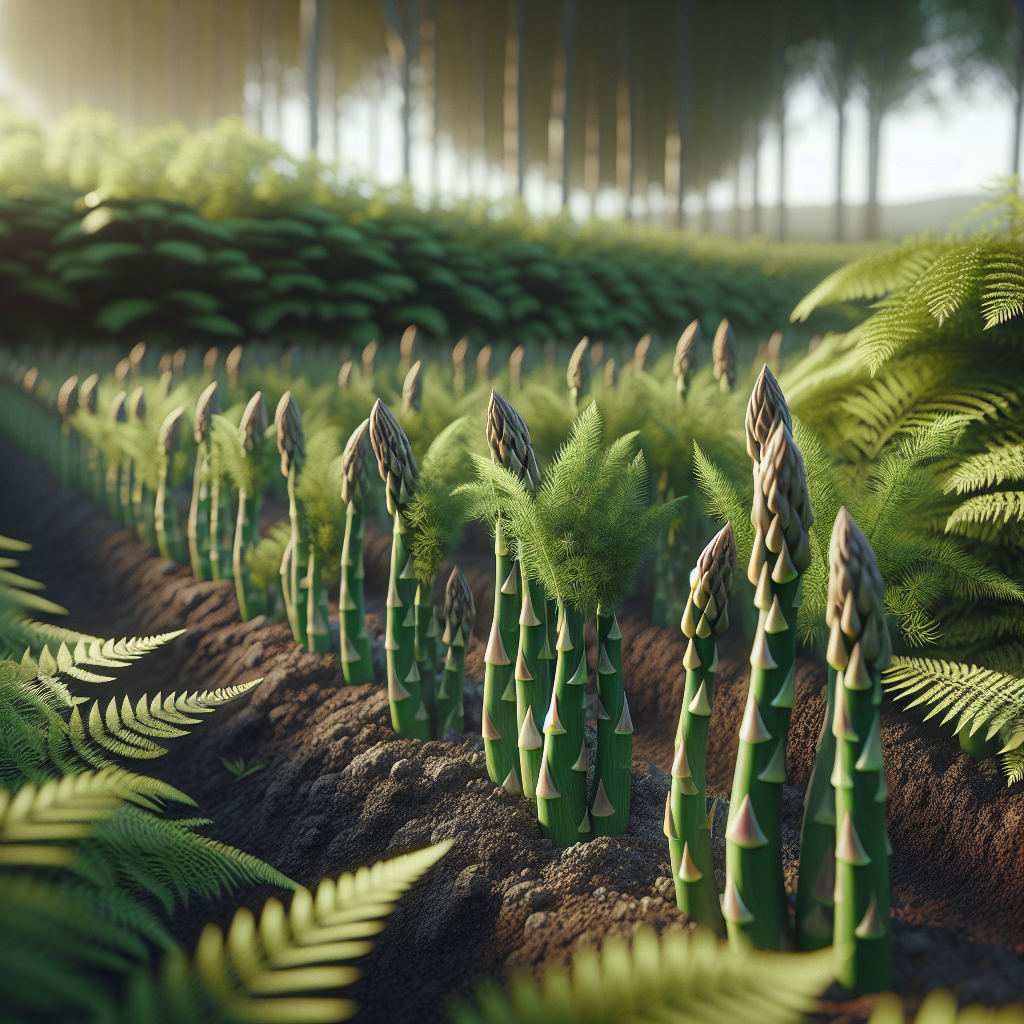
Introduction to Asparagus (Jersey Knight)
A modern hybrid developed from the Rutgers Jersey asparagus breeding program, this cultivar was selected to improve vigor, spear size, yield consistency, and resistance to several common asparagus diseases. One of its defining traits is that it is predominantly all-male, which matters because male asparagus plants typically direct more energy into spear production rather than seed formation. In practical terms, that means larger and often more numerous spears, less volunteer seedling spread, and a more uniform planting.
For growers in temperate climates, it is one of the most dependable asparagus choices for both garden and commercial rows. It tolerates cold winters well, pushes strong spring spears, and adapts to a wide range of soils if drainage is excellent. Compared with older open-pollinated strains, Jersey Knight tends to produce thicker spears and stronger crowns, and it is widely considered a top choice for regions with cool winters and disease pressure. If you want broader asparagus culture background, see this general Asparagus guide.
Unlike annual vegetables, asparagus is a long-term investment. A properly prepared bed can remain productive for 15 to 20 years, sometimes longer. That long lifespan is both its greatest advantage and the reason site preparation must be done thoroughly before planting. Mistakes in drainage, weed control, or crown spacing can affect yields for years.
Botanical Profile of Asparagus (Jersey Knight)
This crop is a herbaceous perennial in the family Asparagaceae. The edible portion is the young emerging spear, which is a succulent shoot arising from a crown made up of rhizomatous tissue and fleshy storage roots. If left unharvested, spears elongate into tall, feathery fern-like stems that photosynthesize through summer and replenish root reserves for the following year.
Jersey Knight generally produces green spears with tight tips when harvested at the proper stage. Mature fern height commonly reaches 4 to 6 feet under good fertility and moisture. Plants are dioecious in wild and older cultivated populations, meaning male and female flowers occur on separate plants, but this hybrid is bred to be overwhelmingly male. That gives it several agronomic benefits: improved yield efficiency, reduced seed set, fewer volunteer seedlings in the row, and often better spear uniformity.
Its perennial growth cycle is important to understand. In early spring, stored carbohydrates in the crown drive spear emergence. During harvest, the grower removes some of that growth. After harvest ends, remaining spears are allowed to fern out. Those ferns are not waste growth; they are the engine that rebuilds the crown. Weak fern growth in summer almost always translates into reduced yield the next spring.
Botanically, asparagus prefers a winter dormancy period. Chilling helps regulate bud break and contributes to predictable spring emergence. This is one reason it performs best in temperate climates rather than truly tropical zones.
Soil, pH, and Climate Requirements for Asparagus (Jersey Knight)
This cultivar performs best in deep, loose, well-drained soil with high organic matter and minimal perennial weed pressure. Sandy loam to silt loam is ideal, but well-structured loam also works very well. Heavy clay can support asparagus if drainage is significantly improved with organic matter, raised beds, and careful water management. What it will not tolerate for long is chronic saturation. Standing water around crowns encourages root decline, crown rot, and poor oxygen availability.
Target soil pH is 6.5 to 7.5, with 6.8 to 7.2 being especially comfortable for long-term performance. If pH drops below about 6.2, nutrient uptake efficiency declines and the planting may gradually weaken. Lime acidic soils several months before planting based on a soil test. Avoid guessing: asparagus is a perennial, so pre-plant correction is far easier than mid-life remediation.
Because the root system penetrates deeply, subsoil condition matters almost as much as topsoil fertility. Compacted layers should be broken before establishment. A deeply cultivated bed 12 to 18 inches or more is highly beneficial. Incorporate well-finished compost, but avoid excessive fresh manure, which can increase weed pressure and create overly lush, disease-prone fern growth.
Climate-wise, Jersey Knight excels in temperate and cool-temperate regions, roughly USDA zones 3 through 8, with best performance where winters are cold enough to induce dormancy and summers are warm but not relentlessly hot. Spring spear emergence is strongest when soil temperatures rise into roughly 50-60°F (10-16°C). Summer fern growth is best around 65-80°F (18-27°C). Extended heat above 90°F (32°C), especially when combined with drought, can reduce fern vigor and shorten spear quality windows.
Moisture should be consistent but never stagnant. A useful target is evenly moist soil in the root zone, especially during establishment and post-harvest fern growth. In field terms, aim for soil that holds together when squeezed but does not release free water and does not feel sticky or swampy. Overwatered beds show yellowing fern, reduced vigor, shallow root behavior, and in severe cases patchy plant death beginning in the wettest spots. Underwatered beds show thin spears, rapid tip opening, short fern, and premature summer yellowing.
Wind exposure should also be considered. Ferns can become tall and top-heavy, and repeated whipping by wind can reduce photosynthetic efficiency and break stems. In exposed sites, orient rows with prevailing wind in mind and consider staking or twine support systems.
Step-by-Step Planting & Propagation
Most growers establish this variety from one-year-old crowns rather than seed. Crown planting saves time, improves stand uniformity, and gets the bed into production sooner. Seed propagation is possible, but it adds a year or more before establishment and introduces more variation.
Choose a permanent site with full sun. Asparagus needs at least 8 hours of direct sun daily for high carbohydrate storage and strong spear production.
Remove perennial weeds completely before planting. Quackgrass, bindweed, nutsedge, and similar weeds are especially problematic because asparagus beds are difficult to cultivate deeply once established.
Soil test and amend before planting. Bring pH into range and incorporate phosphorus, potassium, and compost based on recommendations. Deep fertility matters because the crop will occupy the same ground for many years.
Mark rows 4 to 5 feet apart for home or small-farm plantings where access and airflow matter. In tighter market systems, rows can be somewhat closer, but airflow and harvest access must remain practical.
Dig trenches 8 to 12 inches deep and 12 to 18 inches wide. In heavier soils, stay toward the shallower end; in lighter, well-drained soils, deeper trenches are acceptable.
Create a low mound in the bottom of each trench. Spread each crown over the mound so the roots drape evenly downward and outward. This prevents root bunching and promotes balanced establishment.
Space crowns 12 to 18 inches apart. Twelve inches favors maximum plant density and somewhat thinner spears; 18 inches favors larger individual crown development and often thicker spears. For Jersey Knight, many serious growers prefer about 15 to 18 inches to capitalize on its large-spear genetics.
Cover crowns initially with 2 to 3 inches of soil, not the full trench depth. As shoots emerge and grow, gradually backfill the trench over several weeks until level with the surrounding soil.
Water thoroughly after planting to settle soil around the roots. The goal is deep moisture penetration without puddling.
Do not harvest in the planting year. Let all growth fern out so the crowns can build strength.
If starting from seed, sow indoors 10 to 12 weeks before the last frost or direct seed into a nursery bed after soil warms. Transplant one-year-old crowns to the permanent bed the following spring. Seed-grown beds take longer and are generally less efficient for a named hybrid where crown uniformity is valuable.
Mulch after emergence with clean straw, shredded leaves, or weed-free compost to reduce weed pressure and moderate soil moisture. Keep mulch slightly back from spear emergence points if slug pressure is high.
For broader planning around perennial bed fertility and structure, growers often benefit from reviewing principles like those in soil health strategies.
Care & Maintenance regimes for Asparagus (Jersey Knight)
The first two years determine the future productivity of the bed. During establishment, the primary goal is crown enlargement, not harvest. Maintain weed-free conditions relentlessly. Even moderate weed competition can cut crown development substantially because young asparagus does not shade the soil surface effectively.
Watering should be deep and infrequent rather than shallow and frequent. During establishment, provide roughly 1 to 1.5 inches of water per week from rain or irrigation, adjusted for soil type. Sandy soils may require split applications two or three times weekly; heavier loams may need one deep soaking. The root zone should remain consistently moist to a depth of 6 to 10 inches during active growth. If the top 2 inches are dry but deeper soil is still cool and moist, watering can wait. If the soil at 4 to 6 inches is dry and spears or fern appear dull, irrigation is overdue.
Fertilization is best done with soil-test guidance, but asparagus typically benefits from moderate nitrogen paired with adequate phosphorus and potassium. Too much nitrogen causes lush but weak fern and can worsen foliar disease. A common practical approach is to apply compost annually plus a balanced organic fertilizer in early spring before spear emergence and again lightly after harvest ends, when fern regrowth begins. Nitrogen is especially useful post-harvest because that is when the plant rebuilds reserves.
Do not harvest at all in year one. In year two, only a very light harvest may be taken for 1 to 2 weeks if crowns are vigorous and spear diameter is good, but many professional growers still avoid harvest entirely in year two for maximum long-term performance. By year three, harvest can usually extend 4 to 6 weeks. Mature plantings may support 6 to 8 weeks, though stopping earlier is wise if spear diameter declines markedly.
A good rule is to stop harvest when spear thickness drops below pencil size across much of the planting or when less than half the crowns are sending robust shoots. Continuing too long weakens next year's crop.
Fern management is essential. After the harvest season, allow all new shoots to grow into fern. Keep the planting adequately fed and watered through summer. Yellowing before autumn usually indicates stress from drought, nutrient deficiency, root problems, or disease. Once frost kills the fern in late fall or winter, cut it down to 1 to 2 inches above the soil and remove it from the bed to lower disease and insect carryover.
In windy areas, support mature fern with stakes and twine on both sides of the row. Lodged fern reduces photosynthesis and makes pest scouting harder.
Top-dress annually with compost, but avoid burying crowns too deeply over time. Excessive soil accumulation can delay emergence and reduce spear quality.
Pests, Diseases & Organic Management
The most notable insect pest is the Asparagus Beetle, including both common and spotted species. Adults chew spears, causing scarring and crooked growth, while larvae feed on fern and reduce photosynthetic capacity. Early control is critical because repeated defoliation weakens crowns. Hand-pick adults in small plantings, destroy eggs on spears and fern, and encourage beneficial insects. Clean post-season sanitation helps interrupt overwintering.
Cutworms can clip emerging spears at or below the soil line. Slugs may feed on young shoots in cool, damp mulch-heavy beds. Aphids occasionally colonize fern and contribute to stress, especially in hot, dry conditions.
Fusarium Crown and Root Rot is among the most serious long-term diseases of asparagus. It is favored by stress, poor drainage, repeated overharvest, and soil compaction. There is no easy cure once it is established, so prevention is vital: choose clean crowns, maintain drainage, avoid injuring crowns, keep harvest duration appropriate, and reduce plant stress. Jersey Knight is valued in part because it shows useful tolerance, but tolerance is not immunity.
Rust is another common disease, especially in humid conditions. It appears as orange to reddish pustules on fern, eventually causing premature yellowing and loss of vigor. Good airflow, adequate spacing, sanitation, and avoiding excess nitrogen help reduce pressure. Purple Spot can also mark spears and fern under wet spring conditions.
Organic management depends on integration rather than a single input. Key practices include:
- Start with disease-free crowns from reputable suppliers.
- Plant in full sun with excellent airflow.
- Maintain balanced fertility, especially potassium, to support tissue strength.
- Remove and destroy dead fern after frost rather than composting infected debris on site.
- Avoid overhead irrigation late in the day; use drip or soaker systems where possible.
- Rotate new asparagus plantings away from old beds whenever feasible, since replanting directly into exhausted asparagus ground often leads to weak establishment.
- Scout weekly during spear emergence and fern expansion.
Beneficial habitat nearby can help suppress pest outbreaks. Border plantings of Thyme or Yarrow may attract predatory insects and parasitoids while also fitting well into diversified garden systems.
Harvesting, Curing & Optimal Storage
Harvest begins when spears are 6 to 9 inches tall and tips are still tight. For green asparagus, quality declines rapidly once tips loosen or branches begin to expand. Cut or snap spears at ground level or just below the soil surface, taking care not to damage neighboring emerging shoots. A sharp knife can increase speed in larger plantings, but careless cutting may nick hidden spears.
For premium quality, harvest daily during warm weather and every 2 to 3 days during cooler periods. Rapid spring warming can cause spears to elongate very quickly. Thick, straight, tightly tipped spears are the hallmark of a well-managed Jersey Knight bed.
There is no curing step in the sense used for onions or garlic. Instead, quality preservation depends on immediate cooling and moisture retention. Asparagus has one of the highest respiration rates among vegetables, so field heat must be removed quickly. Hydro-cooling or immediate refrigeration is ideal. Keep harvested spears shaded at all times.
For short-term storage, trim ends lightly if needed, stand bundles upright in a shallow amount of clean water, and refrigerate at 32-36°F (0-2°C) with very high relative humidity, ideally 95% or more. Alternatively, wrap cut ends in a damp towel and place in a perforated bag. At proper temperature and humidity, spears can hold market quality for 1 to 2 weeks, though best eating quality is within the first several days.
Do not store near ethylene-producing fruits if avoidable, as senescence may accelerate. Signs of declining quality include tip opening, limpness, pithiness, loss of gloss, and sour odor at the cut ends.
For processing, spears freeze well after blanching. Select uniform spears, wash thoroughly, trim woody bases, blanch briefly according to spear thickness, cool rapidly, drain, and pack airtight.
Companion Planting for Asparagus (Jersey Knight)
Because asparagus emerges early and then occupies vertical rather than dense horizontal space once in fern, it can coexist with certain shallow-rooted or seasonally compatible companions. The best companions are those that do not aggressively disturb roots, do not create dense shade, and ideally help with pest balance or space efficiency.
Tomato is a traditional asparagus companion in mixed gardens. While the old claims of strong mutual pest repellence are somewhat overstated, the seasonal growth patterns are complementary: asparagus is harvested in spring, while tomato reaches peak size later. The key is spacing. Keep tomato rows far enough from crowns to prevent root disturbance and shading of fern.
Parsley, Thyme, and Yarrow are excellent low-competition options. These herbs can attract beneficial insects, make good use of edge space, and do not generally interfere with asparagus crowns when planted outside the immediate crown zone. Parsley in particular is often used in asparagus beds because it stays relatively modest and allows easy harvest access.
Avoid planting heavy feeders or sprawling crops directly into the row. Corn, potatoes, and vigorous cucurbits compete too strongly for moisture, nutrients, and light. Deep cultivation around established crowns is also risky, so choose companions that require minimal soil disturbance.
In well-managed systems, companion planting around asparagus works best at the row shoulders or bed edges rather than directly over the crowns. Think of the asparagus root zone as permanent infrastructure that must remain protected from digging, compaction, and crowding.