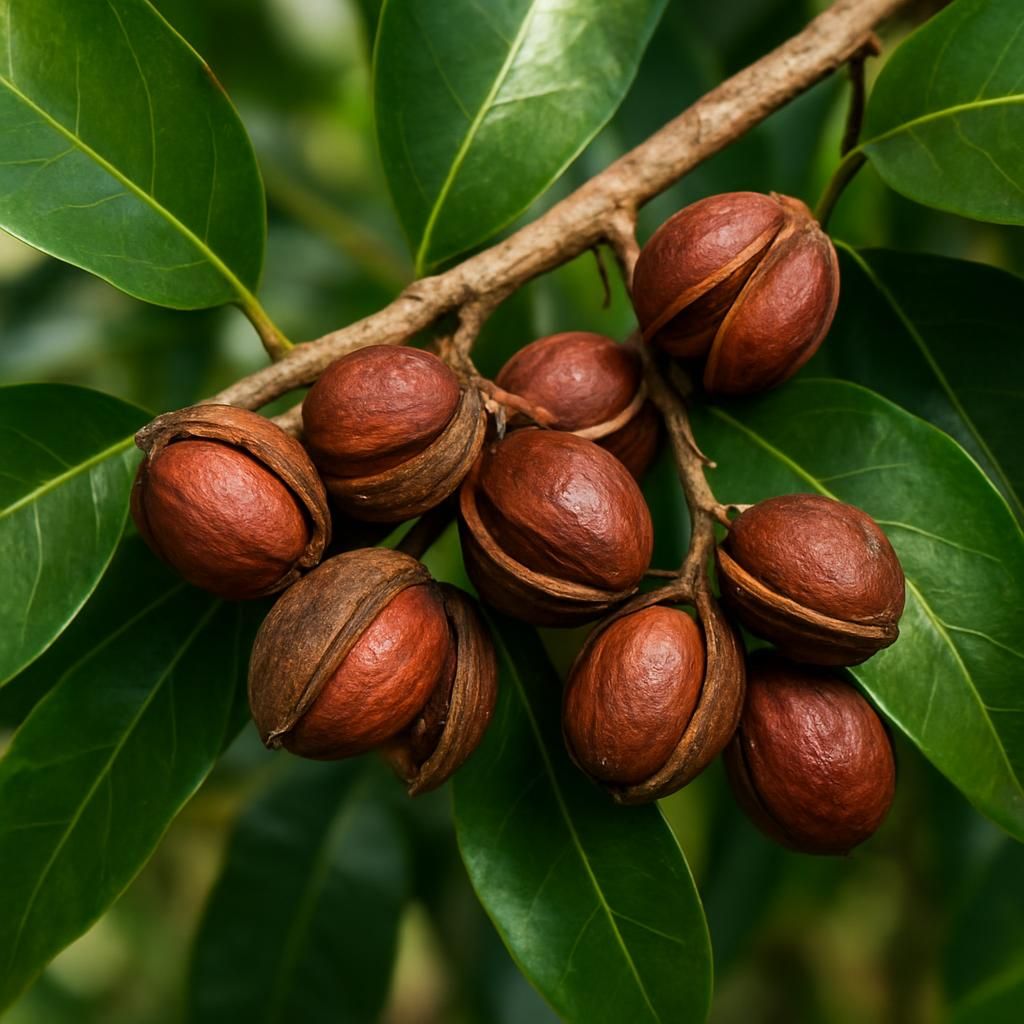
Introduction to Cola nitida
Cola nitida, widely recognized as the cola nut or kola nut tree, is a perennial evergreen species belonging to the Malvaceae family. Native to the lowland rainforests of West Africa, particularly Ghana, Nigeria, Sierra Leone, and Côte d'Ivoire, it has been cultivated for centuries for its seeds, which contain high concentrations of caffeine and theobromine. These seeds form the traditional basis of many West African social and ceremonial practices and serve as the original flavoring agent in global cola beverages. Today, Cola nitida is grown commercially across tropical regions including parts of South America, the Caribbean, and Southeast Asia. Its economic importance extends beyond beverages into pharmaceuticals, traditional medicine, and the emerging natural caffeine market.
Botanical Profile of Cola nitida
Cola nitida grows as a medium to large evergreen tree reaching 10–20 meters in height with a dense, spreading crown. The leaves are dark green, glossy, and oblong-elliptic, measuring 10–20 cm long. Small, cream-white flowers appear in axillary clusters and are primarily pollinated by insects. The fruit consists of a woody follicle containing 4–10 smooth, reddish-brown seeds known as cola nuts. These seeds are the primary harvested product and contain 1–3% caffeine along with polyphenols and theobromine. The tree exhibits a slow initial growth rate but can remain productive for 50–80 years under optimal management. Cola nitida prefers well-drained, fertile soils and demonstrates moderate tolerance to short dry periods once established.
Soil, pH, and Climate Requirements for Cola nitida
Successful cultivation of Cola nitida requires specific environmental parameters typical of humid tropical lowlands. The species thrives in regions with annual rainfall between 1,200 and 2,500 mm, evenly distributed or with a short dry season. Mean annual temperatures should range from 24–30°C, with minimum temperatures not falling below 18°C for extended periods. High humidity levels above 70% support optimal growth and flowering.
| Parameter | Ideal Range | Notes |
|---|---|---|
| Soil Type | Deep sandy loam to loam | Well-drained; avoid waterlogging |
| Soil pH | 5.5 – 6.8 | Slightly acidic to neutral |
| Organic Matter | 3–5% | Incorporate compost or well-rotted manure |
| Annual Rainfall | 1,200–2,500 mm | Even distribution preferred |
| Temperature Range | 24–30°C | Minimum 18°C; frost sensitive |
| Relative Humidity | 70–90% | Supports flowering and pod development |
| Altitude | 0–600 m | Lowland tropical zones |
Step-by-Step Planting & Propagation
Cola nitida is primarily propagated from fresh seeds, as vegetative propagation through cuttings or grafting has limited success rates. Select fully mature, healthy seeds from high-yielding mother trees. Soak seeds in clean water for 24–48 hours to soften the seed coat and improve germination. Sow seeds in well-drained nursery beds or polybags containing a sterilized mix of topsoil, sand, and compost (2:1:1 ratio) at a depth of 3–5 cm. Maintain consistent moisture and partial shade (50% shade net). Germination typically occurs within 14–28 days. Transplant seedlings to the field when they reach 30–50 cm in height, usually after 6–9 months. Field planting should occur at the onset of the rainy season. Dig planting holes measuring 60 cm × 60 cm × 60 cm and space trees 8–10 meters apart in a square or hexagonal pattern. Incorporate 10–15 kg of well-rotted manure or compost into each hole before planting. Water thoroughly after transplanting and provide temporary shade for the first 4–6 weeks.
Care & Maintenance regimes for Cola nitida
Young Cola nitida trees require regular weeding, mulching, and supplemental irrigation during the first 2–3 years. Mulch with organic materials such as dried leaves or wood chips to conserve moisture and suppress weeds. Prune lower branches to encourage a clear trunk and improve air circulation within the canopy. Fertilization should be based on soil analysis but generally follows a balanced NPK regimen with emphasis on nitrogen during vegetative growth and potassium during fruiting.
| Growth Stage | Watering Schedule | Fertilizer Application | Pruning Schedule |
|---|---|---|---|
| Year 1–2 | 20–30 L per tree weekly in dry periods | 100 g NPK 15-15-15 every 3 months | Formative pruning at 6 and 18 months |
| Year 3–5 | 40–60 L per tree every 10–14 days | 250 g NPK 15-15-15 + 100 g K2SO4 twice yearly | Remove dead/diseased wood annually |
| Mature Trees | Supplemental only in prolonged drought | 500 g NPK 12-12-17-2 + micronutrients annually | Light canopy thinning every 2 years |
Pests, Diseases & Organic Management
Cola nitida is susceptible to several insect pests and fungal pathogens. Common pests include Aphids, Mealybugs, and Scale insects, which can be managed through regular monitoring and releases of beneficial insects such as lady beetles and lacewings. Spider mites may appear during dry periods and are best controlled with neem oil sprays and increased humidity through misting. Major diseases include Phytophthora root rot and Anthracnose, both favored by poor drainage and high humidity. Prevent these through proper site selection, raised beds if necessary, and copper-based fungicides applied at the first sign of infection. Regular sanitation by removing fallen leaves and infected pods reduces inoculum levels. Integrated pest management combining cultural, biological, and minimal chemical interventions provides the most sustainable results.
Harvesting, Curing & Optimal Storage
Cola nitida trees begin bearing fruit 4–6 years after planting, with peak production occurring between years 10 and 30. Harvest mature pods when they turn from green to yellowish-brown, typically 5–6 months after flowering. Collect pods carefully to avoid damaging the tree and extract seeds immediately. Ferment the fresh seeds for 3–5 days in moist sacks or heaps to remove the mucilaginous coating. Sun-dry the seeds for 5–7 days until moisture content reaches 10–12%. For long-term storage, keep seeds in breathable jute bags or ventilated containers in a cool, dry location (below 25°C and 65% RH). Properly cured and stored seeds maintain quality for 12–18 months. Avoid plastic packaging, which can promote mold development.
Companion Planting for Cola nitida
Strategic companion planting enhances soil fertility, provides shade, and reduces pest pressure in Cola nitida orchards. Leguminous species such as Pigeon pea and Gliricidia fix atmospheric nitrogen and can be grown as intercrops or boundary hedges. Banana and Coconut provide light shade during early establishment while generating additional income. Aromatic herbs including Thai Basil and Rosemary deter certain insect pests when planted in orchard understories. Cover crops such as Clover and Hairy vetch improve soil structure and suppress weeds between tree rows. Avoid planting heavy feeders like Corn or Cassava in close proximity, as they compete for nutrients and moisture. Diverse companion systems also support beneficial insect populations, contributing to long-term orchard resilience.