Introduction to Coffee (Excelsa)
Excelsa (Coffea liberica var. dewevrei) is a distinctive coffee species that originated in Central Africa and has become an important alternative to Arabica Coffee (Typica) and Robusta Coffee in lowland tropical regions. It produces large, elongated beans with pronounced acidity, dark fruit notes, and a heavy body that many specialty roasters value for blending. Excelsa trees are vigorous, drought-tolerant once established, and show notable resistance to several major coffee diseases, making the crop attractive for farmers seeking climate-resilient options.
Commercial interest in Excelsa has grown because it tolerates lower altitudes (0–800 m) and higher temperatures than Arabica while delivering yields comparable to Robusta on well-managed farms. The variety also performs well on sandy or nutrient-poor soils when organic matter is maintained. Because it is less susceptible to coffee leaf rust and certain nematodes than Arabica, many producers integrate Excelsa into diversified portfolios.
Global demand for unique flavor profiles continues to rise, positioning Excelsa as both a specialty crop and a reliable bulk component. Successful cultivation requires attention to spacing, shade management, and timely harvesting to preserve its signature tartness. This guide provides science-based recommendations for every stage of production.
Botanical Profile of Coffee (Excelsa)
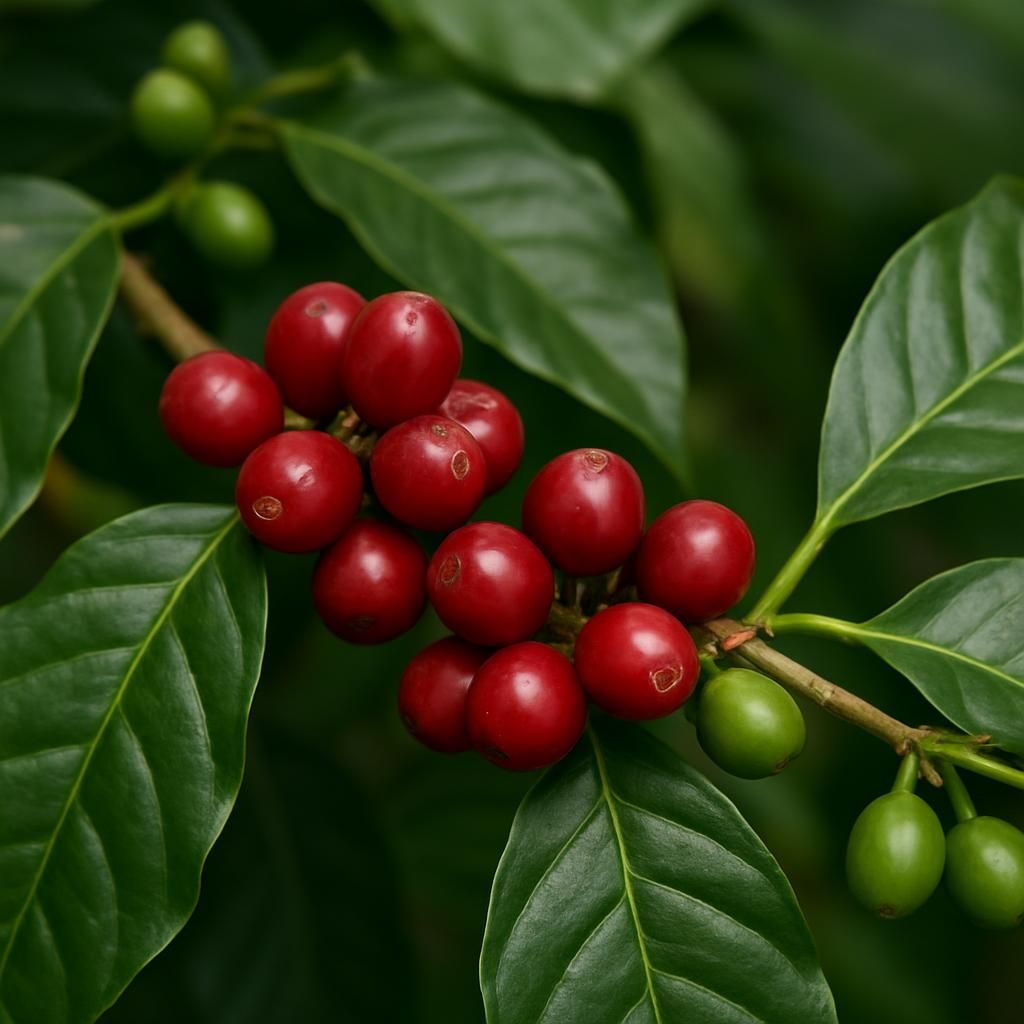
Excelsa belongs to the Rubiaceae family and is botanically classified as a variety of Liberica coffee. Mature trees reach 4–8 meters in height with a spreading canopy and thick, leathery leaves that are larger than Arabica foliage. The plant produces clusters of white, fragrant flowers that appear after dry periods, followed by large oval cherries that ripen from green to deep red or purple.
Each cherry typically contains two flat-sided seeds, although peaberries occur at low frequency. The root system is deep and extensive, conferring good drought tolerance once the tree is established. Excelsa flowers and fruits over an extended period, allowing multiple harvests per season in equatorial climates. The wood is dense and the bark is gray-brown, providing structural resilience against wind.
Genetic studies show Excelsa shares ancestry with Liberica but exhibits distinct morphological traits including larger bean size and higher caffeine content than many Arabica cultivars. These characteristics contribute to its bold flavor and strong pest deterrence.
Soil, pH, and Climate Requirements for Coffee (Excelsa)
Excelsa performs best in deep, well-drained soils with high organic matter. It tolerates a broader pH range than Arabica and can succeed on lateritic or sandy loam soils if fertility is maintained through regular organic amendments.
| Parameter | Ideal Range | Notes |
|---|---|---|
| Soil Type | Sandy loam to clay loam | Deep profile (>1 m) preferred |
| Soil pH | 5.5–6.8 | Slightly acidic to neutral |
| Organic Matter | 3–6 % | Maintain with compost and cover crops |
| Altitude | 0–800 m | Performs well where Arabica declines |
| Temperature | 22–30 °C daytime | Tolerates brief spikes to 35 °C |
| Annual Rainfall | 1,500–2,500 mm | Even distribution ideal; mulch conserves moisture |
| Relative Humidity | 70–85 % | Supports flowering and cherry development |
Adequate drainage is critical to prevent Phytophthora and root rot. On heavy clay soils, raised beds or contour ridges improve aeration. Mulching with legume residues or rice straw helps regulate soil temperature and moisture.
Step-by-Step Planting & Propagation
Excelsa is most reliably propagated from seed, although grafting onto disease-resistant Liberica rootstocks can accelerate production. Select fully ripe cherries from high-yielding, disease-free mother trees. Remove pulp immediately and ferment seeds for 24–48 hours before washing and drying to 12 % moisture.
Sow fresh seeds in shaded nursery beds containing a 1:1:1 mix of forest soil, sand, and well-rotted manure. Maintain 60–70 % shade and keep media moist but not waterlogged. Germination occurs in 4–8 weeks. Transplant seedlings to polybags when they reach the two-pair leaf stage.
Field planting should occur at the start of the rainy season. Dig holes 60 cm × 60 cm × 60 cm and incorporate 10 kg of compost plus 200 g of rock phosphate per hole. Recommended spacing is 2.5 m × 2.5 m for single-stem systems or 3 m × 3 m for multi-stem. Provide temporary shade with banana or Gliricidia until trees establish.
Care & Maintenance regimes for Coffee (Excelsa)
Young trees require consistent moisture and weed control for the first two years. Once established, Excelsa tolerates short dry spells but responds well to supplemental irrigation during flowering and fruit expansion. Fertilizer programs should emphasize nitrogen and potassium while avoiding excess that promotes vegetative growth at the expense of fruiting.
| Growth Stage | Water Schedule | Fertilizer (per tree/year) | Pruning Schedule |
|---|---|---|---|
| Year 1–2 | 20–30 L/week split into 3 irrigations | 100 g N + 50 g P₂O₅ + 80 g K₂O in 4 splits | Formative pruning at 6 and 18 months |
| Year 3–5 | 40–60 L/week during dry periods | 250 g N + 120 g P₂O₅ + 200 g K₂O | Annual removal of suckers and crossing branches |
| Mature (>5 years) | 60–80 L/week at flowering & filling | 400 g N + 150 g P₂O₅ + 300 g K₂O | Stumping every 5–7 years at 30–40 cm |
Apply fertilizers in split doses coinciding with rainy periods. Use organic sources such as compost, vermicompost, or pigeon pea green manure to improve soil biology. Mulch rings 1 m wide around each trunk suppress weeds and conserve moisture.
Pests, Diseases & Organic Management
Excelsa exhibits good field resistance to coffee leaf rust but remains susceptible to scale insects, mealybugs, and root-knot nematodes. Regular scouting and cultural practices form the foundation of integrated management.
Key pests include the coffee berry borer, which can be suppressed by prompt harvesting and solarization of fallen cherries. Ants that protect mealybugs should be disrupted by trunk banding with sticky traps. For nematodes, interplanting with marigold or sesame reduces populations over time.
Major diseases are Phytophthora collar rot and anthracnose. Improve drainage, avoid wounding trunks during weeding, and apply copper-based sprays only when infection pressure is high. Gliricidia shade reduces stress-related disease outbreaks.
Harvesting, Curing & Optimal Storage
Excelsa cherries ripen unevenly over 6–8 months. Selective hand-picking every 10–14 days ensures optimal flavor. Harvest when cherries are fully colored and begin to soften. Avoid stripping entire branches to preserve next season’s fruiting wood.
Process cherries within 6 hours of harvest. For washed coffee, depulp, ferment 24–36 hours at 25–28 °C, wash thoroughly, and dry on raised beds to 10–12 % moisture. Natural processing yields heavier body and pronounced fruit notes but requires careful turning to prevent mold.
Store parchment or green beans in jute bags inside ventilated warehouses at 18–22 °C and 60 % relative humidity. Monitor for storage beetles and maintain moisture below 12 % to preserve cup quality for 12–18 months.
Companion Planting for Coffee (Excelsa)
Strategic companion planting enhances biodiversity, improves soil fertility, and disrupts pest cycles. Leguminous shade trees such as Gliricidia and pigeon pea fix nitrogen and moderate microclimate. Banana provides temporary shade and wind protection during establishment.
Ground covers including clover and thai basil suppress weeds while attracting beneficial insects. Marigold and sesame planted in borders reduce nematode pressure. Sesame also serves as a trap crop for certain sucking insects.
Avoid planting coffee near solanaceous crops that share nematode hosts. Rotate companion species every 3–4 years to maintain soil health and break disease cycles. Diverse understory plantings also improve pollinator activity, supporting consistent yields.