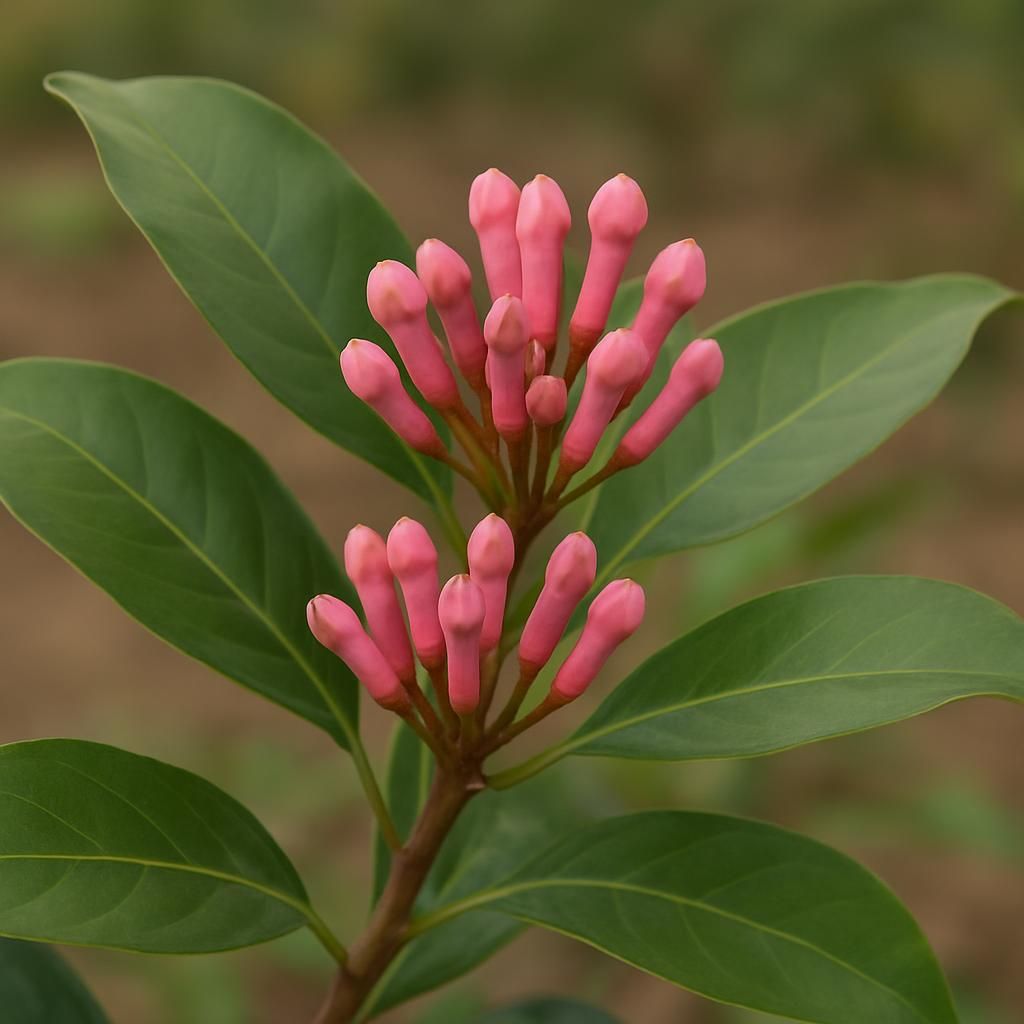
Introduction to Clove (Syzygium aromaticum)
Clove (Syzygium aromaticum) is a perennial evergreen tree belonging to the Myrtaceae family, valued for its intensely aromatic flower buds that are harvested and dried for culinary, medicinal, and industrial uses. Native to the Maluku Islands of Indonesia, it has been cultivated for centuries across tropical regions including India, Sri Lanka, Tanzania, and Madagascar. The spice trade history of clove is extensive, but modern commercial production focuses on consistent quality, high eugenol content in the essential oil, and sustainable orchard management.
Professional growers recognize clove as a long-term investment crop with productive lifespans exceeding 100 years when properly maintained. The tree produces clusters of small, crimson flower buds that must be harvested at the precise pink-bud stage before they open. Post-harvest processing through sun-drying or mechanical drying preserves the characteristic aroma and prevents mold development. Global demand remains strong for both whole buds and clove oil used in dentistry, perfumery, and food processing.
Botanical Profile of Clove (Syzygium aromaticum)
The clove tree is a medium-sized evergreen reaching 10–20 meters in height with a pyramidal canopy and opposite, ovate leaves that are glossy and aromatic when crushed. Young leaves often exhibit a pinkish-bronze coloration before maturing to deep green. The tree produces terminal cymes of small, fragrant white flowers that develop from the characteristic unopened buds harvested as the spice.
The flower buds are approximately 1.5–2 cm long and consist of a fleshy hypanthium containing essential oil glands rich in eugenol. After pollination, the buds develop into dark purple drupes containing one or two seeds, though commercial orchards focus almost exclusively on bud production. The root system is shallow and fibrous, making the tree sensitive to soil compaction and waterlogging.
Soil, pH, and Climate Requirements for Clove (Syzygium aromaticum)
Clove thrives in deep, well-drained loamy soils rich in organic matter. It prefers slightly acidic conditions and cannot tolerate saline or waterlogged soils. Consistent rainfall or irrigation is essential, with annual precipitation ideally between 1500–2500 mm distributed throughout the year.
| Parameter | Ideal Range | Notes |
|---|---|---|
| Soil Type | Deep sandy loam to clay loam | Good drainage critical |
| Soil pH | 5.5 – 6.5 | Slightly acidic; avoid alkaline soils |
| Temperature | 20–30 °C (day); min 15 °C | Sensitive to frost |
| Annual Rainfall | 1500–2500 mm | Even distribution preferred |
| Relative Humidity | 70–90 % | High humidity supports growth |
| Altitude | 0–600 m | Low to mid elevations optimal |
| Sunlight | Partial shade (30–50 %) | Young trees benefit from nurse shade |
Step-by-Step Planting & Propagation
Clove is primarily propagated from seeds, though vegetative methods such as grafting onto seedling rootstocks are used for selected high-yielding clones. Fresh seeds should be sown immediately after collection in shaded nursery beds containing a 1:1:1 mix of soil, sand, and well-rotted manure. Germination occurs in 4–6 weeks under 50 % shade and consistent moisture.
Seedlings are transplanted to polybags at the 4–6 leaf stage and grown under partial shade for 12–18 months until they reach 60–90 cm in height. Field planting occurs at the onset of the monsoon season with pits measuring 60 × 60 × 60 cm filled with topsoil mixed with 10–15 kg of compost and 500 g of rock phosphate. Recommended spacing is 6 m × 6 m for pure stands or 8 m × 8 m when intercropped with Coconut or other shade trees.
Care & Maintenance regimes for Clove (Syzygium aromaticum)
Young clove trees require regular weeding, mulching, and irrigation during dry spells. Shade regulation is critical in the first three years; 30–40 % shade from temporary shade trees such as Gliricidia or banana is recommended. Fertilizer application begins in the second year and is split into pre-monsoon and post-monsoon doses.
| Growth Stage | Water Schedule | Fertilizer (per tree/year) | Pruning Schedule |
|---|---|---|---|
| Year 1–3 (Juvenile) | 20–30 L every 3–4 days in dry season | 50 g N, 30 g P₂O₅, 60 g K₂O split in 2 doses | Formative pruning to establish shape |
| Year 4–7 (Pre-bearing) | 40–50 L weekly during dry periods | 150 g N, 100 g P₂O₅, 200 g K₂O + 5 kg compost | Remove lower branches; tip pruning |
| Mature (Year 8+) | 60–80 L every 7–10 days | 300 g N, 150 g P₂O₅, 400 g K₂O + 20 kg FYM | Annual removal of dead/diseased wood |
Mulching with dried leaves or coconut husk helps retain soil moisture and suppress weeds. Foliar micronutrient sprays containing zinc and boron are applied annually before flowering to improve bud set.
Pests, Diseases & Organic Management
Clove orchards face several insect and disease challenges. The most common pests include Scale insects, Mealybugs, and Aphids, which can be managed with neem oil sprays and introduction of natural predators. Stem borers and Termites may attack young trees; soil application of neem cake and maintaining field hygiene are effective preventive measures.
Major diseases include Dieback caused by fungal pathogens, Phytophthora root rot in poorly drained soils, and Leaf spot diseases. Organic management relies on copper-based fungicides, improved drainage, and removal of infected plant parts. Regular monitoring and timely removal of affected buds help limit spread of Anthracnose.
Harvesting, Curing & Optimal Storage
Clove buds are harvested when they turn from green to pinkish-red but before the petals open. Harvesting is done manually by climbing or using long poles with hooks. A mature tree can yield 4–8 kg of dried buds annually under good management.
Fresh buds are spread in thin layers on clean mats for sun-drying over 4–6 days, turning regularly to ensure uniform color and moisture reduction to 10–12 %. Mechanical drying at 45–50 °C can accelerate the process. Properly dried cloves are graded by size and stored in airtight containers or jute bags lined with polythene in a cool, dry place to preserve aroma and prevent mold.
Companion Planting for Clove (Syzygium aromaticum)
Clove benefits from strategic companion planting that provides shade, improves soil fertility, and deters pests. Gliricidia and Pigeon pea serve as excellent temporary shade and nitrogen-fixing companions during establishment. Leguminous cover crops such as Clover help maintain soil nitrogen levels between tree rows.
Marigold and Nasturtium planted in the understory can repel Aphids and Whiteflies while attracting beneficial insects. Avoid heavy feeders such as Banana in close proximity once trees mature, as competition for nutrients may reduce clove yields. Maintaining diverse ground cover also supports beneficial microbial activity and reduces soil erosion on slopes.