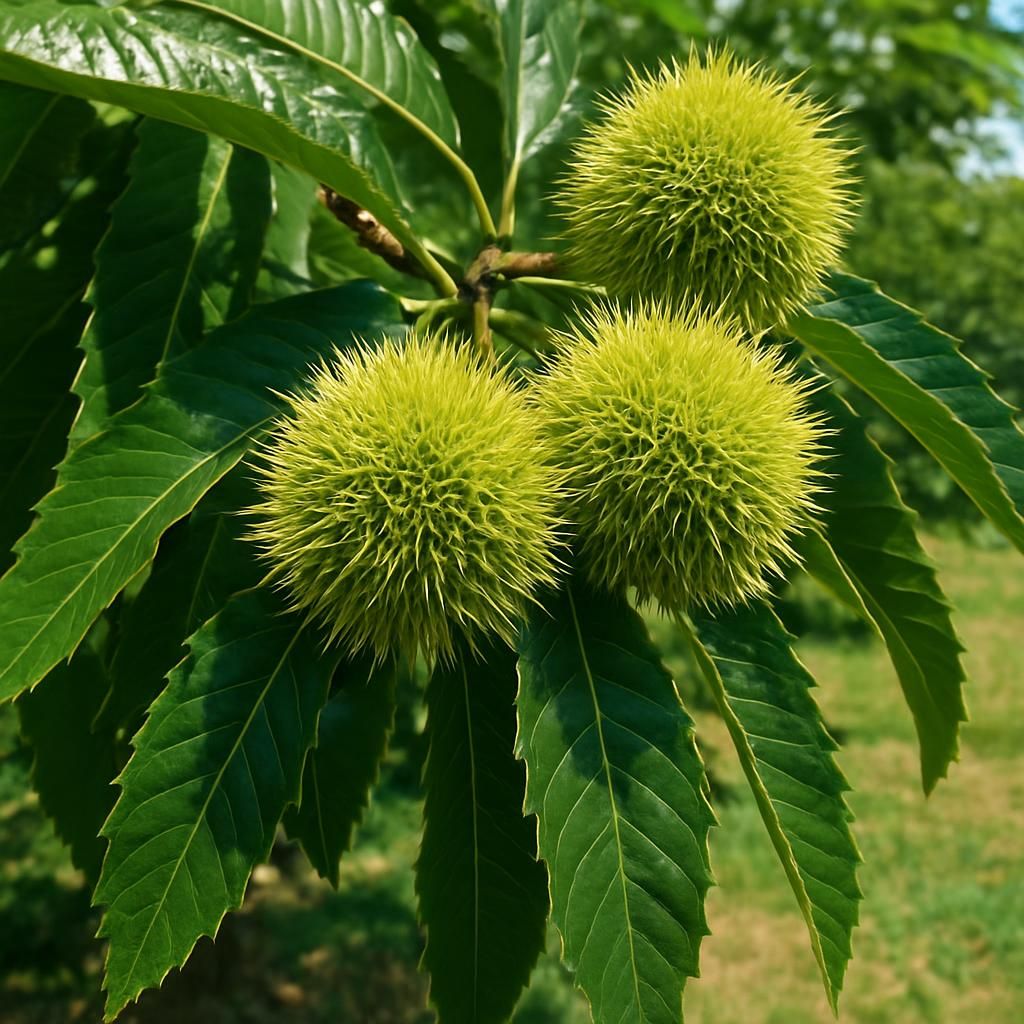
Introduction to Chestnut (Colossal Hybrid)
The Colossal Hybrid chestnut combines the large nut size of European Chestnut with the disease resistance of Chinese chestnut genetics. Developed for commercial orchards, it produces nuts averaging 25–35 g with excellent flavor and easy-to-peel shells. Growers choose Colossal for its consistent yields, cold hardiness to USDA Zone 5, and strong resistance to Chestnut Blight.
Botanical Profile of Chestnut (Colossal Hybrid)
Colossal forms a broad, spreading tree reaching 12–18 m at maturity with a 10–15 m canopy spread. Leaves are lanceolate, 15–20 cm long, with prominent serrations and a glossy upper surface. Male catkins appear in late spring followed by bisexual flowers; pollination requires a compatible second cultivar such as Bouche de Betizac. Nuts develop inside spiny burrs that split open in autumn.
Soil, pH, and Climate Requirements for Chestnut (Colossal Hybrid)
| Parameter | Ideal Range | Notes |
|---|---|---|
| Soil Type | Loamy, well-drained | Avoid heavy clay; sandy loams acceptable |
| Soil pH | 5.5 – 6.5 | Slightly acidic; liming rarely needed |
| USDA Hardiness Zones | 5 – 8 | Tolerates –25 °C with snow cover |
| Annual Rainfall | 700 – 1200 mm | Supplemental irrigation in dry summers |
| Temperature Range | –25 °C to 35 °C | Late frosts can damage catkins |
| Sun Exposure | Full sun (6+ hours) | Partial shade reduces nut size |
| Elevation | Up to 1200 m | Good air drainage prevents frost pockets |
Step-by-Step Planting & Propagation
- Site Selection: Choose a south-facing slope with good air drainage and protection from strong winds.
- Soil Test: Conduct a comprehensive soil test; amend with aged compost to reach 3 % organic matter.
- Spacing: Plant grafted trees 10–12 m apart in rows 12–14 m wide.
- Hole Preparation: Dig 60 cm wide × 60 cm deep holes; incorporate 10 L of well-rotted manure per hole.
- Planting Depth: Set the graft union 5 cm above soil level; backfill and water thoroughly.
- Initial Mulch: Apply 10 cm of wood-chip mulch in a 1 m diameter circle, keeping mulch 15 cm from the trunk.
- Irrigation: Provide 20 L per tree weekly for the first two seasons.
Care & Maintenance regimes for Chestnut (Colossal Hybrid)
| Season | Watering Schedule | Fertilizer Application | Pruning Schedule |
|---|---|---|---|
| Spring | 25–30 L/week per tree | 0.5 kg 10-10-10 NPK at bud break | Remove deadwood and crossing branches |
| Summer | 35–40 L/week during dry spells | Side-dress 0.25 kg ammonium sulfate mid-June | Light tipping of vigorous shoots |
| Autumn | Reduce to 15 L/week | Apply 2 kg aged compost per tree | No major pruning |
| Winter | Dormant; water only if soil dry | None | Structural pruning of young trees |
Pests, Diseases & Organic Management
Colossal Hybrid shows strong resistance to Chestnut Blight but remains susceptible to Chestnut gall wasp and Nut weevils. Monitor for galls in June and deploy parasitic wasps (Torymus sinensis). For weevils, collect and destroy fallen nuts weekly. Phytophthora root rot can occur in poorly drained soils; improve drainage and apply potassium phosphite drenches. Maintain orchard sanitation by removing burr debris to reduce Ink disease pressure.
Harvesting, Curing & Optimal Storage
Harvest when burrs begin to split naturally, typically mid-September to mid-October. Shake or knock trees gently and collect fallen nuts daily. Cure nuts at 15–18 °C and 85 % humidity for 7–10 days to reduce moisture to 10 %. Store cured nuts at 0–2 °C and 90 % humidity for up to six months. For longer storage, freeze at –18 °C in vacuum-sealed bags.
Companion Planting for Chestnut (Colossal Hybrid)
Plant Clover as a living mulch to fix nitrogen and suppress weeds. Interplant rows with Comfrey to mine deep nutrients and attract pollinators. Avoid planting Walnut nearby due to juglone sensitivity. Nasturtium and Marigold provide beneficial insect habitat while repelling aphids. Thyme planted at orchard edges improves biodiversity and supports predatory mites.