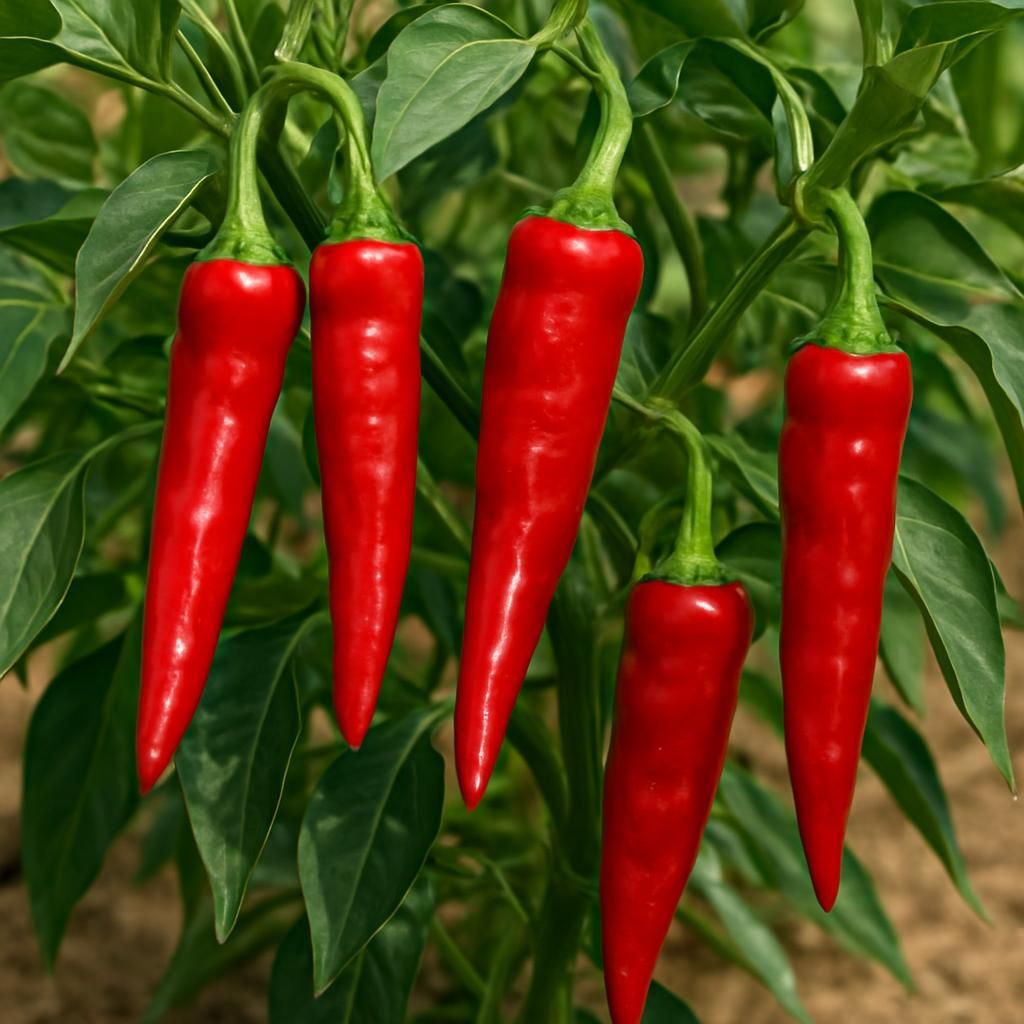
Introduction to Cheongyang Chili
Cheongyang Chili (Capsicum annuum 'Cheongyang') is a premium Korean hot pepper cultivar renowned for its extreme heat levels, reaching 10,000–15,000 Scoville Heat Units, and its thick-walled, glossy red pods. Developed through selective breeding in South Korea, this chili has become a staple in both traditional Korean cooking and international hot sauce markets due to its consistent pungency and rich capsanthin content. Commercial growers and home gardeners alike value Cheongyang Chili for its vigorous growth habit and reliable productivity across extended harvest windows.
The pepper’s popularity continues to grow globally as demand rises for authentic Asian ingredients and artisanal spice products. Its balanced flavor profile—combining sharp heat with subtle sweetness—makes it ideal for kimchi, gochujang, and fermented chili pastes. Successful cultivation requires attention to warm-season requirements, precise irrigation, and integrated pest management strategies that maintain fruit quality throughout the growing cycle.
Botanical Profile of Cheongyang Chili
Cheongyang Chili belongs to the Solanaceae family and exhibits a compact, bushy growth habit reaching 60–90 cm in height. The plant produces lanceolate leaves with a deep green hue and clusters of small, star-shaped white flowers that develop into elongated, tapered pods measuring 7–10 cm long. Pods transition from green to a brilliant scarlet red at maturity, signaling peak capsaicin concentration.
The variety is classified as an annual in temperate zones but can behave as a short-lived perennial in frost-free subtropical environments. Cheongyang Chili sets fruit prolifically under full-sun conditions and benefits from cross-pollination by bees and other beneficial insects. Its thick pericarp provides excellent drying characteristics and resistance to cracking during post-harvest handling.
Soil, pH, and Climate Requirements for Cheongyang Chili
Cheongyang Chili demands well-drained, fertile loam or sandy loam soils rich in organic matter. The crop performs best when soil temperature remains above 18 °C at planting depth. Consistent moisture without waterlogging is critical to prevent root rot and blossom-end issues.
| Parameter | Ideal Range | Notes |
|---|---|---|
| Soil Type | Sandy loam to loam | High organic matter improves nutrient retention |
| Soil pH | 6.0 – 6.8 | Slightly acidic to neutral; avoid alkaline soils |
| Temperature (Day) | 24 – 30 °C | Optimal fruit set occurs within this range |
| Temperature (Night) | 18 – 22 °C | Cooler nights enhance capsaicin development |
| Annual Rainfall | 600 – 900 mm | Supplemental irrigation required in dry periods |
| Frost Tolerance | None | Protect seedlings from temperatures below 10 °C |
Step-by-Step Planting & Propagation
Start seeds indoors 8–10 weeks before the last expected frost date. Sow seeds 0.5 cm deep in sterile seed-starting mix maintained at 25–28 °C. Germination typically occurs within 7–14 days under consistent warmth and humidity.
Harden off seedlings for 7–10 days before transplanting into the field or greenhouse beds once soil temperatures reach a minimum of 18 °C. Space plants 45–60 cm apart in rows 75–90 cm wide to allow adequate airflow and sunlight penetration. Apply a starter fertilizer solution high in phosphorus at transplanting to encourage strong root establishment.
Care & Maintenance regimes for Cheongyang Chili
Consistent cultural practices are essential for maximizing pod size, heat level, and overall plant health. Mulching with organic materials helps retain soil moisture and suppress weeds. Regular monitoring for nutrient deficiencies and timely corrective actions ensure sustained productivity.
| Growth Stage | Watering Schedule | Fertilizer Application | Pruning/Maintenance |
|---|---|---|---|
| Seedling (0–4 wks) | Keep evenly moist; 2–3 mm/day | Light fish emulsion every 10 days | Remove lower leaves to improve airflow |
| Vegetative (4–8 wks) | 25–30 mm/week; deep infrequent | Balanced NPK (10-10-10) every 3 weeks | Pinch growing tips at 30 cm for bushiness |
| Flowering/Fruiting | 35–40 mm/week; avoid overhead | High-potassium formula every 2 weeks | Remove diseased or damaged branches |
| Late Season | Reduce to 20 mm/week | Stop nitrogen; apply compost tea | Cut back 20 % foliage to ripen fruit |
Pests, Diseases & Organic Management
Cheongyang Chili is susceptible to common solanaceous pests including aphids, thrips, and spider mites. Early detection through weekly scouting prevents population explosions. Introduce beneficial insects such as lady beetles and lacewings as the first line of defense.
Fungal threats such as powdery mildew and phytophthora blight can be managed with copper-based sprays and strict crop rotation. Neem oil applications every 7–10 days provide broad-spectrum organic control while preserving beneficial insect populations. Maintain field sanitation by removing crop debris at season’s end to reduce overwintering inoculum.
Harvesting, Curing & Optimal Storage
Harvest Cheongyang Chili pods at full red color for maximum heat and flavor, typically 75–85 days after transplanting. Use clean pruning shears to cut stems, leaving a short peduncle attached to reduce moisture loss. Morning harvest minimizes field heat and preserves capsaicin integrity.
Cure freshly picked chilies in a single layer on shaded racks with good airflow for 5–7 days until skins become slightly wrinkled. For long-term storage, dry pods to 10–12 % moisture content and store in airtight containers away from light. Properly cured and stored Cheongyang Chili retains pungency for up to 18 months.
Companion Planting for Cheongyang Chili
Pair Cheongyang Chili with Thai Basil and marigold to repel aphids and nematodes while attracting pollinators. Interplanting with tomato and eggplant maximizes space but requires careful disease monitoring due to shared pathogens. Avoid planting near fennel or members of the Brassica family that may compete for nutrients or harbor pests.
Strategic companion planting enhances biodiversity, improves soil health, and reduces reliance on external inputs. Rotate Cheongyang Chili with legumes such as cowpeas in subsequent seasons to naturally replenish nitrogen and break pest cycles.