Introduction to Cercospora spot
Cercospora spot, caused by various species of the fungal genus Cercospora, represents one of the most common and destructive leaf spot diseases affecting agricultural crops worldwide. This pathogen targets a broad range of plants, manifesting as small, circular spots on leaves that can coalesce into larger lesions, impairing photosynthesis and leading to premature defoliation. Farmers and growers often encounter this disease in tropical and subtropical regions where high humidity and moderate temperatures prevail, making it a persistent challenge in both commercial fields and small-scale operations.
Understanding Cercospora spot is crucial for maintaining crop health and maximizing yields. The disease doesn't just cause aesthetic damage; it significantly reduces plant vigor, fruit quality, and overall productivity. Early identification and intervention are key to minimizing losses, which can exceed 50% in severe outbreaks. This guide provides comprehensive diagnostic criteria, lifecycle insights, environmental risk factors, organic management strategies, prevention techniques, and details on the most susceptible crops. By integrating these practices, growers can protect their harvests effectively. For more on related foliar issues, see Cercospora leaf spot.
The economic impact of Cercospora spot is substantial, with global losses estimated in billions annually across staple crops. In soybeans, for instance, it can reduce pod fill and seed quality, while in sugar beets, it affects root sugar content. This disease's polycyclic nature—multiple infection cycles per season—amplifies its threat, necessitating proactive strategies.
Identifying Symptoms & Damage
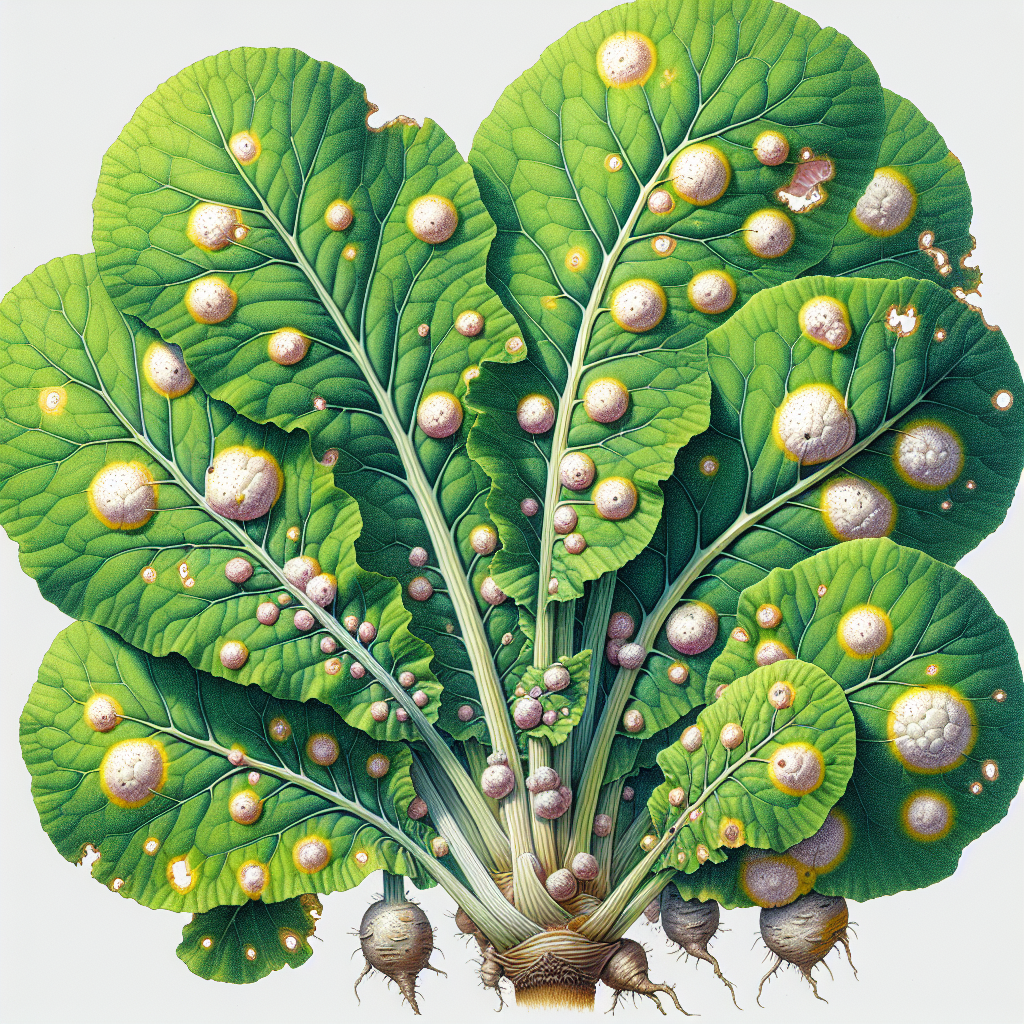
Accurate diagnosis begins with recognizing the hallmark symptoms of Cercospora spot. Initial signs appear as small, circular spots (1-3 mm in diameter) on the upper leaf surface, often with a light gray to white center surrounded by a darker margin—typically tan, brown, or reddish-purple. These spots may develop a shot-hole appearance as the center tissue sloughs off, especially in older lesions.
As the disease progresses, spots enlarge (up to 1 cm) and merge, forming irregular blotches that cover large areas of the leaf. A yellow halo often surrounds the spots, leading to chlorosis (yellowing) and eventual necrosis (dead tissue). Undersides of leaves may show sparse fungal sporulation—fine, grayish-black powdery growth visible under magnification or in humid conditions. Severe infections cause leaves to curl, wilt, and drop prematurely, exposing fruits or lower canopy to sunburn.
Damage varies by crop and timing. In vegetative stages, it reduces photosynthetic area, stunting growth. During reproductive phases, it lowers yield by 20-40% through defoliation and weakened plants. Secondary effects include increased susceptibility to other pathogens like Alternaria or powdery mildew. Inspect lower leaves first, as symptoms start there due to spore splash from soil.
To differentiate from look-alikes: Unlike Septoria leaf spot, Cercospora spots lack prominent pycnidia (black fruiting bodies). Bacterial spots are water-soaked initially, while anthracnose features sunken centers. Use a 10x hand lens to confirm sporulation. For small farms, early scouting—weekly walks through fields—prevents escalation. Yield losses correlate with disease severity: 5% leaf area affected = 10% yield drop; 25% = 50% loss.
Lifecycle and Progression of Cercospora spot
Cercospora spp. follow a polycyclic lifecycle, enabling rapid epidemic development. The fungus overwinters as stromata (dormant fungal structures) in infected plant debris, seeds, or alternate hosts. In spring, as temperatures rise (optimal 25-30°C/77-86°F), conidia (asexual spores) form on these structures.
Primary inoculum spreads via rain splash to lower leaves. Once on foliage, conidia germinate in free water (dew or rain >6-12 hours), penetrating through stomata or wounds. Incubation lasts 7-14 days, producing symptoms. New conidia then disperse by wind, rain, or overhead irrigation, initiating secondary cycles every 7-10 days under favorable conditions.
Progression accelerates mid-season: Cool nights (15-20°C) with daytime warmth and leaf wetness >72 hours weekly drive 10-20 cycles per season. High spore density (10^4-10^6/cm² on lesions) ensures reinfection. In dry periods, the fungus survives latent in leaves. Harvest residues fuel next season's outbreak if not managed.
Understanding this cycle informs timing: Fungicides target early cycles; sanitation disrupts overwintering. In sugar beet, progression models predict defoliation thresholds (45% severity = economic loss).
Environmental Triggers & Risk Factors
Cercospora spot epidemics hinge on specific conditions: Warm temperatures (24-32°C), high relative humidity (>85%), and prolonged leaf wetness (8-24 hours). Nighttime temps of 18-22°C with morning dew are ideal for sporulation. Dense canopies trap moisture, exacerbating spread.
Risk factors include overhead irrigation, poor air circulation from narrow row spacing, excessive nitrogen promoting lush foliage, and susceptible varieties. Continuous monocropping without rotation builds inoculum. Wet springs followed by humid summers spike incidence—e.g., 90% infection in rainy seasons.
Soil type matters: High clay retains moisture, favoring splash dispersal. In tropics, two rainy seasons double risk. Climate change extends wet periods, intensifying outbreaks. Monitor with weather stations; thresholds: 10-hour wetness at >90% RH triggers action.
Organic Control & Treatment Plans
Organic management integrates cultural, biological, and approved fungicides. Start with sanitation: Remove and destroy infected debris post-harvest (tillage buries spores). Rotate crops 2-3 years with non-hosts like corn or wheat.
Biologicals: Apply Trichoderma spp. or Bacillus subtilis (e.g., Serenade) preventively every 7-10 days. Compost teas with compost extracts suppress via competition.
Approved organics: Copper-based (e.g., Bordeaux mix, fixed copper) at 1-2 kg/ha, 7-day intervals post-scout. Potassium bicarbonate or sulfur for early stages. Neem oil disrupts spore germination.
Plan: Scout weekly (10 plants/10 locations); treat at 5% severity. Improve spacing (50-75 cm rows), prune for airflow. Foliar potassium boosts resistance. Integrate with Soil Health Mastery for resilient plants. Yields recover 20-30% with timely IPM.
Preventing Cercospora spot in the Future
Prevention outperforms cure. Plant resistant varieties: 'Monument' sugar beet, 'NK303' soybeans. Use certified disease-free seeds. Time planting to avoid peak wetness.
Cultural: Wide rows, staking for airflow; drip irrigation over overhead. Balanced fertility—avoid excess N. Mulch suppresses splash. Rogue infected plants early.
Long-term: Crop rotation (3+ years), cover crops like clover break cycles. Monitor with apps for weather alerts. Fall tillage + biofumigants (mustard). Annual soil tests ensure pH 6.0-7.0. Resistant rootstocks in perennials. Zero-tolerance scouting pre-flowering.
Crops Most Affected by Cercospora spot
Cercospora spot plagues over 200 species, but key crops include sugar beet (C. beticola), soybeans (C. kikuchii, C. sojina), peanuts (C. arachidicola, C. personata), tomato (C. tomatophila), cassava (C. henningsii), [cowpea](/wiki/cowpeas? wait, no direct, but legumes), dry beans, okra, and cucurbits. In sugar beet, it causes 30-50% losses; soybeans see seed infection. Tropical crops like mango and banana face leaf spot variants. Field beans and chickpeas highly susceptible. Regional hotspots: Midwest U.S. (beet/soy), Southeast Asia (cassava). Choose resistant cultivars per crop.