Introduction to Celery Seed
Celery seed (Apium graveolens) is cultivated for its small, aromatic seeds that deliver concentrated celery flavor in pickles, soups, and spice blends. Unlike stalk celery, seed varieties are selected for high essential oil content and uniform seed set. Commercial production focuses on regions with long, cool growing seasons that promote slow maturation and maximum seed quality.
Growers value celery seed for its relatively compact footprint and strong market demand from food processors and herbal suppliers. Successful cultivation requires precise moisture management and protection from bolting triggered by heat stress.
Botanical Profile of Celery Seed
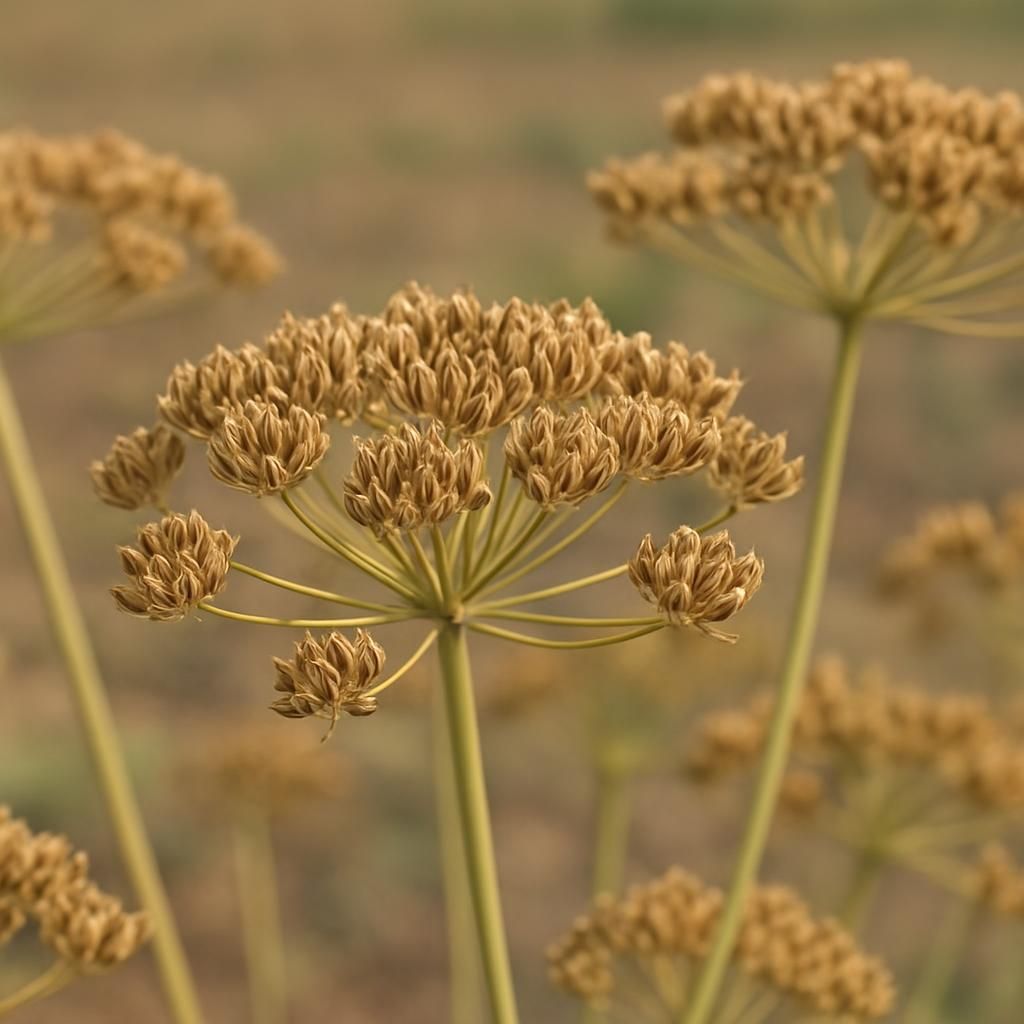
Apium graveolens belongs to the Apiaceae family and produces compound umbels of tiny white flowers that develop into schizocarp fruits commonly called seeds. Plants reach 60–90 cm in height with deeply lobed leaves and a taproot system. The seeds contain 1.5–3% essential oil dominated by limonene and sedanolide, which give the characteristic celery aroma.
Celery seed is a biennial that completes its life cycle in two seasons under natural conditions but is managed as an annual for seed production. Flowering occurs after a required vernalization period of 6–10 weeks below 10 °C.
Soil, pH, and Climate Requirements for Celery Seed
Celery seed thrives in fertile, well-drained loam with high organic matter. Heavy clay soils restrict root development and increase disease pressure, while sandy soils demand frequent irrigation.
| Parameter | Ideal Range | Notes |
|---|---|---|
| Soil Type | Loam to sandy loam | Good drainage essential |
| Soil pH | 6.0–7.0 | Slightly acidic to neutral |
| Temperature (Day) | 15–21 °C | Cool conditions promote seed quality |
| Temperature (Night) | 10–15 °C | Prevents premature bolting |
| Annual Rainfall | 600–900 mm | Supplemental irrigation required |
| Frost Tolerance | Light frost (-2 °C) | Seedlings tolerate light frost |
Step-by-Step Planting & Propagation
- Start seeds indoors 10–12 weeks before the last expected frost in sterile seed-starting mix at 18–21 °C.
- Transplant seedlings at the 4–6 true-leaf stage, spacing 30 cm between plants and 45–60 cm between rows.
- Direct seeding is possible in mild climates; sow 1 cm deep and thin to final spacing after emergence.
- Maintain soil temperature above 10 °C for rapid germination; use floating row covers if cool nights persist.
Care & Maintenance regimes for Celery Seed
Consistent moisture prevents stress-induced bolting. Apply 2.5–3.8 cm of water weekly, adjusting for rainfall and soil type.
| Growth Stage | Water Schedule | Fertilizer Schedule | Pruning/Maintenance |
|---|---|---|---|
| Seedling (0–4 wks) | Keep evenly moist, 1 cm/day | 10-10-10 NPK at 50 kg/ha at transplant | Remove weeds; mulch to retain moisture |
| Vegetative (4–12 wks) | 2.5 cm every 3–4 days | Side-dress with 20-10-10 at 75 kg/ha | Monitor for flowering stalks; rogue |
| Flowering & Seed Set | Maintain 2.5 cm weekly | Apply 0-0-20 potassium at 40 kg/ha | Stake if wind risk; remove diseased foliage |
| Pre-Harvest | Reduce to 1.5 cm/week | Cease nitrogen applications 3 weeks prior | Clean beds of debris |
Pests, Diseases & Organic Management
Common threats include Aphids, Thrips, and Spider mites. Use insecticidal soaps and introduce beneficial insects such as lady beetles. Fungal issues such as Alternaria leaf spot and Powdery mildew are managed with neem oil sprays and improved airflow.
Crop rotation with Onion and Garlic reduces soil-borne pathogens. Reflective mulch deters aphids and thrips while conserving soil moisture.
Harvesting, Curing & Optimal Storage
Harvest when 70–80 % of umbels turn light brown and seeds begin to shatter. Cut entire plants and hang in bundles in a shaded, well-ventilated area for 7–10 days. Thresh by hand or mechanical tumbler, then clean with screens and air separation.
Store seeds at 8–10 % moisture in airtight containers at 4–10 °C. Properly cured seed retains viability and essential oil content for 2–3 years.
Companion Planting for Celery Seed
Celery seed benefits from Nasturtium and Marigold which repel aphids and nematodes. Pair with Lettuce and Onion for efficient space use and shared irrigation needs. Avoid planting near Carrot to reduce cross-pollination and shared pest pressure.
Stop Treating Tomato Blight Like a Spray Problem: Here Is What Works Better