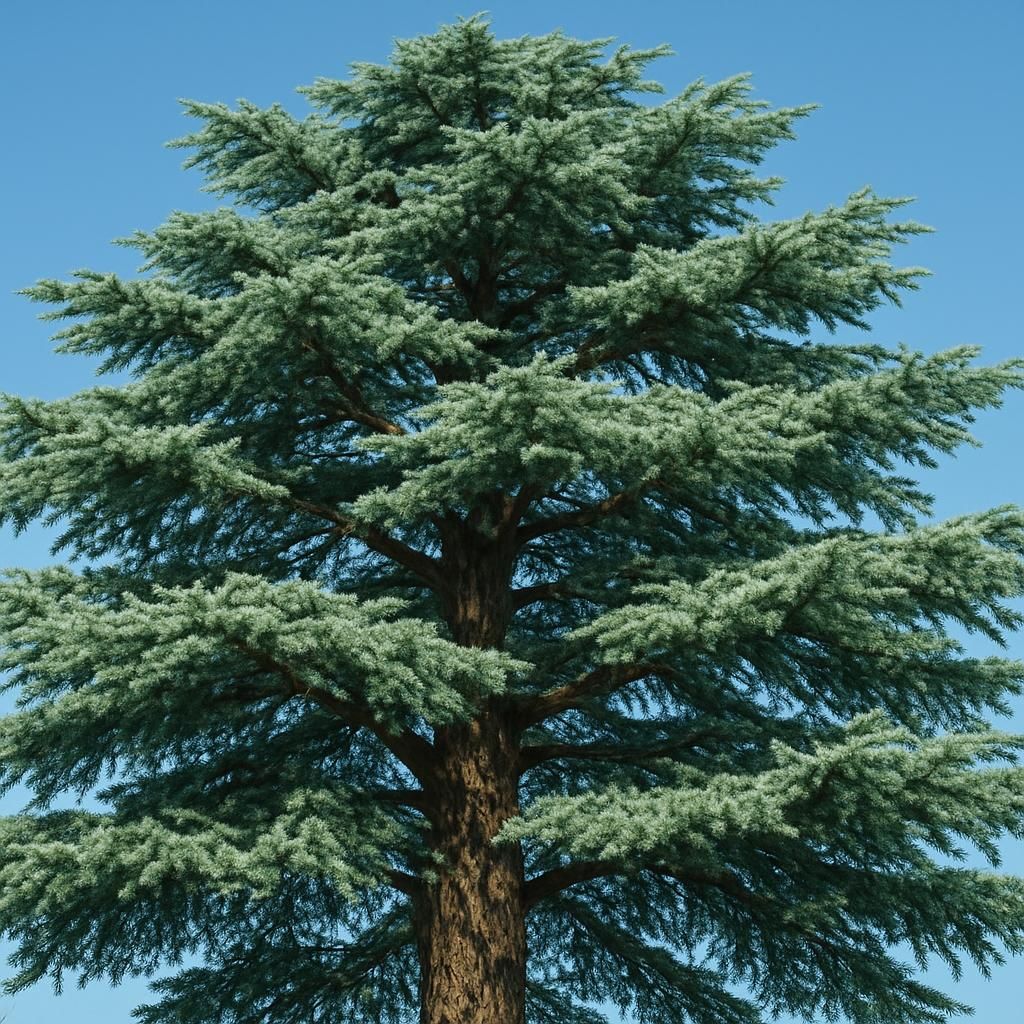
Introduction to Cedar
Cedar trees (Cedrus spp.) are iconic evergreen conifers native to mountainous regions of the Mediterranean, Himalayas, and North Africa. Valued for their aromatic, decay-resistant timber and majestic form, these long-lived species are cultivated for timber plantations, windbreaks, and high-end landscaping. While often confused with juniper or cypress, true cedars belong to the Pinaceae family and include four primary species: Cedrus atlantica (Atlas cedar), Cedrus libani (Lebanon cedar), Cedrus deodara (Deodar cedar), and Cedrus brevifolia (Cyprus cedar). Professional growers appreciate cedar for its resilience, low maintenance once established, and valuable lumber that commands premium prices in construction and furniture markets.
Botanical Profile of Cedar
Cedar trees are monoecious conifers with needle-like leaves arranged in dense spirals on short shoots. They produce distinctive erect cones that disintegrate at maturity, releasing winged seeds. Growth habit varies from pyramidal in youth to broad, flat-topped crowns in maturity. Most species reach 40–60 meters at maturity with trunk diameters exceeding 2 meters under optimal conditions. The wood contains natural oils that deter insects and resist rot, making it a preferred material for outdoor applications. Root systems are deep and extensive, providing excellent anchorage but requiring careful transplanting of young stock.
Soil, pH, and Climate Requirements for Cedar
Cedar thrives in well-drained, slightly acidic to neutral soils with good aeration. Heavy clay or waterlogged conditions lead to root diseases and poor growth. The following table summarizes ideal growing parameters:
| Parameter | Ideal Range | Notes |
|---|---|---|
| Soil Type | Loamy, sandy loam, or gravelly | Excellent drainage essential |
| Soil pH | 5.5–7.0 | Slightly acidic to neutral |
| Temperature | -15°C to 30°C (5°F to 86°F) | Cold hardy; avoid prolonged extreme heat |
| Annual Rainfall | 600–1200 mm | Supplemental irrigation in dry periods |
| USDA Zones | 6–9 | Species-specific tolerances vary |
| Sun Exposure | Full sun | Minimum 6–8 hours direct sunlight |
| Elevation | 500–2500 m | Prefers cooler highland microclimates |
Step-by-Step Planting & Propagation
Cedar is primarily propagated from seed, though grafting and cuttings are used for selected cultivars. Collect mature cones in autumn, extract seeds, and stratify at 4°C for 30–60 days before sowing in well-drained seedbeds. Seedlings are transplanted at 1–2 years old into nursery rows spaced 30 cm apart. For field planting, select 2–3-year-old container-grown or bare-root stock. Dig holes twice the width of the root ball and plant at the same depth as the nursery line. Space trees 4–6 meters apart for timber production or 8–10 meters for ornamental specimens. Water thoroughly after planting and apply a 5–8 cm layer of organic mulch to conserve moisture and suppress weeds.
Care & Maintenance regimes for Cedar
Established cedar requires minimal intervention beyond monitoring for pests and ensuring adequate moisture during the first three growing seasons. The following table outlines recommended schedules:
| Task | Frequency | Details |
|---|---|---|
| Watering | Weekly for first 2–3 years | Deep soak to 30 cm; reduce after establishment |
| Fertilizer | Early spring and mid-summer | Balanced NPK 10-10-10 at 50–100 g per tree |
| Pruning | Late winter or early spring | Remove dead/diseased branches; shape young trees |
| Mulching | Annual renewal | Maintain 5–8 cm organic layer around base |
| Weed Control | As needed | Hand pull or shallow cultivation |
Pests, Diseases & Organic Management
Common threats include aphids, spider mites, and cedar-apple rust. Monitor foliage regularly for discoloration or webbing. Organic controls include horticultural oils, insecticidal soaps, and encouraging beneficial insects such as lady beetles. Root rot caused by Phytophthora is prevented through proper drainage and avoiding overwatering. Maintain good air circulation by spacing trees appropriately and removing lower branches on mature specimens.
Harvesting, Curing & Optimal Storage
Timber harvesting typically occurs at 40–80 years depending on species and market. Select trees with straight boles and minimal taper. Fell during dormant season to minimize sap stain. Air-dry lumber in covered stacks with good ventilation for 6–12 months. For essential oil production, harvest young branches or needles in early summer and distill promptly. Store finished timber in dry, well-ventilated sheds away from direct sunlight to preserve color and aromatic qualities.
Companion Planting for Cedar
Cedar integrates well with nitrogen-fixing understory species such as clover and hairy vetch to improve soil fertility. Avoid planting near apple or pear orchards due to cedar-apple rust transmission. Compatible companions include thyme and rosemary in the understory for pest deterrence and ground cover. In agroforestry systems, cedar provides valuable wind protection for wheat and barley crops while contributing long-term timber revenue.