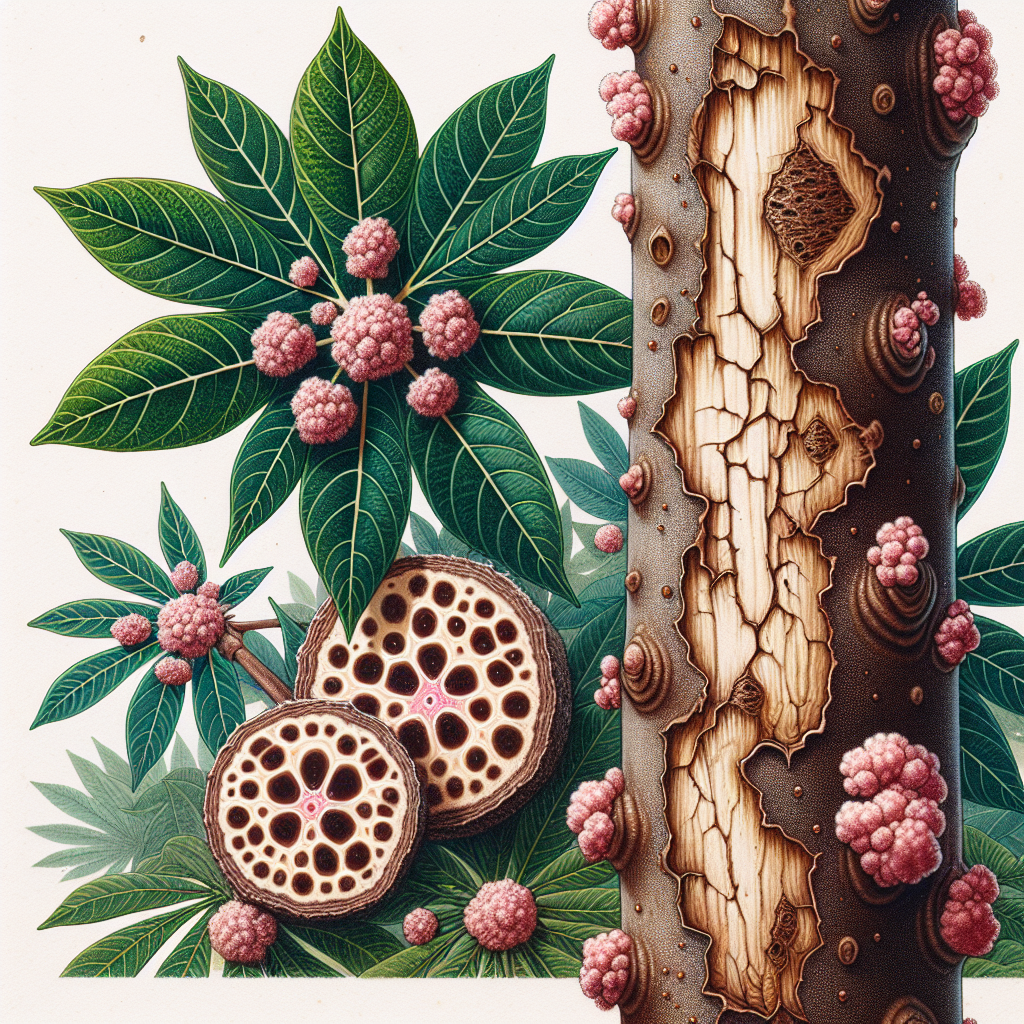
Introduction to Cassava anthracnose
Cassava anthracnose, caused by the fungus Colletotrichum gloeosporioides, stands as one of the most devastating diseases affecting Cassava production globally. This pathogen targets this vital root crop, which serves as a primary food source for over 800 million people, particularly in sub-Saharan Africa, Asia, and Latin America. First identified in the early 20th century, the disease has escalated in recent decades due to intensified farming practices, climate shifts, and reliance on susceptible varieties. In severe outbreaks, it can reduce yields by up to 80%, compromising food security and farmer livelihoods.
The fungus infects all plant parts but is notorious for stem cankers and dieback, which weaken plants and promote lodging. Unlike bacterial blights or viral mosaics, anthracnose progresses rapidly under favorable conditions, forming sunken lesions with pink spore masses. Early detection is crucial, as latent infections can spread silently through cuttings. This guide provides professional-grade diagnostics, lifecycle insights, and proven organic management strategies to safeguard your cassava fields. For broader context on similar fungal threats, see our detailed entry on Anthracnose.
Farmers often confuse it with Cercospora leaf spot or Alternaria, but anthracnose's distinctive acervuli (spore-producing structures) set it apart. With climate change extending humid periods, proactive measures are non-negotiable. Implementing integrated disease management can cut losses by 50-70%, ensuring robust harvests.
Identifying Symptoms & Damage
Accurate identification hinges on recognizing hallmark symptoms across cassava growth stages. On leaves, initial signs appear as small, water-soaked spots that evolve into circular, sunken lesions 5-10 mm in diameter with dark brown to black centers. These lesions often feature concentric rings and may coalesce, leading to leaf blight and premature defoliation. Under humid conditions, pinkish-orange spore masses ooze from acervuli, confirming C. gloeosporioides.
Stem infections manifest as elongated, sunken cankers with cracked bark, starting at nodes or wounds. These cankers girdle stems, causing wilting, dieback from the tip, and plant lodging. In advanced stages, stems exhibit dark streaks and shredding. Twigs show dieback with black lesions, while roots and tubers develop brown, sunken rots post-harvest, rendering them unmarketable.
Damage quantification reveals severe impacts: leaf loss reduces photosynthesis by 40-60%, stem cankers halve storage root yields, and tuber rots cause 20-50% post-harvest losses. Young plants succumb rapidly, while mature ones show stunted growth and reduced starch content. Differentiate from Phytophthora by anthracnose's drier lesions versus oozy rots. Use a hand lens to spot black setae (bristle-like structures) in acervuli for confirmation.
Field scouting involves checking 20-30 plants per hectare weekly, noting incidence (affected plants %) and severity (lesion coverage). Economic thresholds: >10% stem cankers warrant action. Photosynthetic decline correlates with 1-2% yield loss per 10% leaf area affected.
Lifecycle and Progression of Cassava anthracnose
Colletotrichum gloeosporioides follows a polycyclic lifecycle, with multiple infection cycles per season. Primary inoculum survives in crop debris, infected cuttings, and alternate hosts as dormant mycelium or appressoria (infection structures). Conidia (asexual spores) form on acervuli during wet weather, splashing via rain or irrigation up to 1-2 meters.
Germination occurs in 4-6 hours at 25-30°C and >90% humidity, with appressoria penetrating via wounds or stomata. Incubation lasts 3-7 days, yielding symptoms. Under optimal conditions (28°C, free water), conidia produce secondary inoculum, enabling 10-15 cycles per season. Sexual spores (ascospores) in perithecia contribute to overwintering.
Progression accelerates post-flowering: latent infections activate during tuber bulking, peaking at 60-90 days after planting. Disease gradients show epicenters from old debris, spreading 50-100m/year. Inoculum density >10^4 conidia/ml triggers epidemics. Lifecycle ties to cassava's perennial nature, with stakes (cuttings) harboring 20-50% infections.
Environmental Triggers & Risk Factors
Warm, humid tropics (25-32°C, 80-100% RH) drive epidemics, with prolonged leaf wetness (>12 hours) essential for sporulation. Rainfall >1500mm/year, poor drainage, and dense canopies exacerbate spread. High nitrogen favors succulent tissues, while wounding from termites or cultivation aids entry.
Susceptible varieties like TMS 30572 amplify risks; intercropping with sweet potato or yam increases humidity. Monoculture, narrow row spacing (<1m), and late harvesting prolong exposure. Climate variability—erratic rains—boosts latent infections. Soil pH <5.5 and low potassium weaken resistance.
Risk mapping: scores >7 (humid lowlands) demand vigilance. For predictive insights, check Why 80% of Small Farms Battle Weather Disasters - And How Hyper-Local AI Forecasts Can Save Your Harvest.
Organic Control & Treatment Plans
Organic management emphasizes prevention, but active treatments curb outbreaks. Cultural: Use disease-free stakes from apex (top 30cm); hot water treat at 49°C for 20min kills 99% inoculum. Rotate with cowpeas or legumes (2-3 years). Prune infected parts, bury debris.
Resistant Varieties: Opt for TMS 92/0057, NR 8082 (50-70% resistance). Biopesticides: Apply Trichoderma harzianum (10^9 CFU/ml) weekly; reduces incidence 60%. Bacillus subtilis (QST 713) at 5L/ha every 10 days suppresses sporulation.
Botanicals: Neem oil (5ml/L) + garlic extract inhibits conidia 70%. Chili-garlic spray (1:1:100) weekly. Extracts: Moringa leaf extract boosts defenses via SAR (systemic acquired resistance).
Integrated Plan: Scout weekly; at 5% incidence, prune + biofungicide. Mulch with neem cake (2t/ha) suppresses soil inoculum. Silicon (20kg/ha) strengthens cell walls. Efficacy: 75-90% control vs. 95% for synthetics, sustainable long-term.
Preventing Cassava anthracnose in the Future
Prevention fortifies resilience. Select certified, indexed stakes; rogue infected plants pre-planting. Site selection: well-drained loams, spacing 1x1m for airflow. Balanced NPK (100:50:100 kg/ha) avoids excess vigor.
Sanitation: deep plow residues (>20cm); solarize soil (6 weeks summer). Intercrop with marigold for biofumigation. Monitor via traps; forecast models predict outbreaks 7-10 days ahead.
Build soil health: mycorrhizae inoculants enhance uptake, reducing stress. Farmer field schools train on IPM. Long-term: breed multi-resistant hybrids. Annual audits cut recurrence 80%.
Crops Most Affected by Cassava anthracnose
Primarily cassava, with 20-80% losses in susceptible cultivars. Alternate hosts include sorghum, mango, banana, and papaya, harboring inoculum. In mixed systems, proximity to these amplifies risks. Global hotspots: Nigeria (40% incidence), Thailand, Brazil. Minor impacts on sweet potato and taro.