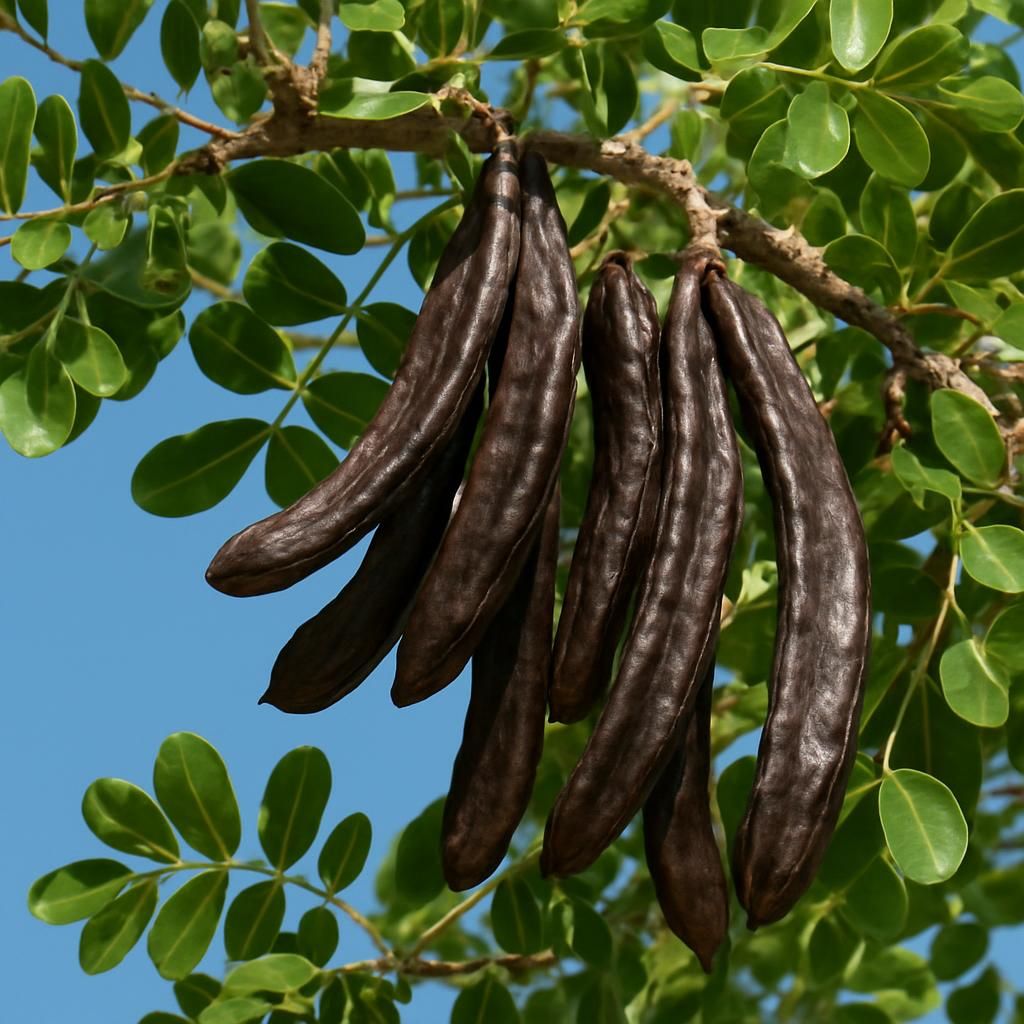
Introduction to Carob tree
The carob tree (Ceratonia siliqua) is a resilient evergreen legume native to the Mediterranean basin that has been cultivated for thousands of years for its nutritious pods and ecological benefits. Known for its deep root system and exceptional drought tolerance, the carob tree produces sweet, chocolate-like pods that are processed into flour, syrup, and animal feed. Its ability to fix nitrogen and stabilize soils makes it a valuable species for sustainable agroforestry and marginal land restoration.
Carob cultivation is expanding in arid and semi-arid regions worldwide because it requires far less water than many commercial tree crops while delivering consistent harvests for decades. The pods are naturally high in natural sugars, fiber, and minerals, and carob powder serves as a popular caffeine-free alternative to cocoa in baking and confectionery. Commercial growers value the tree for its low maintenance requirements once established and its potential for dual-purpose use in both food and fodder production.
Botanical Profile of Carob tree
Ceratonia siliqua belongs to the Fabaceae family and is an evergreen tree that can reach 10–15 meters in height with a broad, spreading canopy. The tree features compound leaves with 6–10 pairs of oval leaflets and produces small, inconspicuous flowers that develop into elongated pods 10–20 cm long. Carob trees are typically dioecious, although some hermaphroditic cultivars exist, and pollination is primarily wind-assisted with some insect involvement.
The pods contain 8–12 hard seeds embedded in a sweet, fibrous pulp. Mature trees can produce 100–200 kg of pods annually under good management. The deep taproot system allows the tree to access groundwater, enabling survival in regions receiving as little as 250 mm of annual rainfall. Carob wood is dense and durable, and the tree can live for over 100 years, making it a long-term investment for farmers.
Soil, pH, and Climate Requirements for Carob tree
Carob trees tolerate a wide range of soil types but perform best in well-drained, calcareous soils. They are highly tolerant of salinity and alkaline conditions but sensitive to waterlogging. The following table summarizes ideal growing conditions:
| Parameter | Ideal Range/Value | Notes |
|---|---|---|
| Soil Type | Sandy loam to loam | Excellent drainage essential |
| Soil pH | 7.0–8.5 | Tolerates up to 9.0; avoid acidic soils |
| Annual Rainfall | 250–550 mm | Supplemental irrigation improves yields |
| Temperature Range | 15–35 °C (growing season) | Frost sensitive below –4 °C |
| Altitude | 0–800 m | Higher altitudes reduce pod quality |
| Sun Exposure | Full sun | Minimum 6–8 hours direct sunlight |
| Spacing | 8–10 m between trees | 10–12 m for mechanical harvesting |
Step-by-Step Planting & Propagation
Carob is most reliably propagated from seeds or grafted seedlings. Fresh seeds should be scarified by soaking in hot water (80 °C) for 24 hours or by mechanical abrasion before sowing. Sow seeds 2–3 cm deep in well-drained potting mix during spring; germination occurs in 2–4 weeks at 20–25 °C. Seedlings are transplanted to the field after 12–18 months when they reach 30–50 cm in height.
Grafting is recommended for commercial orchards to ensure female or hermaphroditic trees and to accelerate fruiting. Use whip-and-tongue or cleft grafting on 1–2 year old rootstocks during late winter. Plant grafted trees at the same depth as in the nursery, spacing them 8–10 m apart in rows oriented north-south for optimal light interception. Mulch the planting area with 10 cm of organic material to conserve moisture and suppress weeds.
Care & Maintenance regimes for Carob tree
Once established, carob trees require minimal intervention. Young trees benefit from regular watering and light fertilization during the first three years. Mature trees are highly drought tolerant but respond positively to supplemental irrigation during flowering and pod development. The following table outlines recommended schedules:
| Activity | Year 1–3 | Mature Trees (Year 4+) | Frequency |
|---|---|---|---|
| Watering | 20–30 L per tree weekly | 50–80 L during dry spells | Every 7–10 days in first 3 years; reduce after establishment |
| Fertilizer | 0.5 kg NPK 10-10-10 + compost | 1–2 kg slow-release organic blend | Apply in early spring |
| Pruning | Formative pruning to single leader | Remove dead wood; open canopy | Annual winter pruning |
Pests, Diseases & Organic Management
Carob trees are generally resistant to most pests and diseases due to their tough foliage and low water needs. Occasional issues include scale insects, aphids, and root rot caused by poor drainage. Monitor for black scale and treat with horticultural oil or introduce natural predators such as lady beetles. Maintain good airflow through proper pruning to reduce fungal pressure. Avoid over-irrigation to prevent Phytophthora infections.
Organic management emphasizes soil health and biodiversity. Use compost tea and seaweed extracts to boost tree vigor. Introduce beneficial insects and maintain ground covers that support predatory species. Remove and destroy heavily infested branches rather than relying on chemical controls.
Harvesting, Curing & Optimal Storage
Carob pods are harvested when they turn dark brown and begin to dry on the tree, typically between late summer and early autumn. Hand harvesting or mechanical shaking onto tarps is common. After collection, pods are sun-dried for 5–7 days until moisture content drops below 15 %. Properly dried pods can be stored in ventilated sacks or bins for up to two years in cool, dry conditions.
For processing into flour or syrup, pods are kibbled and separated from seeds. Seeds are roasted and ground for industrial uses, while the pulp is milled into carob powder. Store finished products in airtight containers away from direct sunlight to preserve flavor and nutritional quality.
Companion Planting for Carob tree
Carob trees integrate well into agroforestry systems. Compatible companions include olive, almond, and pomegranate trees that share similar soil and climate requirements. Understory legumes such as chickpeas or clover improve soil nitrogen levels and provide additional income. Aromatic herbs like thyme and rosemary planted beneath the canopy help deter pests while utilizing the partial shade provided by mature trees.
Avoid planting shallow-rooted vegetables directly under young carob trees until the canopy is well established. Interplanting with deep-rooted perennials maximizes land use efficiency and creates a resilient, multi-layered production system.