Introduction to Canna
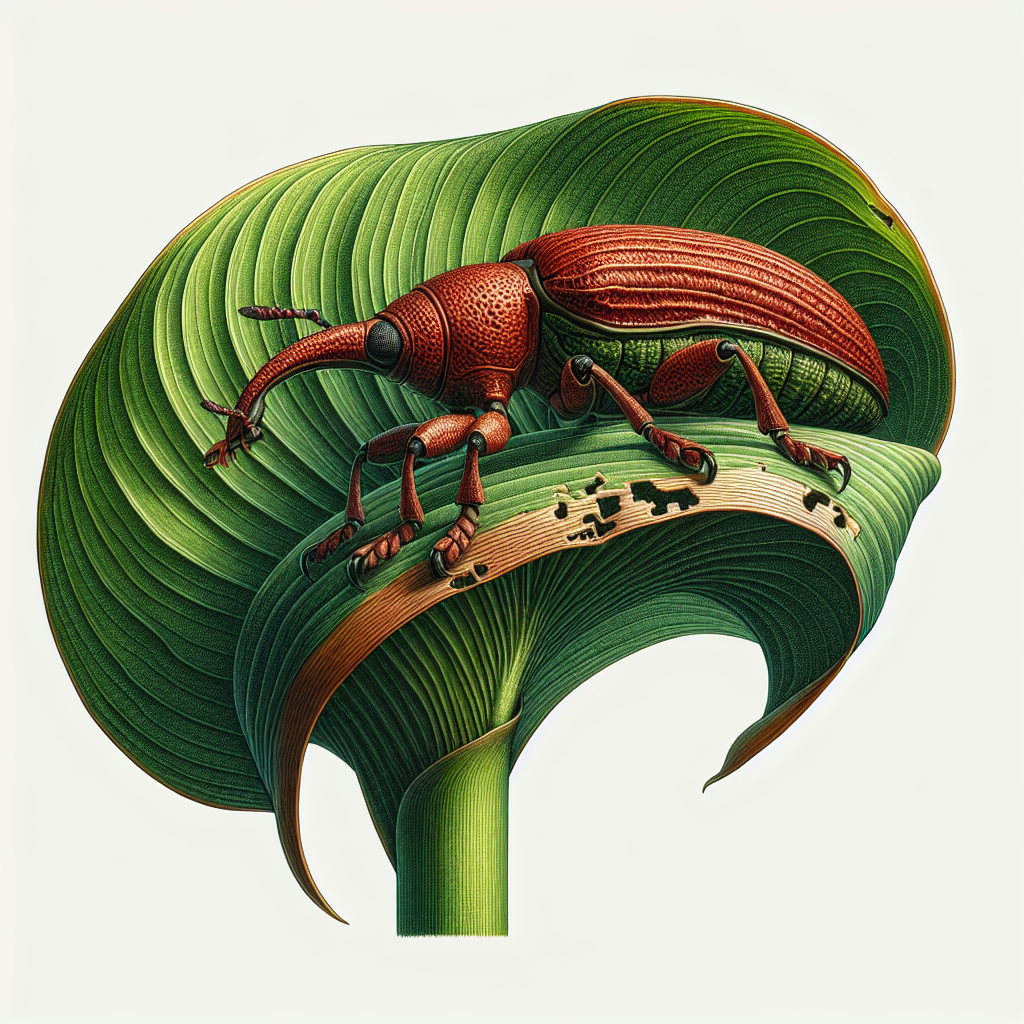
Canna Lily Weevil, scientifically known as Odoiporus longicollis, represents a significant threat to canna lilies (Canna indica and hybrids), prized ornamental plants in gardens, landscapes, and even some agricultural settings. This beetle pest, originating from India and Southeast Asia, has become invasive in regions like Australia, Africa, and parts of the Americas, where warm climates favor its proliferation. Adults are large, reddish-brown weevils measuring 2-3 cm long with a distinctive elongated snout, while larvae are creamy-white grubs that bore into plant tissues.
Farmers and gardeners often encounter this pest during warm, humid seasons, as it feeds voraciously on foliage, causing characteristic U-shaped notches and longitudinal slits. Beyond aesthetics, heavy infestations weaken plants, reduce photosynthesis, and increase susceptibility to secondary infections like leaf spot diseases. Early detection is crucial, as populations explode rapidly without intervention. This guide provides comprehensive diagnostics, lifecycle insights, and proven organic management strategies to safeguard your canna plantings. For small farms optimizing crop health, integrating these tactics with tools like AI-driven pest monitoring can prevent losses—check out Spring Pest Patrol: Organic AI Strategies to Shield Your Crops from Common Invaders for advanced tips.
Understanding the pest's biology empowers proactive control. Adult weevils are nocturnal, hiding in soil or debris during the day, while larvae develop inside stems, making them hard to spot until damage appears. In tropical areas, multiple generations per year amplify the problem, potentially defoliating entire stands. Economic impacts include replacement costs for ornamentals and yield reductions in canna-derived products like starch or fibers in some regions.
Identifying Symptoms & Damage
Diagnosing Canna Lily Weevil infestations requires keen observation of specific symptoms. Adult feeding produces irregular, U-shaped notches along leaf margins, often 1-2 cm wide, with a raspy, scraped appearance. Unlike general chewers, these notches are semicircular and concentrated on older leaves. Look for longitudinal slits on leaf midribs or petioles, where females chew to insert eggs.
Larval damage is subtler but devastating: tunnels within stems and rhizomes cause wilting, yellowing, and sudden plant collapse. Affected stems may show frass (sawdust-like excrement) at entry points or blackened, rotting interiors upon splitting. Severe cases lead to stunted growth, flower drop, and plant death. Differentiate from caterpillars by the absence of webbing or frass pellets, and from slugs by dry, precise cuts rather than slime trails.
Secondary signs include sooty mold on honeydew-excreting pests, though rare here, or wilting mimicking root rot. Scout at dusk with a flashlight to spot adults; shake plants over white sheets for larvae. Use a 10x hand lens to confirm the long snout. Damage peaks in summer, with 50-100% defoliation possible in untreated plots. Photograph suspect plants for AI identification tools to speed diagnosis.
Lifecycle and Progression of Canna
The Canna Lily Weevil completes its lifecycle in 3-6 months, depending on temperature (optimal 25-32°C). Adults emerge in spring, measuring 20-30 mm with rusty-brown bodies and black spots. Females lay 50-100 eggs singly in leaf slits, chewing access wounds. Eggs hatch in 5-7 days into 10-20 mm white larvae with brown heads, boring into petioles and stems.
Larvae feed for 4-6 weeks, molting 4-5 times, creating galleries filled with frass. They pupate in soil or stems for 10-14 days, yielding new adults that overwinter in plant debris. In tropics, 3-4 generations occur annually; in subtropics, 1-2. Progression: eggs (tiny, white, leaf-embedded) → larvae (C-shaped, soil-dwelling later) → pupae (in earthen cells) → adults (long-lived, 6-12 months).
Monitor for synchronized emergence post-rain. Lifecycle aligns with canna growth flushes, amplifying damage during vegetative stages. Disrupt at larval stage for best control, as adults are mobile and hard to target.
Environmental Triggers & Risk Factors
Warm, humid conditions (above 25°C, 70% RH) trigger outbreaks, favoring egg-laying and larval survival. Poor air circulation in crowded plantings exacerbates spread. Overwatering creates moist soil for pupation, while excessive nitrogen promotes lush foliage attractive to adults. Imported infested rhizomes are primary introduction vectors.
Risk factors include monoculture landscapes, proximity to wild cannas, and neglect of debris cleanup. Tropical/subtropical zones (USDA 9-11) face highest threats; mild winters allow survivor carryover. Companion pests like ants farm honeydew, worsening infestations. Soil pH above 7 reduces natural enemies. Recent studies link climate change to expanded ranges, with models predicting northward shifts.
Organic Control & Treatment Plans
Integrated Pest Management (IPM) emphasizes organics. Cultural: Hand-pick adults at night into soapy water; destroy infested rhizomes by solarization (black plastic, 4-6 weeks). Rotate plantings; mulch to deter soil pupation.
Biological: Introduce predatory beetles (e.g., Menochilus sexmaculatus) or parasitic wasps (Telenomus spp.). Neem oil (0.5% weekly sprays) disrupts feeding/oviposition; spinosad targets larvae effectively (apply evenings). Bacillus thuringiensis (Bt) ineffective against weevils—use for co-occurring armyworms.
Mechanical: Wrap stems with burlap bands to trap descending larvae; use pitfall traps with molasses. Treatment Plan: Week 1: Scout/remove adults, apply neem. Week 2-4: Reapply neem/spinosad, till soil. Monitor 6 weeks. Threshold: 5 adults/plant. Combine with marigold borders for nematode suppression.
Yields recover 70-90% with timely action. Avoid synthetics for organic certification.
Preventing Canna in the Future
Prevention hinges on exclusion and hygiene. Inspect nursery stock; hot-water treat rhizomes (49°C, 30 min). Plant resistant hybrids like Canna 'Tropicanna'. Space 60 cm apart for airflow; avoid overhead irrigation. Clean debris post-season; deep till to expose pupae to predators.
Use row covers during peak (spring-fall); yellow sticky traps for monitoring. Boost soil health with compost to enhance resilience—see Soil Health Mastery: 5 Proven Strategies for Small Farms to Build Fertile Ground Without Breaking the Bank. Quarantine new plants 4 weeks. Long-term: Diverse plantings with thai-basil repel adults.
Annual scouting prevents establishment; IPM reduces populations 95%.
Crops Most Affected by Canna
Primarily attacks canna lilies (Canna spp.), including ornamental varieties and wild Canna indica. Minor hosts: banana (banana), ginger (ginger), and taro (taro) in mixed tropics. Ornamental gardens suffer most, with landscape losses exceeding $10M annually in infested areas. Edible canna rhizomes for starch face contamination risks. No major field crops, but edges near ornamentals vulnerable. Protect high-value dragon-fruit plantings nearby.