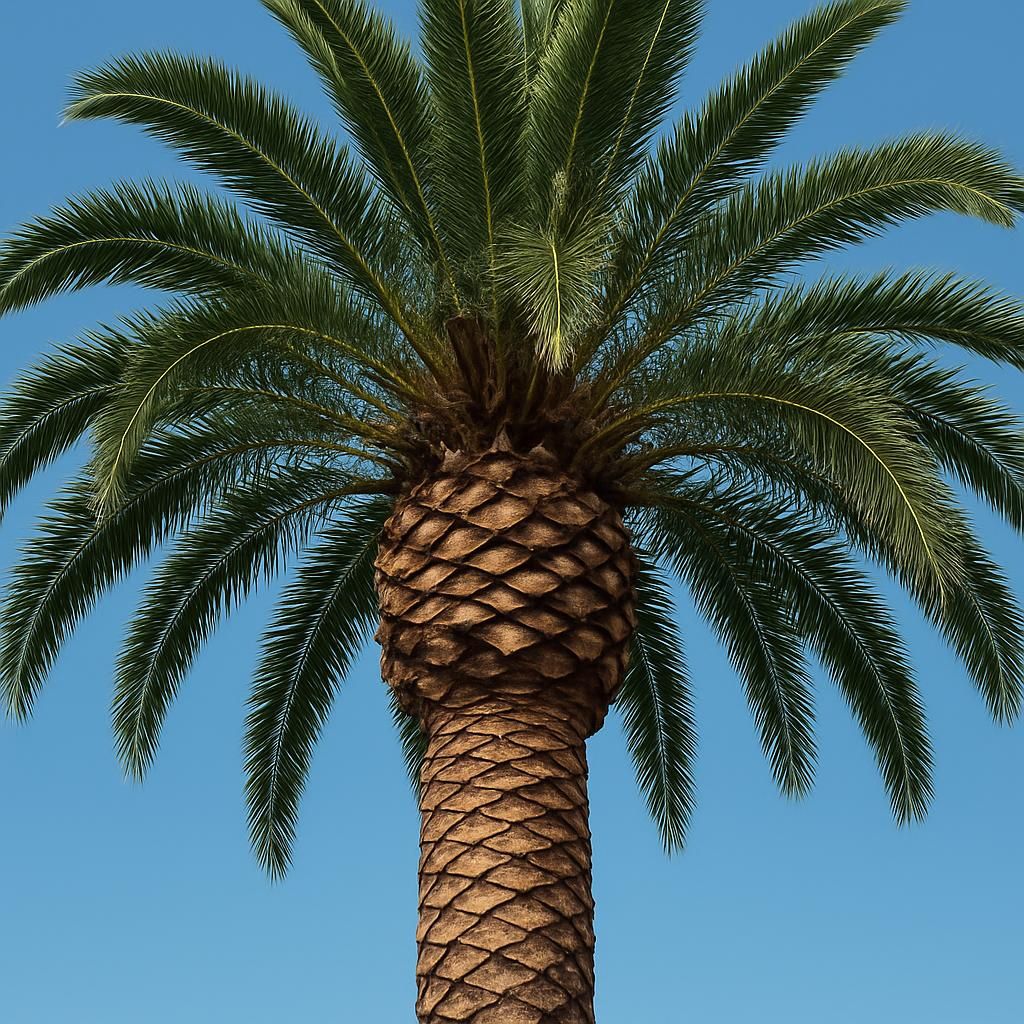
Introduction to Canary Island Date Palm
The Canary Island Date Palm (Phoenix canariensis) is one of the most recognizable and widely planted palms in the world. Native to the Canary Islands, it has become a signature landscape feature in coastal Mediterranean climates, arid zones, and urban streetscapes. Its massive, barrel-shaped trunk crowned with a dense canopy of dark green, feathery fronds creates dramatic vertical interest and provides valuable shade.
Professional growers and landscape architects value this species for its relative cold tolerance (down to approximately -6°C/21°F), salt tolerance, and low water requirements once established. Unlike the true date palm (Phoenix dactylifera), it is grown primarily for ornamental purposes rather than fruit production, although it occasionally produces small, inedible dates.
This comprehensive guide delivers professional-grade, field-tested advice on soil preparation, planting techniques, irrigation schedules, fertilization programs, integrated pest management, and companion planting strategies to ensure long-term success with Phoenix canariensis.
Botanical Profile of Canary Island Date Palm
Phoenix canariensis is a dioecious, single-stemmed palm in the Arecaceae family. Mature specimens typically reach 15–20 meters (50–65 feet) in height with a trunk diameter of 60–90 cm (24–36 inches). The trunk is characteristically marked with persistent leaf bases that create a distinctive diamond pattern.
The crown consists of 50–100 pinnate fronds, each 4–6 meters long. Individual leaflets are rigid, dark green above and silvery-gray beneath. Male and female flowers are borne on separate plants in large, branched inflorescences. Female plants produce clusters of small, orange-brown fruits that are generally considered inedible.
The species is highly adaptable to container culture when young but performs best when planted in the ground with ample root space. It grows at a moderate rate of 30–60 cm (12–24 inches) per year under optimal conditions.
Soil, pH, and Climate Requirements for Canary Island Date Palm (MUST INCLUDE A MARKDOWN TABLE OF IDEAL CONDITIONS)
Phoenix canariensis performs best in well-drained soils with moderate fertility. It tolerates a wide range of soil textures but will decline rapidly in waterlogged conditions. The root system is extensive and deep, making proper site selection critical.
| Parameter | Ideal Range | Notes |
|---|---|---|
| Soil Type | Sandy loam to loam | Excellent drainage essential |
| Soil pH | 6.0–8.0 | Slightly acidic to mildly alkaline |
| Temperature Range | 10–35°C (50–95°F) daytime | Tolerates brief dips to -6°C (21°F) |
| USDA Hardiness Zones | 9–11 | Marginal in zone 8 with protection |
| Sun Exposure | Full sun | Minimum 6–8 hours direct sunlight |
| Annual Rainfall | 300–800 mm (12–32 in) | Supplemental irrigation required in drier zones |
| Wind Tolerance | Moderate to high | Young plants benefit from windbreaks |
| Salinity Tolerance | Moderate | Suitable for coastal plantings |
Site preparation should include incorporation of organic matter and creation of raised beds or berms in heavy clay soils to ensure drainage.
Step-by-Step Planting & Propagation
Site Selection and Preparation Choose a location with full sun and excellent drainage. Dig a planting hole twice the width and equal to the depth of the root ball. Amend the backfill with 20–30% well-aged compost if soil is poor.
Planting Technique
- Remove the palm from its container, taking care not to damage the root ball.
- Position the plant so the top of the root ball is level with or slightly above the surrounding soil.
- Backfill and firm gently to eliminate air pockets.
- Create a watering basin and apply a 7–10 cm (3–4 inch) layer of organic mulch, keeping it 15 cm (6 inches) away from the trunk.
- Water thoroughly immediately after planting.
Propagation Phoenix canariensis is primarily propagated from seed. Fresh seeds germinate in 2–4 months at 25–30°C (77–86°F). Soak seeds for 48 hours before sowing in a sterile, well-draining mix. Tissue culture and offshoot (pups) removal are possible but less common for this species.
Spacing recommendations: 6–10 meters (20–33 feet) between mature specimens for landscape plantings.
Care & Maintenance regimes for Canary Island Date Palm (MUST INCLUDE A MARKDOWN TABLE OF WATER, FERTILIZER, AND PRUNING SCHEDULES)
Proper irrigation, nutrition, and pruning are essential for maintaining health and appearance. Over-pruning or excessive fertilization can lead to nutrient imbalances and increased pest susceptibility.
| Season | Watering Schedule | Fertilizer Application | Pruning Schedule |
|---|---|---|---|
| Spring | Deep watering every 7–10 days | Apply slow-release palm fertilizer (8-4-12 + micronutrients) at 1–2 kg per mature tree | Remove only dead or damaged fronds |
| Summer | Deep watering every 5–7 days | Supplemental micronutrient spray (Mg, Mn, Fe) if deficiency symptoms appear | Minimal pruning; avoid removing green fronds |
| Autumn | Reduce to every 10–14 days | Light application of compost or aged manure | Remove spent inflorescences and any damaged fronds |
| Winter | Minimal; water only if soil is dry | No fertilizer unless deficiency confirmed | Remove only severely damaged or diseased fronds |
Always water deeply but infrequently to encourage deep root growth. Avoid wetting the trunk base to reduce risk of fungal issues.
Pests, Diseases & Organic Management
Common pests include scale insects, mealybugs, and spider mites. These can be managed with horticultural oils, insecticidal soaps, and introduction of beneficial insects such as lady beetles and lacewings.
Fungal diseases such as Phytophthora root rot and Ganoderma butt rot are the primary disease concerns. Prevention through proper drainage and avoidance of trunk injury is the most effective strategy. Infected plants should be removed and destroyed to prevent spread.
Regular monitoring, good sanitation, and maintaining plant vigor through balanced nutrition are the cornerstones of an organic integrated pest management program.
Harvesting, Curing & Optimal Storage
While primarily ornamental, female specimens occasionally produce small dates. Harvest when fruits turn orange-brown. The fruits are generally bitter and not suitable for human consumption but may be used for wildlife feed or seed propagation.
Store seeds in cool, dry conditions for up to 12 months. Fresh seeds should be sown immediately for best germination rates.
Companion Planting for Canary Island Date Palm
Compatible understory plants include drought-tolerant Mediterranean species such as rosemary, thyme, and lavender. These companions improve soil biodiversity and provide visual contrast without competing for water or nutrients.
Avoid planting water-loving species or aggressive ground covers that retain moisture near the trunk. Marigold and nasturtium can be used as trap crops for aphids and other soft-bodied insects.
For larger landscapes, pairing with olive or citrus trees creates a classic Mediterranean planting scheme that shares similar cultural requirements.