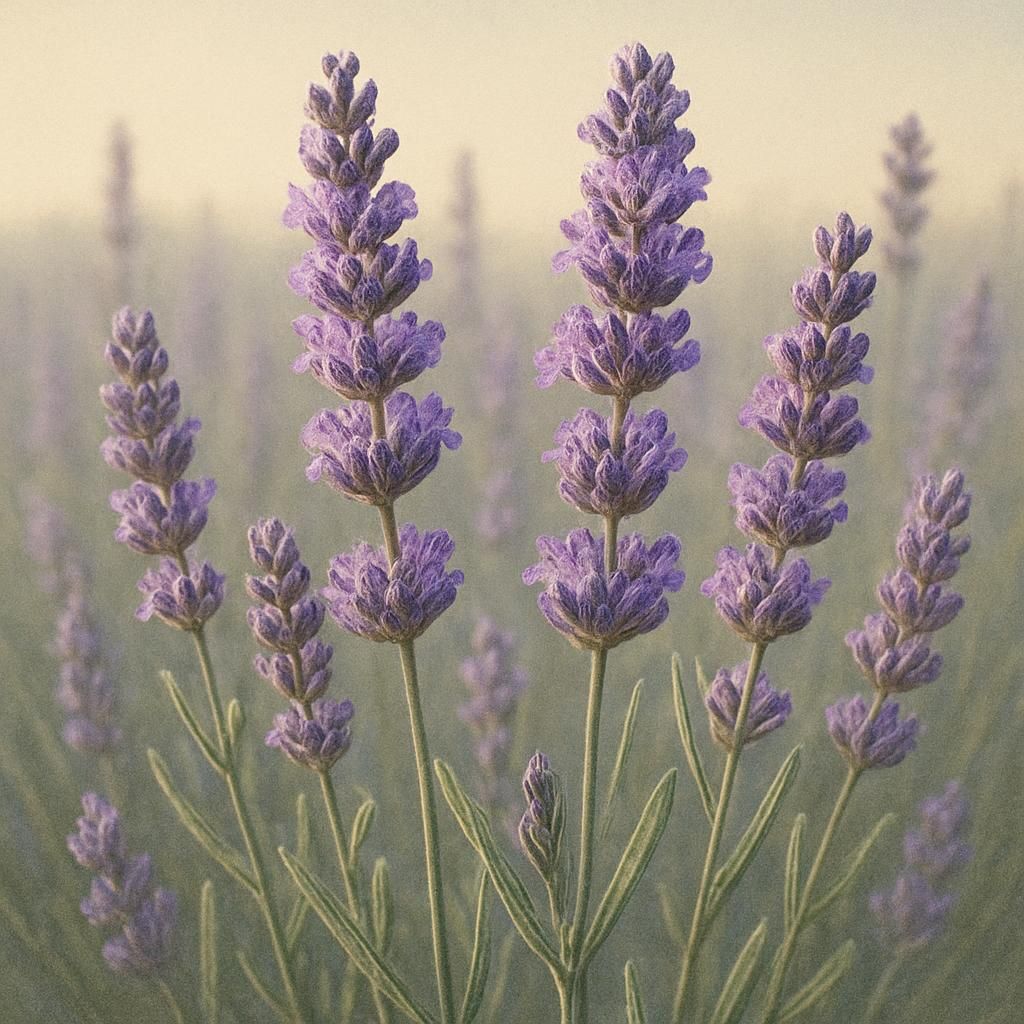
Introduction to Lavender
Lavender (Lavandula angustifolia) is a woody Mediterranean perennial grown worldwide for its aromatic essential oils, dried flower bundles, and ornamental value. Commercial production focuses on high-oil cultivars such as 'Hidcote', 'Munstead', and ' Grosso' for distillation, while smaller farms target culinary, cosmetic, and agritourism markets. Because lavender thrives in poor soils and requires minimal inputs once established, it is an excellent low-water crop for regions facing increasing drought pressure.
Successful lavender enterprises begin with site selection and cultivar choice matched to local climate. English lavender tolerates colder winters than French or Spanish types, while hybrid lavandins offer higher oil yields but sterile flowers. Understanding these differences allows growers to optimize both yield and market positioning.
Botanical Profile of Lavender
Lavender belongs to the Lamiaceae family. Plants develop a deep taproot and fibrous lateral roots that anchor them in rocky, well-drained soils. Narrow, silver-green leaves are covered in glandular trichomes that secrete the characteristic monoterpenes responsible for the scent. Terminal spikes bear whorls of small tubular flowers ranging from deep violet to pale lilac.
Flowering occurs from late spring through midsummer depending on latitude and cultivar. After bloom, plants enter semi-dormancy during hot, dry periods, resuming growth with cooler autumn temperatures. This phenological rhythm guides irrigation cutoffs and pruning schedules.
Soil, pH, and Climate Requirements for Lavender
Lavender demands sharply drained soils and full sun. The following table summarizes ideal conditions for commercial production:
| Parameter | Ideal Range | Notes |
|---|---|---|
| Soil Type | Sandy loam to gravelly loam | Heavy clay must be amended with grit |
| Soil pH | 6.5–8.0 | Slightly alkaline preferred |
| Organic Matter | <3 % | Excess fertility promotes weak growth |
| Drainage | Excellent | Raised beds or slopes recommended |
| Temperature Range | −15 °C to 35 °C | Established plants tolerate light frost |
| Annual Rainfall | 300–600 mm | Supplemental irrigation only during establishment |
| Sunlight | 8+ hours direct | South-facing aspect maximizes oil content |
Step-by-Step Planting & Propagation
Propagation from seed is slow and variable; most commercial growers use rooted cuttings or divisions. Take 8–10 cm semi-ripe cuttings in early summer, remove lower leaves, and root in a 50:50 perlite-sand mix under intermittent mist. Rooting occurs in 3–5 weeks at 20–22 °C.
Transplant well-rooted plugs in spring or early autumn. Space plants 45–60 cm apart in rows 90–120 cm wide on 20–30 cm raised beds. Water immediately after transplanting, then withhold irrigation to encourage deep rooting.
Care & Maintenance regimes for Lavender
Lavender is drought-tolerant once established but benefits from precise seasonal management. The table below outlines a professional schedule:
| Season | Watering | Fertilizer | Pruning |
|---|---|---|---|
| Spring | Light irrigation if dry spell >10 days | None unless deficiency confirmed | Remove winter damage, shape lightly |
| Summer | None after flowering begins | None | Harvest flowers at 50 % bloom |
| Autumn | Withhold to harden plants | Light compost tea if needed | Cut back 5–7 cm above woody base |
| Winter | None | None | Protect young plants with row cover |
Mulch with 5 cm of coarse gravel or crushed shells to suppress weeds and reflect heat. Avoid organic mulches that retain moisture around the crown.
Pests, Diseases & Organic Management
Common issues include root rot caused by Phytophthora and Fusarium species in poorly drained soils, and spider mites during hot, dry spells. Cultural prevention—excellent drainage, proper spacing, and moderate fertility—is the first line of defense.
For mites, release predatory mites (Phytoseiulus persimilis) or apply neem oil at the first sign of stippling. Root diseases are best managed by rogueing infected plants and improving drainage rather than chemical drenches.
Harvesting, Curing & Optimal Storage
Harvest lavender when 50 % of florets on the spike are open for maximum oil content. Cut stems in the morning after dew has dried, bundle in small bunches, and hang upside-down in a dark, well-ventilated barn at 25–30 °C. Drying takes 7–14 days.
Once crisp, strip flowers from stems and store in airtight containers away from light. Essential oil yield is highest when flowers are distilled within 48 hours of harvest; dried bundles retain fragrance for 12–18 months when kept cool and dry.
Companion Planting for Lavender
Lavender repels aphids and attracts beneficial insects when paired with Tomato and Cucumber. Its deep roots also improve drainage for shallow-rooted companions. Avoid planting near moisture-loving crops such as Lettuce that share similar irrigation needs.