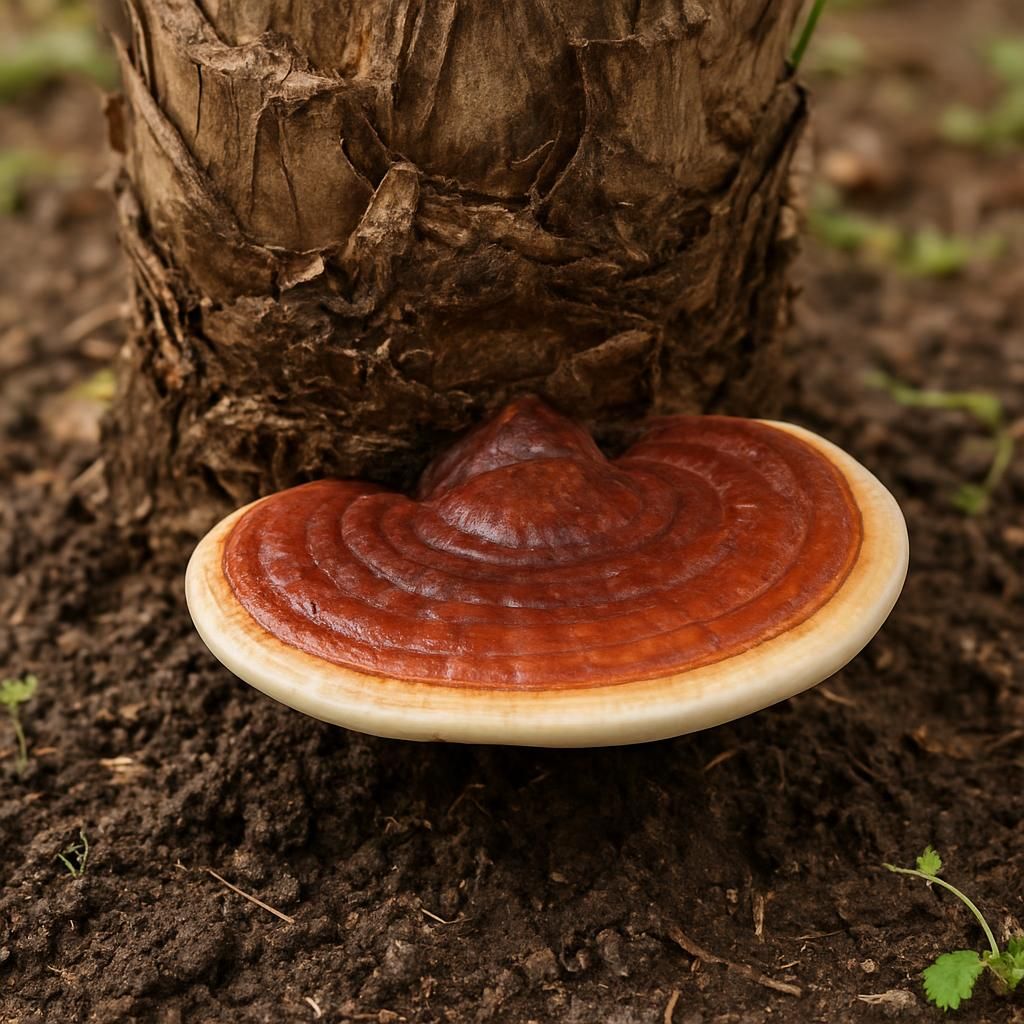
Introduction to Ganoderma
Ganoderma is a soil-borne fungal pathogen belonging to the family Ganodermataceae that causes basal stem rot (BSR) and butt rot in a wide range of woody hosts. The disease is particularly devastating in oil palm, coconut, and date palm plantations, but also affects avocado, citrus, and various hardwood species. Once established, the fungus degrades lignin and cellulose in the lower trunk and root system, leading to structural failure and eventual plant death. Early detection remains difficult because above-ground symptoms often appear only after 50–70% of the root system has been compromised.
Identifying Symptoms & Damage
The first visible above-ground sign is often a progressive yellowing and wilting of older fronds that begins at the tip and moves downward. In palms, the spear leaf may remain green while lower fronds droop and fracture at the petiole base. As the disease advances, the trunk base develops a soft, spongy texture and may exude a reddish-brown resinous fluid. The most diagnostic feature is the appearance of perennial, bracket-shaped basidiocarps (conks) at or just above soil level; these range from 5–30 cm wide, have a shiny reddish-brown upper surface and a white to cream pore layer underneath. Internally, infected wood shows a distinctive white pocket rot with black demarcation lines.
Lifecycle and Progression of Ganoderma
The pathogen survives as mycelium and chlamydospores in infected roots and woody debris for several years. Primary infection occurs when healthy roots contact colonized debris or when basidiospores land on fresh wounds. The table below outlines the key stages.
| Stage | Description | Typical Duration |\n|-------|-------------|------------------|\n| Spore Germination | Basidiospores germinate on moist wounds or root surfaces | 1–7 days |\n| Root Colonization | Mycelium penetrates and spreads through root cortex | 3–12 months |\n| Butt Rot Development | Decay advances upward into the lower trunk | 6–24 months |\n| Fruiting Body Formation | Conks emerge at the base when decay is advanced | 12–36 months after infection |\n| Tree Decline & Death | Progressive wilting, frond loss, and structural collapse | 2–5 years total |\n
Environmental Triggers & Risk Factors
Ganoderma thrives in warm, humid climates with mean annual temperatures above 24 °C and well-drained but not excessively sandy soils. High soil moisture combined with poor drainage favors spore germination and mycelial spread. Acidic soils (pH 4.5–5.5) and compacted subsoils increase susceptibility by stressing roots. Wounding from mechanical cultivation, rodent damage, or previous Phytophthora infections provides entry points. Monoculture plantings and replanting into sites with undecomposed stumps dramatically elevate inoculum pressure.
Organic Control & Treatment Plans
Once Ganoderma is confirmed, complete eradication is rarely feasible; management focuses on slowing spread and protecting neighboring plants. The table below summarizes organic options and application frequencies.
| Treatment Option | Application Method | Frequency | Notes |\n|------------------|--------------------|-----------|-------|\n| Trichoderma harzianum biofungicide | Soil drench around base | Every 3 months for 2 years | Apply 5–10 L of 10^8 CFU/mL suspension |\n| Wood vinegar (pyroligneous acid) | Basal spray and soil drench | Monthly during rainy season | 1:50 dilution; avoid direct trunk contact |\n| Compost tea fortified with Bacillus subtilis | Foliar and soil application | Bi-weekly during active growth | Maintain 10^7 CFU/mL; rotate with Trichoderma |\n| Mulching with fresh Gliricidia leaves | 10–15 cm layer around base | Reapply every 4 months | Suppresses spore germination via allelopathy |\n| Removal of infected stumps and roots | Excavation and burning | Once at diagnosis | Dispose at least 50 m from healthy plants |\n
Preventing Ganoderma in the Future
Prevention begins with site selection and rigorous sanitation. Always plant on well-drained ridges or raised beds and avoid low-lying areas prone to waterlogging. Use only certified disease-free planting material and treat nursery bags with Trichoderma before field transplanting. Implement a minimum 3-year fallow or rotate with non-host cover crops such as Clover after palm removal. Destroy all infected debris by burning or deep burial rather than chipping. Maintain optimal soil health through regular incorporation of well-rotted compost and balanced organic amendments to support vigorous root systems less prone to invasion.
Crops Most Affected by Ganoderma
Oil palm and coconut are the primary hosts worldwide, followed by date palm, areca nut, and betel nut. Among fruit crops, avocado, citrus, and mango show increasing incidence in tropical regions. Hardwood timber species including rubber and acacia are also commonly affected in Southeast Asia. In home landscapes, ornamental palms such as queen palm and royal palm frequently succumb when planted near old stumps. Early monitoring of these high-risk hosts is essential for regional containment.