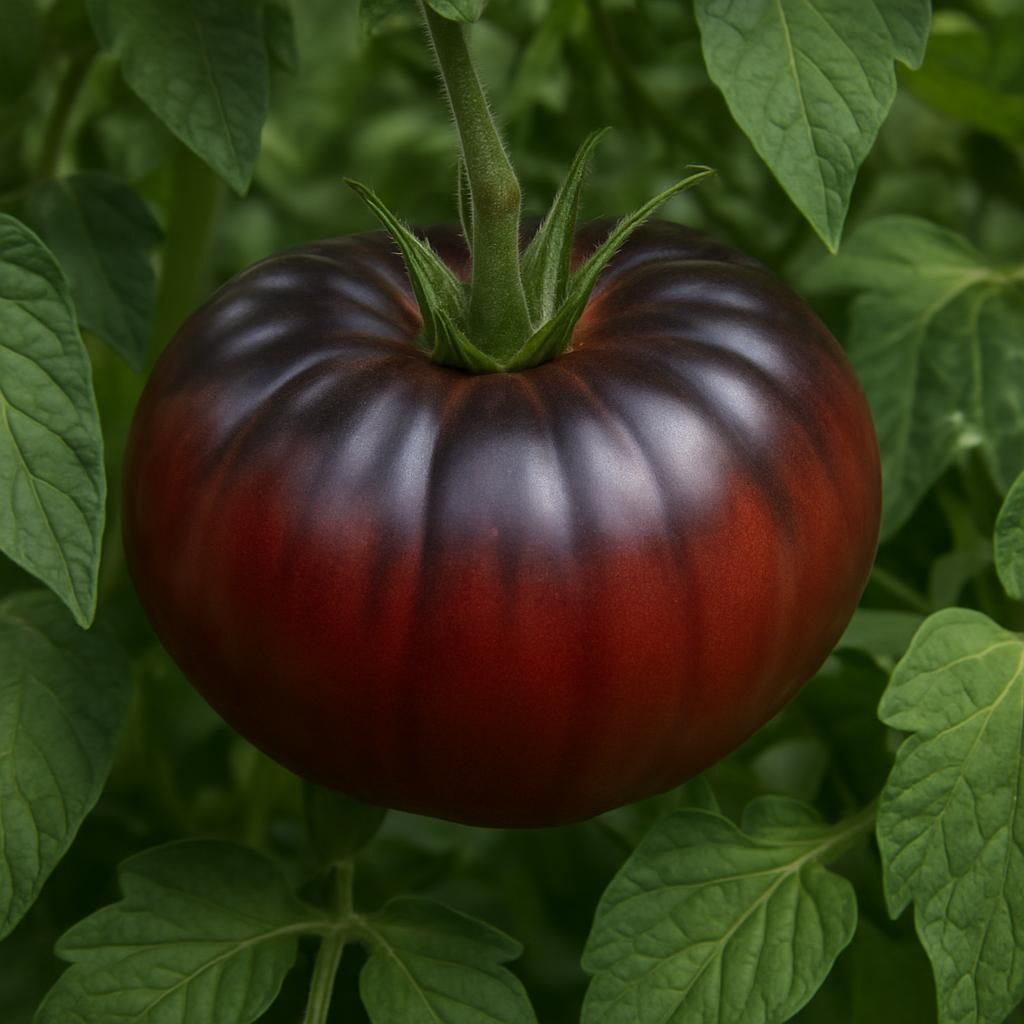
Introduction to Brandywine Black Tomato
Brandywine Black Tomato stands among the most distinctive heirloom tomatoes available to modern growers. Developed from the legendary Brandywine lineage, this variety produces large, irregularly shaped fruits with deep burgundy to nearly black shoulders when fully ripe. The flesh is dense, meaty, and exceptionally flavorful with balanced acidity and sweetness that sets it apart from standard red tomatoes.
Gardeners seeking premium flavor and visual drama often turn to Brandywine Black for its unique appearance and complex taste profile. While yields may be lower than hybrid varieties, the quality of each fruit justifies the additional effort required. This guide provides professional-grade cultivation advice for successful production of this exceptional tomato.
Botanical Profile of Brandywine Black Tomato
Brandywine Black belongs to the species Solanum lycopersicum and exhibits classic indeterminate growth, continuing to produce new stems and fruit clusters throughout the growing season. Plants typically reach heights of 6–9 feet when properly supported, forming vigorous vines with potato-leaf foliage characteristic of many Brandywine strains.
The fruits average 12–16 ounces with some specimens exceeding one pound. Skin coloration transitions from green to deep mahogany-purple, often with nearly black shoulders at full ripeness. The interior is richly colored with fewer seed cavities than standard beefsteak types, contributing to its dense texture. Flowering occurs in clusters of 4–6 blossoms, requiring pollination for fruit set.
Soil, pH, and Climate Requirements for Brandywine Black Tomato
Successful cultivation begins with proper site preparation. Brandywine Black performs best in well-drained, fertile loam amended with generous organic matter. Soil testing prior to planting is essential to correct nutrient imbalances.
| Parameter | Ideal Range | Notes |
|---|---|---|
| Soil Type | Loamy, well-drained | Heavy clay requires raised beds or amendment |
| Soil pH | 6.2–6.8 | Slightly acidic; avoid alkaline conditions |
| Soil Temperature | 65–75°F (18–24°C) | Minimum 60°F for transplanting |
| Air Temperature | Day 70–85°F / Night 55–65°F | Protect from frost; provide shade in extreme heat |
| Sunlight | Full sun, 8+ hours | Morning sun preferred in hot climates |
| Spacing | 24–36 inches between plants | Rows 4–5 feet apart for vine support |
Step-by-Step Planting & Propagation
Start seeds indoors 6–8 weeks before the last expected frost. Sow seeds ¼ inch deep in sterile seed-starting mix at 75–80°F. Germination occurs in 7–14 days. Transplant seedlings into 4-inch pots once two true leaves develop.
Harden off plants for 7–10 days before outdoor planting. Choose a location receiving at least eight hours of direct sunlight. Install sturdy cages, stakes, or trellis systems at planting time to support heavy vines. Set transplants deep, burying the stem up to the first true leaves to encourage strong root development. Water thoroughly after planting and apply a 2–3 inch layer of organic mulch to conserve moisture and suppress weeds.
Care & Maintenance regimes for Brandywine Black Tomato
Consistent care throughout the season maximizes both yield and fruit quality. Regular monitoring prevents stress that can reduce flavor and increase disease susceptibility.
| Task | Frequency | Details |
|---|---|---|
| Watering | 1–2 inches per week | Deep watering at base; maintain even moisture, especially during fruiting |
| Fertilizer | Every 3–4 weeks | Balanced organic fertilizer (5-5-5) at planting; switch to high-potassium (2-5-8) after first fruit set |
| Pruning | Weekly | Remove suckers below first flower cluster; maintain 1–2 main stems |
| Mulching | Seasonal | 3-inch organic mulch layer to retain moisture and reduce soil splash |
| Support | Continuous | Tie vines every 8–12 inches to prevent breakage under fruit weight |
Pests, Diseases & Organic Management
Brandywine Black is susceptible to common tomato pests and diseases. Early detection and organic controls preserve fruit quality without chemical residues.
Common pests include Aphids, Hornworms, and Spider Mites. Handpick hornworms and use insecticidal soap or neem oil for aphids and mites. Companion planting with Nasturtium and Marigold can deter pests naturally.
Diseases such as Early Blight, Late Blight, and Fusarium Wilt pose significant threats. Practice crop rotation, avoid overhead watering, and remove infected foliage promptly. Copper-based fungicides provide organic protection during humid periods. Ensure good air circulation through proper spacing and pruning.
Harvesting, Curing & Optimal Storage
Harvest Brandywine Black tomatoes when fruits reach full color and yield slightly to gentle pressure. Pick at the breaker stage for shipping or allow full ripening on the vine for maximum flavor. Use clean pruners to avoid stem damage.
Store ripe fruits at room temperature away from direct sunlight. For longer storage, harvest mature green tomatoes and ripen in a paper bag with a banana. Avoid refrigeration, which diminishes flavor and texture. Properly stored fruits maintain quality for 5–7 days after ripening.
Companion Planting for Brandywine Black Tomato
Strategic companion planting improves pest control, pollination, and soil health. Plant Basil nearby to repel insects and enhance flavor. Marigold and Nasturtium deter nematodes and aphids while attracting beneficial insects.
Avoid planting near Fennel or Walnut trees, which can inhibit tomato growth. Interplant with Carrot or Radish to maximize space and diversity. These pairings support a resilient, productive garden ecosystem.