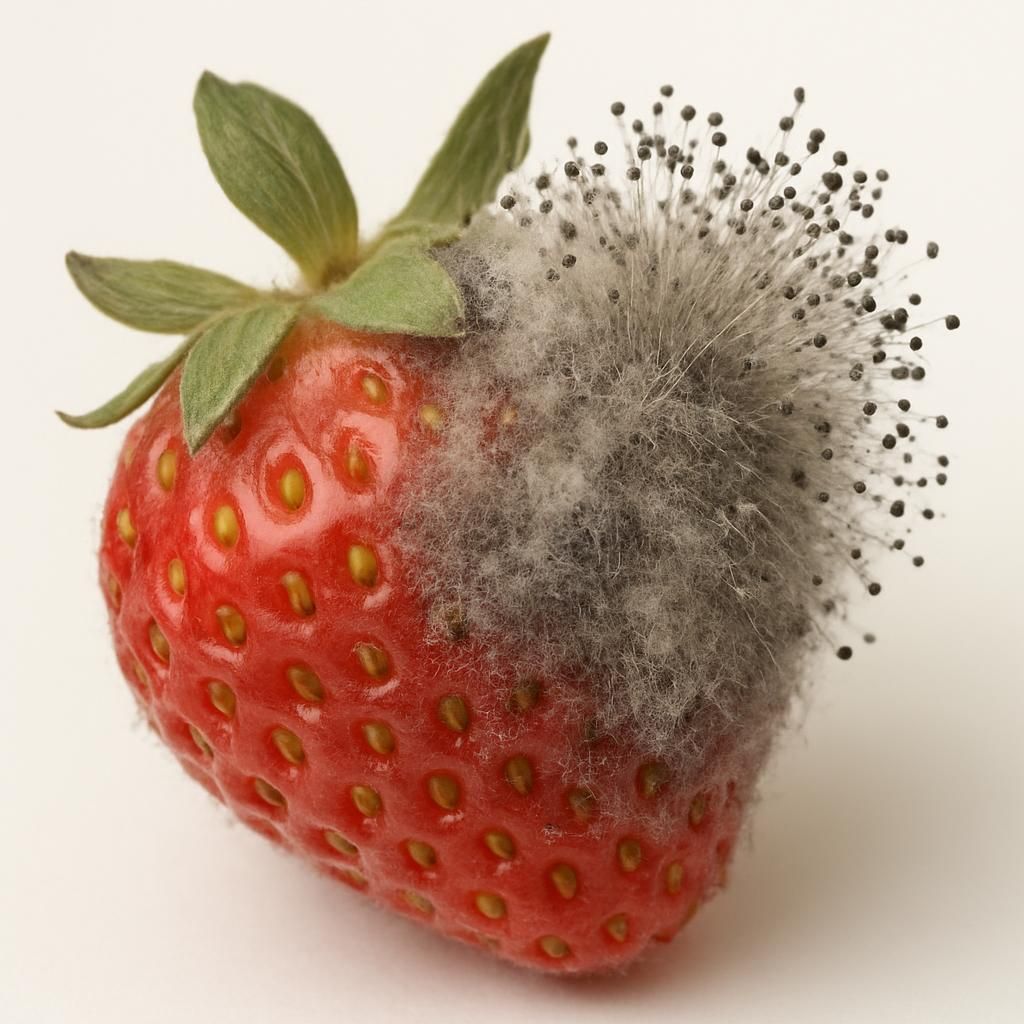
Introduction to Botrytis blight
Botrytis blight, commonly referred to as gray mold disease, is one of the most destructive fungal pathogens in agriculture, caused by the necrotrophic fungus Botrytis cinerea. This opportunistic pathogen infects over 200 plant species, exploiting wounded or senescing tissues to cause blighting, rotting, and mold growth. In high-value crops like strawberry, grapes, and tomato, it can lead to 50-90% yield losses if unchecked, particularly during wet seasons or in greenhouses with poor ventilation.
Farmers worldwide recognize Botrytis blight for its characteristic gray, fuzzy sporulation that resembles a coating of ash on leaves, stems, flowers, and fruits. Unlike obligate parasites, B. cinerea survives as sclerotia or mycelium in crop debris, soil, or on weeds, ready to infect under favorable conditions. Its ability to produce mycotoxins and rapid sporulation makes it a persistent threat, but integrated management combining cultural practices, biological controls, and monitoring can minimize damage. This definitive guide equips growers with professional-grade diagnostics, lifecycle insights, organic treatments, and prevention tactics to safeguard harvests. For deeper reading on the pathogen, see the Botrytis (disease) wiki page.
Understanding Botrytis blight begins with recognizing its polyphagous nature—it doesn't discriminate between field crops, ornamentals, or greenhouse plants. Economic impacts are staggering: in the U.S. alone, strawberry losses exceed $100 million annually, while global wine industries lose billions to bunch rot forms. Climate change exacerbates spread by increasing humidity fluctuations, underscoring the need for proactive strategies.
Identifying Symptoms & Damage
Early detection of Botrytis blight is critical, as symptoms evolve rapidly from subtle water-soaking to widespread necrosis. Initial signs appear as small, tan to brown lesions on leaves, often at margins or tips, with a water-soaked appearance under high humidity. These lesions expand, developing a grayish-white mycelial growth and abundant powdery conidia, giving the hallmark 'gray mold' look visible in low light or with a hand lens.
On stems, symptoms manifest as cankers or girdling lesions with gray fuzz, leading to wilting above the infection site. Flowers exhibit blighting, where petals turn brown and mummify, serving as primary infection courts for fruit rot. In fruits like raspberry or blueberry, soft, watery spots form, leaking sap that attracts insects, accelerating spread. Advanced stages show sclerotia—hard, black resting structures—on decayed tissues.
Damage varies by crop: in lettuce, it causes midrib rot and drop; in cucumber, stem lesions lead to collapse; in ornamentals, it blights buds. Differentiate from powdery mildew (white, superficial) or Phytophthora (dark, firm rots). Use a microscope for confirmation: B. cinerea conidia are unicellular, hyaline, and borne on ramose conidiophores. Yield losses stem from premature defoliation, fruit rot, and reduced marketability—rotten berries shrivel and leak, contaminating healthy produce.
Scout weekly during cool, wet periods, focusing on lower canopies and dense foliage. Symptoms worsen post-rain or overhead irrigation, with secondary spread via splashing or wind. Economic thresholds: remove 5% infected tissues immediately to curb epidemics.
Lifecycle and Progression of Botrytis blight
Botrytis cinerea lifecycle is polycyclic, enabling multiple infection cycles per season. It overwinters as sclerotia in soil, debris, or on mummified fruits, or as mycelium in dead tissues. In spring, sclerotia germinate under moist conditions (RH >93%, 15-25°C), producing conidiophores with millions of spores dispersed by wind, rain splash, or air currents up to kilometers.
Primary infections occur on senescing petals, wounded leaves, or stressed tissues. Germ tubes penetrate via stomata, wounds, or enzymes dissolving cuticles. Inside, it colonizes as mycelium, killing cells and producing toxins like botrydial. After 3-5 days, gray sporulation emerges, releasing conidia for secondary cycles every 4-7 days under optimal conditions.
Progression accelerates in dense canopies: latent infections activate post-harvest, causing shipping rots. Sexual stage (rare) forms apothecia from sclerotia, but asexual conidia drive epidemics. Temperature optima: 18-23°C; extremes halt growth. In greenhouse tomato, microclimates foster 10+ cycles/season. Lifecycle ties to host phenology—flowers and fruits are vulnerable windows.
Environmental Triggers & Risk Factors
Botrytis blight explodes under cool (15-25°C), humid (RH >90%) conditions with free leaf moisture >8 hours. Nighttime dews, fog, or poor airflow in canopies create microhabitats. Overhead irrigation splashes spores, while dense planting reduces drying.
Risk factors include high nitrogen fertilization promoting succulent growth, mechanical wounds from wind or cultivation, and nearby alternate hosts like weeds. Cool springs followed by wet summers prime epidemics, as do greenhouses with condensation. Susceptible varieties (e.g., thin-skinned berries) amplify damage. Soil moisture extremes stress plants, lowering defenses. Climate models predict increased incidence with wetter winters.
Monitor with weather stations: intervene if leaf wetness >12 hours at 20°C. Learn more about predictive tools in Why 80% of Small Farms Battle Weather Disasters - And How Hyper-Local AI Forecasts Can Save Your Harvest.
Organic Control & Treatment Plans
Organic management emphasizes cultural, biological, and approved biorational products—no synthetic fungicides. Start with sanitation: remove debris, mummies, and infected parts promptly, burying or composting hot (>60°C). Improve airflow via pruning (20-30% canopy thinning) and spacing (e.g., 30-45cm rows for strawberries).
Biologicals shine: Trichoderma harzianum (RootShield) colonizes roots, outcompeting Botrytis; apply pre-planting. Bacillus subtilis (Serenade) and Streptomyces (Actinovate) produce antibiotics—spray preventively every 7-10 days. Beauveria bassiana targets spores. Bicarbonates (e.g., potassium bicarbonate) raise pH, inhibiting germination (2-5kg/ha).
Treatment plan: 1) Scout early; 2) Prune infected tips; 3) Apply biofungicide at bloom (e.g., Regalia with Reynoutria extract for induced resistance); 4) Alternate products to prevent resistance; 5) Foliar calcium strengthens cell walls. UV reflectants (e.g., Surround kaolin clay) reduce sporulation. In outbreaks, hydrogen peroxide dips salvage harvests. Efficacy: 70-90% control with IPM. Rotate with companion planting using alliums.
Preventing Botrytis blight in the Future
Prevention is paramount: select resistant varieties (e.g., 'Seascape' strawberry, 'Chardonnay' grapes with moderate resistance). Site selection—avoid low-lying frost pockets; use raised beds for drainage. Mulch with straw (5-10cm) to suppress splash and moderate humidity.
Cultural IPM: drip irrigate, avoiding foliage wetting; time for morning dry-off. Balanced fertility—avoid excess N; boost potassium for resilience. Monitor with spore traps or apps for thresholds (100 spores/m³ triggers action). Crop rotation (2-3 years away from hosts) starves inoculum. Post-harvest: rapid cooling to 0-4°C halts latent infections.
Long-term: enhance biodiversity with cover crops like clover to foster antagonists. UV lights in greenhouses kill spores. Annual soil solarization (4-6 weeks summer) reduces sclerotia 90%. Record-keeping tracks patterns for forecasting.
Crops Most Affected by Botrytis blight
Botrytis blight plagues soft fruits and vegetables: strawberries suffer blossom blight and fruit rot (up to 80% losses); grapes endure bunch rot, ruining vintages; tomatoes face stem cankers and calyx rot in greenhouses. Raspberries, blackberries, and blueberries see cane blight and berry decay. Lettuce midribs rot, cucumbers collapse from stem lesions, and eggplant fruits mummify.
Floriculture hits hard—chrysanthemums, geraniums, and cyclamen blight. Bulb crops like onions develop neck rot. Field crops like chickpeas and peas show pod rots. Ornamentals and herbs (e.g., peonies) are vulnerable. Global hotspots: California's Central Valley strawberries, European vineyards, Dutch greenhouses. Susceptibility links to tissue tenderness and dense habits.