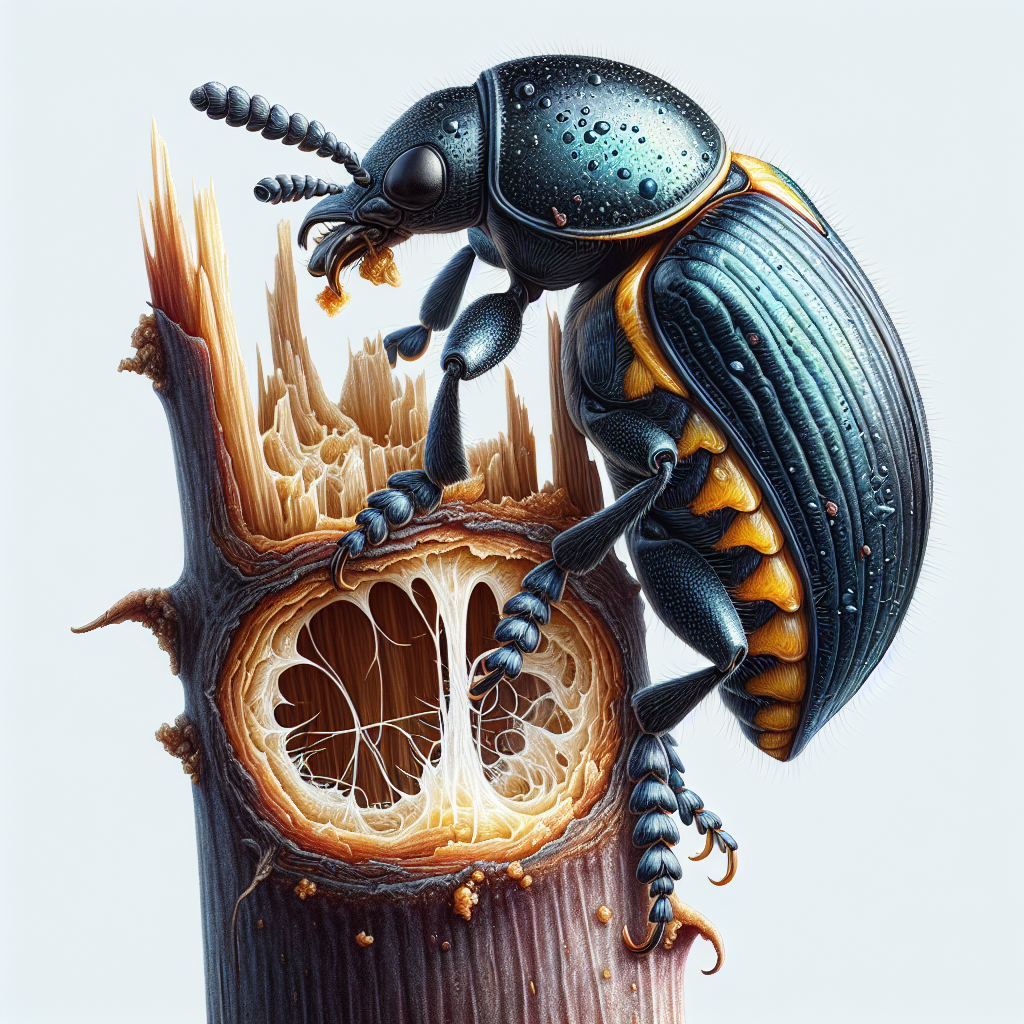
Introduction to Blueberry stem borer
Blueberry stem borer, scientifically known as Oberea ulmi, is a destructive pest primarily affecting Blueberry crops in North America, particularly in regions like the Pacific Northwest, Midwest, and Eastern U.S. where commercial and homegrown blueberries thrive. This longhorned beetle, with its metallic blue-black body and distinctive yellow markings, poses a significant threat to blueberry bushes by boring into stems and canes, disrupting nutrient and water flow. First identified as a blueberry pest in the early 20th century, it has become a growing concern for growers due to its ability to cause rapid plant decline, with infested canes often wilting and dying within a single season.
Understanding this pest is crucial for blueberry producers, as uncontrolled infestations can lead to 20-50% yield losses in moderate to severe cases. The borer's lifecycle aligns perfectly with blueberry dormancy and growth cycles, making timely intervention essential. This guide provides comprehensive diagnostics, lifecycle insights, and proven management strategies to protect your Bluecrop Blueberry or Duke Blueberry plantations. For more on integrated pest management, check out this insightful Spring Pest Patrol: Organic AI Strategies to Shield Your Crops from Common Invaders.
Identifying Symptoms & Damage
Early detection of blueberry stem borer is key to minimizing damage. Look for these hallmark signs during scouting:
- Adult Exit Holes: Round holes about 1/4 to 1/2 inch in diameter on canes, often with sawdust-like frass (insect waste) at the base. These appear in late spring to early summer as adults emerge.
- Girdling Marks: Oval or irregular scars where females chew into the bark to lay eggs, typically on one-year-old canes near the base.
- Wilting and Dieback: Infested canes yellow, wilt from the tip downward, and die back progressively. Severely affected plants show multiple dead canes.
- Larval Tunnels: Split open infested canes to reveal cream-colored larvae up to 1 inch long tunneling longitudinally inside the pith. Tunnels are packed with frass and sawdust.
- Reduced Yield: Fruit clusters on infested canes are small, sparse, or absent due to disrupted vascular tissues.
Damage is most evident in young bushes (1-4 years old), where borers target succulent new growth. Differentiate from similar pests like cane borers by the larger exit holes and frass presence. Use a knife to peel back bark on suspect canes—if you find reddish-brown discoloration or live larvae, confirm infestation. Regular monitoring from May to August catches issues early, preventing spread to healthy Raspberry or Blackberry interplants.
Lifecycle and Progression of Blueberry stem borer
The blueberry stem borer completes one generation per year, synchronized with blueberry phenology:
- Adults (June-July): 1/2-inch long, blue-black beetles with yellow stripes emerge from pupal cases in canes. They feed minimally on foliage before females oviposit (lay 20-50 eggs) in chewed slits on one-year-old canes, preferring lower 12-18 inches.
- Eggs (1-2 weeks): Tiny, white eggs hatch in 7-14 days under warm summer conditions (70-85°F).
- Larvae (Summer-Fall): Newly hatched larvae bore into canes, feeding on vascular tissues and pith. They overwinter as 3rd-4th instar larvae within tunnels, growing to 1 inch by spring.
- Pupae (Late Spring): Larvae pupate inside canes in May, transforming over 2-3 weeks.
Peak activity aligns with blueberry bloom to fruit set, explaining yield impacts. Overwintering sites are secure within wood, making larvae resilient to most sprays. Full progression from egg to adult takes 10-12 months, with adults living 4-6 weeks. Learn more about related borers in our Stem borers wiki entry.
Environmental Triggers & Risk Factors
Blueberry stem borer thrives under specific conditions that growers can mitigate:
- Warm, Humid Summers: Optimal for adult flight and egg hatch (above 70°F daytime temps). Regions like Michigan and Oregon see spikes after mild winters.
- High Plant Density: Crowded rows (>4 ft spacing) limit air flow, favoring egg-laying on shaded canes.
- Susceptible Varieties: Rabbiteye and highbush types like young Blueberry are prime targets; vigorous growers attract more females.
- Weed Competition: Tall weeds around bases provide cover for adults and pupae.
- Previous Infestations: One infested cane per bush can spread via emerging adults.
Risk escalates in fields with poor pruning history, as old canes harbor overwintering larvae. Drought-stressed plants are more vulnerable due to thinner bark. Monitor weather data—infestations surge after 90+ degree heat waves. Companion crops like Thai Basil can disrupt habitats.
Organic Control & Treatment Plans
Organic management emphasizes prevention and targeted treatments:
Cultural Controls:
- Prune and destroy all infested canes in late winter/early spring before adult emergence. Burn or solarize debris to kill larvae.
- Maintain 4-6 ft row spacing and mow weeds to expose bases.
Biological Controls:
- Encourage native parasites like braconid wasps. Release beneficial nematodes (Heterorhabditis bacteriophora) in fall to target larvae.
Organic Insecticides:
- Apply spinosad (e.g., Entrust) or pyrethrins to trunks in early July when adults are active. Target girdling sites; repeat every 7-10 days for 3 applications.
- Neem oil disrupts egg hatch—spray thoroughly on canes post-bloom.
Treatment Timeline:
| Stage | Timing | Action |
|---|---|---|
| Larvae | Fall | Nematodes, prune |
| Adults | June | Spinosad sprays |
| Eggs | July | Neem, monitor |
Threshold: Treat if >10% canes show girdling. Combine with row covers on young plants. Avoid broad-spectrum sprays to preserve pollinators.
Preventing Blueberry stem borer in the Future
Long-term prevention builds resilient systems:
- Resistant Varieties: Plant hybrids with thicker canes; avoid susceptible seedlings.
- Sanitation: Remove wild brambles nearby, as alternate hosts.
- Barrier Methods: Wrap lower canes with burlap or foil bands in spring to block egg-laying.
- Trap Crops: Interplant sacrificial canes or use pheromone traps for monitoring.
- Soil Health: Healthy, well-mulched plants resist boring better. Boost with compost teas.
- Scouting Protocol: Weekly inspections May-August; use sticky traps for adults.
Annual pruning removes 20-30% old wood, breaking the cycle. Integrate with IPM for stem borers. Track progress with field maps.
Crops Most Affected by Blueberry stem borer
Primarily a blueberry specialist, but attacks related Vaccinium species:
- Highbush Blueberry (Vaccinium corymbosum): 80% of commercial damage.
- Rabbiteye Blueberry (V. virgatum): Southern U.S. prevalent.
- Lowbush Blueberry (V. angustifolium): Wild stands.
- Related Crops: Occasional on Raspberry, Blackberry, and azaleas.
Not a major pest on unrelated crops like Strawberry or Grapes. Focus protection on Vaccinium plantings.