Introduction to Blue Gold Tomato
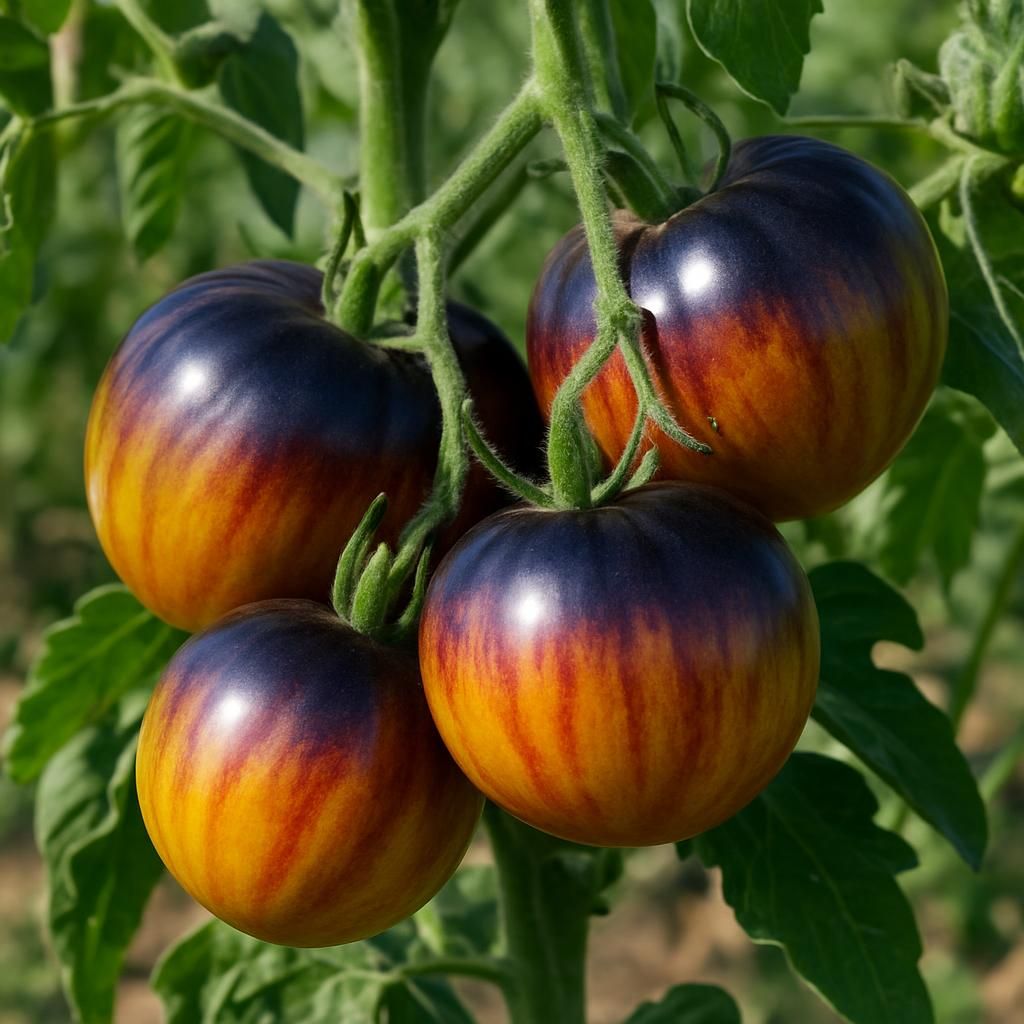
Blue Gold Tomato stands out among modern breeding achievements for combining visual appeal with robust agronomic traits. The cultivar expresses high levels of anthocyanins in the fruit skin, resulting in a distinctive blue-purple coloration that intensifies with direct sunlight exposure. This biochemical trait not only creates market differentiation but also confers antioxidant benefits and improved resistance to certain environmental stresses. Growers seeking both culinary excellence and visual impact consistently rank Blue Gold among top-performing specialty tomatoes.
Developed through selective crossing of traditional heirloom lines with wild tomato species carrying the Aft (Anthocyanin fruit) gene, Blue Gold delivers reliable yields of 8–12 pounds per plant under optimal management. The fruits average 2–3 ounces, featuring green-to-yellow stripes that transition to gold when fully ripe, contrasted by the signature blue shoulders. Flavor profiles are described as balanced sweet-tart with subtle berry undertones, making the variety suitable for fresh eating, gourmet salads, and small-batch preserving.
Commercial viability is supported by strong resistance to several common tomato pathogens, reducing reliance on synthetic inputs. The indeterminate growth habit requires trellising or staking systems, yet rewards attentive growers with an extended harvest window lasting 60–90 days. Blue Gold performs well in both open-field and protected-culture environments, adapting to a range of climates when basic cultural requirements are met.
Botanical Profile of Blue Gold Tomato
Blue Gold Tomato belongs to the Solanaceae family and shares core botanical characteristics with other cultivated tomatoes while expressing unique pigmentation genetics. Plants exhibit vigorous vining growth reaching 5–7 feet in height when properly supported. Leaves are compound, dark green, and slightly rugose, providing ample photosynthetic surface area. Flowers are typical solanaceous yellow blooms appearing in clusters of 6–10 along the main stem and lateral branches.
Fruit development follows standard tomato physiology with the notable accumulation of anthocyanins in the epidermal layer triggered by UV light exposure. This results in the characteristic blue coloration primarily on sun-exposed shoulders. The flesh remains red to orange at maturity, creating a striking two-tone effect. Seeds are small, flat, and beige, numbering 150–250 per fruit. The variety shows moderate tolerance to cracking and maintains firmness suitable for short-distance transport.
Growth is indeterminate, meaning the plant continues vegetative and reproductive phases simultaneously throughout the season. This trait necessitates consistent pruning and training to maintain airflow and light penetration. Blue Gold demonstrates strong root development when started in well-aerated media, supporting nutrient uptake and drought resilience once established.
Soil, pH, and Climate Requirements for Blue Gold Tomato
Successful cultivation begins with precise environmental matching. Blue Gold Tomato thrives in fertile, well-drained loam or sandy loam soils with high organic matter content. Soil structure must support both moisture retention and rapid drainage to prevent root-zone saturation. Raised beds or well-tilled in-ground rows amended with composted manure or aged bark consistently produce superior root health and fruit quality.
| Parameter | Ideal Range | Notes |
|---|---|---|
| Soil pH | 6.2 – 6.8 | Avoid below 5.8 or above 7.2 |
| Soil Type | Loam / Sandy Loam | 3–5% organic matter recommended |
| Temperature (Day) | 70–85 °F (21–29 °C) | Optimal fruit set occurs in this window |
| Temperature (Night) | 55–65 °F (13–18 °C) | Below 50 °F delays growth |
| Spacing (In-Ground) | 24–36 in between plants | Rows 4–5 ft apart |
| Spacing (Containers) | 18–24 in pots minimum | Minimum 5-gallon containers |
| Sunlight | 8+ hours direct | Full sun maximizes anthocyanin expression |
| Frost Tolerance | None | Protect or transplant after last frost |
Climate considerations include avoiding prolonged exposure to temperatures above 90 °F, which can reduce fruit set and intensify blossom drop. In cooler regions, black plastic mulch or low tunnels accelerate soil warming and extend the productive season. High humidity environments benefit from increased plant spacing and aggressive pruning to minimize foliar disease pressure.
Step-by-Step Planting & Propagation
Propagation of Blue Gold Tomato is most reliably achieved through seed starting indoors 6–8 weeks before the last expected frost. Use sterile seed-starting mix in 72-cell trays or 2-inch pots. Sow seeds ¼ inch deep, maintain soil temperature at 75–80 °F, and provide bottom heat if ambient conditions are cooler. Germination typically occurs within 5–10 days.
Once seedlings develop their first true leaves, transplant into 4-inch pots to encourage strong root systems. Harden off plants for 7–10 days by gradually increasing outdoor exposure. Transplant outdoors only after nighttime temperatures consistently exceed 55 °F and soil has reached at least 60 °F. Space plants 24–36 inches apart in rows 4–5 feet wide, or use 18–24 inch spacing in large containers.
Install trellis systems or sturdy cages at planting time to avoid root disturbance later. Bury stems up to the first set of leaves to promote adventitious root formation, enhancing drought tolerance. Water thoroughly immediately after transplanting and apply a light organic mulch layer to conserve moisture and suppress weeds.
Care & Maintenance regimes for Blue Gold Tomato
Consistent cultural practices are essential for maximizing yield and fruit quality. Blue Gold responds favorably to integrated regimes that balance water, nutrition, and structural management. Monitor plant vigor weekly and adjust inputs based on growth stage and environmental conditions.
| Growth Stage | Watering Frequency | Fertilizer Application | Pruning & Training |
|---|---|---|---|
| Seedling (0–4 wks) | Keep evenly moist | Dilute fish emulsion weekly | Remove lower leaves touching soil |
| Vegetative (4–8 wks) | 1–1.5 in per week | Balanced NPK (10-10-10) every 2 weeks | Remove suckers below first flower cluster |
| Flowering & Fruit Set | Deep watering 2–3× weekly | High-phosphorus (5-10-10) at bloom | Continue sucker removal; tie main stem |
| Fruit Ripening | Reduce slightly to concentrate sugars | Potassium-rich (2-5-10) every 10–14 days | Maintain open canopy; remove diseased foliage |
Mulching with 2–3 inches of straw or shredded leaves reduces soil temperature fluctuations and conserves moisture. Side-dress with compost or well-aged manure mid-season to replenish organic matter. Avoid overhead irrigation to minimize foliar disease; drip or soaker hoses are preferred. Regular scouting for nutrient deficiencies allows timely correction with targeted organic amendments.
Pests, Diseases & Organic Management
Blue Gold Tomato exhibits good resistance to many common tomato ailments, yet remains susceptible to certain pests and pathogens under stress. Primary insect concerns include aphids, whiteflies, and hornworms. Early detection through weekly scouting allows effective intervention with insecticidal soaps, neem oil, or Bacillus thuringiensis (Bt) for caterpillar control.
Fungal diseases such as early blight and septoria leaf spot can be managed through cultural practices including proper spacing, pruning for airflow, and crop rotation. Copper-based fungicides or compost tea applications provide organic suppression when applied preventively. Blossom end rot is mitigated by maintaining consistent soil moisture and adequate calcium levels via gypsum amendments or foliar calcium sprays.
Nematode pressure can be reduced through solarization, cover cropping with marigold, and incorporation of organic matter that supports beneficial soil microbes. Avoid planting in areas with recent solanaceous crop history. Integrated management combining resistant rootstocks, sanitation, and biological controls delivers the most sustainable outcomes.
Harvesting, Curing & Optimal Storage
Blue Gold Tomato reaches optimal flavor when fruits show full color transition from green to gold with pronounced blue shoulders. Harvest by gently twisting or cutting the stem to avoid bruising. Pick at the breaker stage for longer storage or fully ripe for immediate consumption. Regular harvesting encourages continued production.
Post-harvest handling includes sorting for defects and storing at 55–60 °F with 85–90% relative humidity. Avoid refrigeration below 50 °F, which causes chilling injury and flavor loss. Fruits can be held 7–10 days under proper conditions. For extended preservation, process into sauces, salsas, or dehydrate for winter use.
Companion Planting for Blue Gold Tomato
Strategic companion planting enhances Blue Gold Tomato performance through pest deterrence, nutrient cycling, and microclimate moderation. Recommended partners include basil for repelling aphids and whiteflies, marigold for nematode suppression, and nasturtium as a trap crop for aphids.
Avoid planting near fennel or walnut trees, which produce allelopathic compounds inhibitory to tomato growth. Carrot and parsley provide beneficial insect habitat without competing for resources. Borage attracts pollinators and improves overall garden biodiversity. Implementing these pairings within a diversified planting scheme supports resilient, low-input production systems.
For additional insights on harvest timing and small-farm profitability strategies, see The Overlooked Art of Seasonal Harvest Timing for Small Farm Profit.