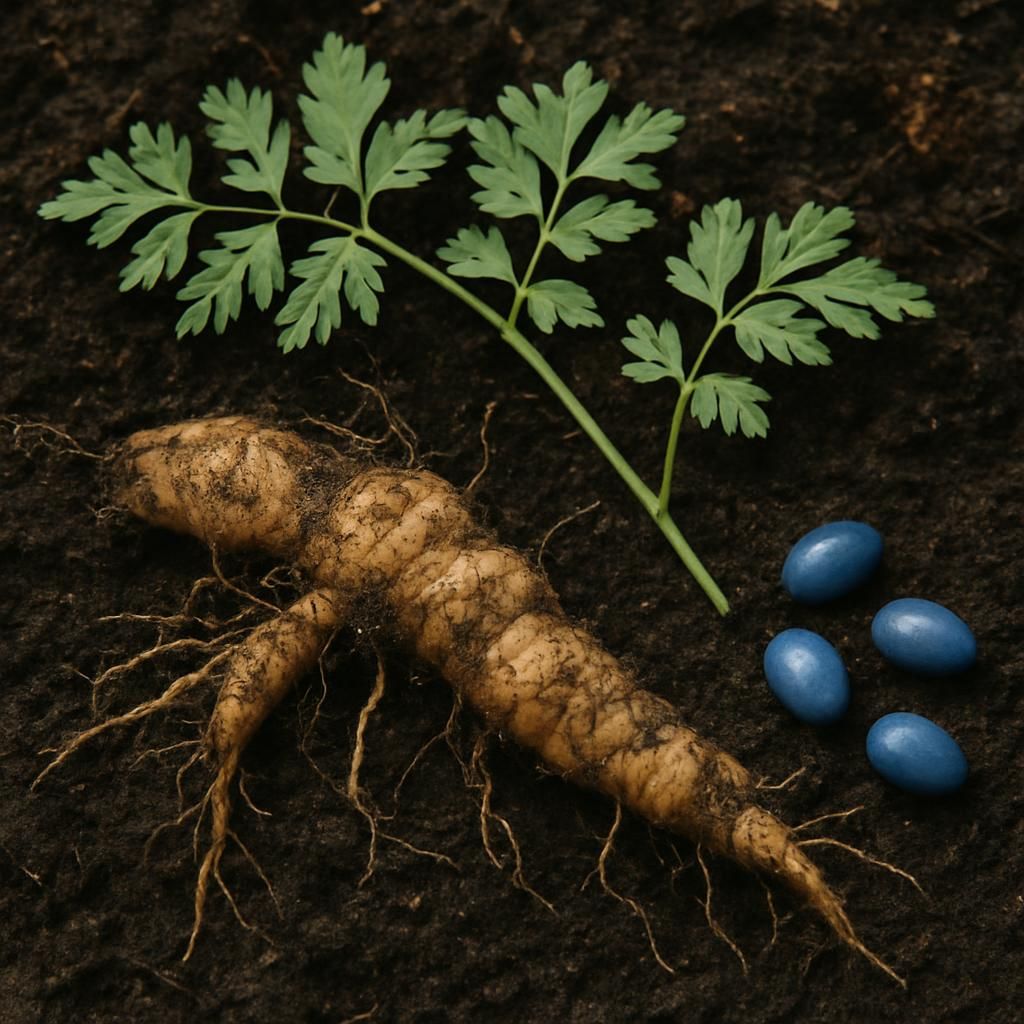
Introduction to Blue Cohosh Root
Blue Cohosh Root (Caulophyllum thalictroides) is a long-lived herbaceous perennial native to eastern North American deciduous forests. The plant produces thick, knotty rhizomes that have been harvested for centuries in traditional herbal medicine. Its common name derives from the striking deep-blue seeds that appear after flowering. While primarily valued for its root, the plant also offers ornamental interest with its lacy foliage and early-spring blooms. Commercial cultivation remains limited due to slow growth and specific habitat requirements, making successful production both rewarding and challenging.
Botanical Profile of Blue Cohosh Root
Blue Cohosh belongs to the Berberidaceae family. Mature plants reach 30–90 cm in height with compound, bluish-green leaves resembling those of meadow-rue. In early spring, small yellowish-green to purplish flowers emerge in terminal panicles. After pollination, the ovary develops into a single-seeded drupe that ripens to a metallic blue. The plant spreads slowly via short rhizomes and seed dispersal by ants. Rhizomes are typically 1–3 cm thick, yellowish-brown externally and white to pale yellow internally when freshly cut. Caulophyllum thalictroides is the primary species used in North American herbal traditions.
Soil, pH, and Climate Requirements for Blue Cohosh Root (MUST INCLUDE A MARKDOWN TABLE OF IDEAL CONDITIONS)
Blue Cohosh prefers rich, well-drained yet consistently moist woodland soils high in organic matter. A slightly acidic to neutral pH supports optimal nutrient uptake. The species is hardy in USDA zones 3–8 and performs best under 60–80% shade. Avoid compacted or heavy clay soils that retain standing water.
| Parameter | Ideal Range | Notes |
|---|---|---|
| Soil Type | Loamy, high humus | Incorporate leaf mold or aged compost |
| Soil pH | 5.5 – 7.0 | Slightly acidic to neutral |
| Drainage | Well-drained, moist | Never allow complete drying or waterlogging |
| Temperature Range | 15–24 °C daytime (growing) | Cool nights preferred |
| Shade | 60–80% canopy cover | Mimics deciduous forest understory |
| USDA Hardiness | Zones 3–8 | Protect from extreme summer heat |
Step-by-Step Planting & Propagation
Propagation is achieved primarily through division of established rhizomes or by seed. Rhizome divisions are planted in autumn or early spring at a depth of 5–8 cm with buds facing upward. Seeds require cold stratification for 90–120 days at 1–5 °C before sowing in late fall. Germination may take 1–3 years. Space plants 30–45 cm apart in prepared beds. Mulch immediately after planting with 5–8 cm of shredded leaves or pine needles to retain moisture and suppress weeds.
Care & Maintenance regimes for Blue Cohosh Root (MUST INCLUDE A MARKDOWN TABLE OF WATER, FERTILIZER, AND PRUNING SCHEDULES)
Established plants need minimal intervention once canopy cover is achieved. Focus on consistent moisture, annual organic mulch renewal, and removal of competing vegetation. Fertilization should be light and organic to avoid stimulating excessive top growth at the expense of rhizome development.
| Season | Watering Schedule | Fertilizer Application | Pruning / Maintenance |
|---|---|---|---|
| Spring | Keep soil evenly moist (2–3 cm/week) | Top-dress with 2 cm well-rotted leaf mold | Remove winter-damaged foliage |
| Summer | Maintain moisture; avoid drying | Light fish emulsion (1:10) every 6 weeks | Deadhead spent flowers if seed not desired |
| Autumn | Reduce watering as dormancy begins | Apply 5 cm shredded leaf mulch | Cut back foliage after first frost |
| Winter | Minimal; protect from heaving | None | Monitor mulch depth for insulation |
Pests, Diseases & Organic Management
Blue Cohosh is relatively resistant to major pests but can be affected by slugs and snails in overly moist conditions. Occasional leaf spot caused by Alternaria species may appear in crowded plantings. Maintain good airflow and remove infected foliage promptly. Use iron phosphate baits for slug control and apply neem oil or insecticidal soap if aphids appear. Crop rotation and companion planting with aromatic herbs such as Thyme help deter pests.
Harvesting, Curing & Optimal Storage
Rhizomes are typically harvested in the third or fourth year after planting, once plants have flowered and set seed. Dig carefully in late autumn when foliage has senesced. Wash rhizomes gently, trim fibrous roots, and slice into 1–2 cm pieces. Dry at 35–40 °C with good airflow until brittle. Store in airtight glass jars away from light and heat. Properly cured material retains potency for up to three years.
Companion Planting for Blue Cohosh Root
Pair Blue Cohosh with other shade-loving woodland species that share similar moisture and soil preferences. Recommended companions include Ginger, Turmeric, and Wild Ginger for mutual soil coverage. Aromatic herbs such as Thyme and Rosemary provide pest-repellent benefits. Avoid aggressive spreaders that may outcompete young cohosh plants. Nasturtium can be used as a living mulch to suppress weeds while attracting beneficial insects.