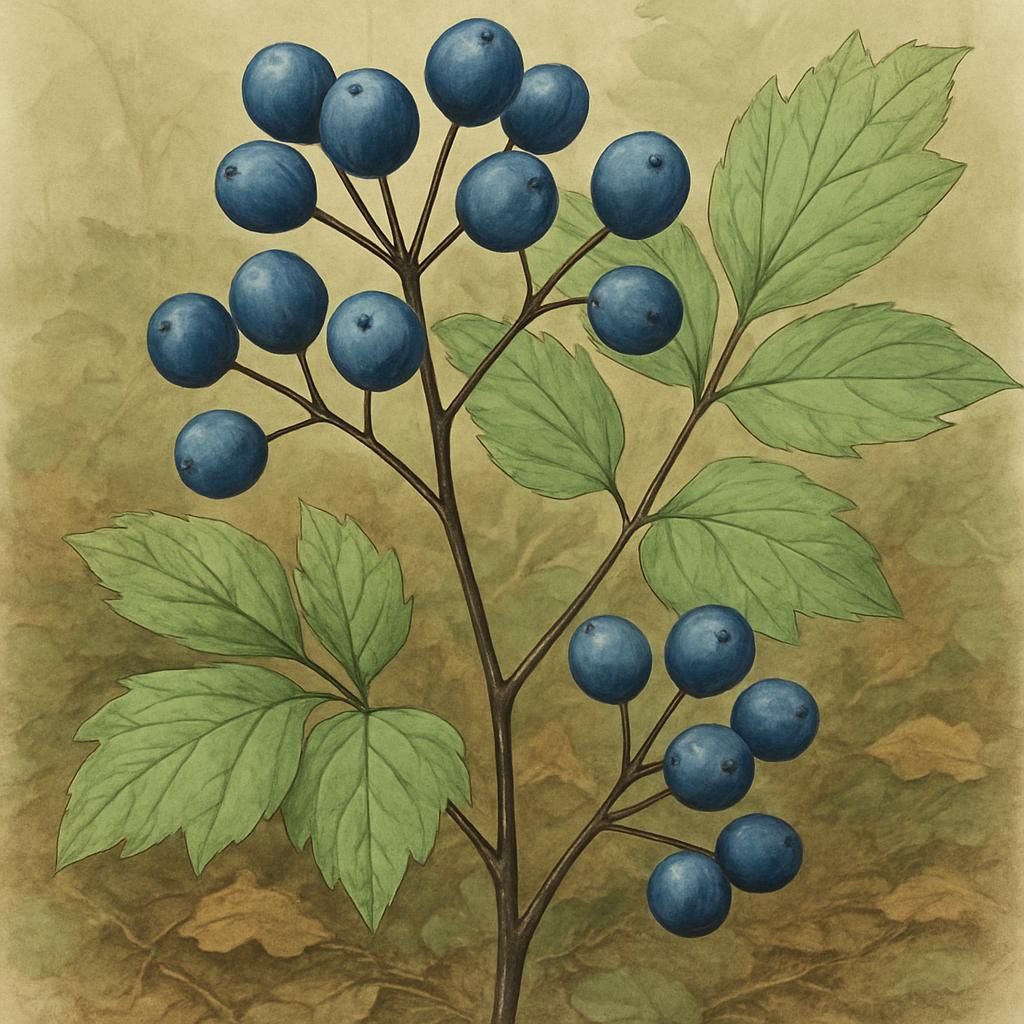
Introduction to Caulophyllum thalictroides
Caulophyllum thalictroides, commonly known as blue cohosh, is a native North American woodland perennial prized by herbalists and restoration ecologists. This long-lived herbaceous species produces striking blue, berry-like seeds and has a history of traditional use for women's health support. Because of its slow growth cycle and specific habitat needs, successful cultivation demands attention to shade, soil biology, and patience.
Botanical Profile of Caulophyllum thalictroides
Blue cohosh belongs to the Berberidaceae family and features compound leaves resembling those of meadow-rue. Plants emerge in early spring with smoky-purple foliage that matures to blue-green. Small yellow-green flowers appear in April–May, followed by clusters of deep-blue seeds that persist into autumn. The thick, knotty rhizomes contain bioactive alkaloids and are the primary part harvested for medicinal purposes.
Soil, pH, and Climate Requirements for Caulophyllum thalictroides (MUST INCLUDE A MARKDOWN TABLE OF IDEAL CONDITIONS)
Blue cohosh thrives in rich, undisturbed forest soils with high organic matter. The following table summarizes the optimal growing conditions:
| Parameter | Ideal Range | Notes |
|---|---|---|
| Soil Type | Loamy, humus-rich | Leaf mold and well-decomposed forest duff |
| pH | 5.5–6.8 | Slightly acidic to neutral |
| Temperature | 15–24 °C daytime | Cool, consistent woodland microclimate |
| Annual Rainfall | 900–1500 mm | Even moisture; avoid drought stress |
| Light | 60–80 % shade | Dappled canopy preferred |
| USDA Zones | 3–8 | Cold hardy but sensitive to heat |
Step-by-Step Planting & Propagation
Propagation is achieved primarily through division of mature rhizomes or careful seed sowing after double dormancy. Collect ripe seeds in late summer and stratify for two winters before germination. Divide established clumps in early spring or fall, ensuring each section has at least two buds. Plant rhizomes 5–8 cm deep in prepared woodland beds with 30 cm spacing. Keep newly planted stock consistently moist for the first two growing seasons.
Care & Maintenance regimes for Caulophyllum thalictroides (MUST INCLUDE A MARKDOWN TABLE OF WATER, FERTILIZER, AND PRUNING SCHEDULES)
Once established, blue cohosh is low-maintenance but benefits from seasonal attention to moisture and organic fertility. The table below outlines recommended care routines:
| Season | Watering Schedule | Fertilizer Application | Pruning/Maintenance |
|---|---|---|---|
| Spring | Maintain even moisture; 2.5 cm/week | Top-dress with 2 cm leaf compost | Remove winter-damaged foliage |
| Summer | Deep soak during dry spells | Light application of aged manure tea | Deadhead spent flowers if seed not desired |
| Autumn | Reduce watering as dormancy begins | Apply 5 cm hardwood mulch | Cut back foliage after seed drop |
| Winter | Minimal; protect from heaving | None required | Monitor mulch depth for insulation |
Pests, Diseases & Organic Management
Blue cohosh is generally resistant to most pests, though slugs and snails can damage emerging shoots in damp springs. Occasional leaf spot diseases may appear in overly wet conditions. Maintain excellent airflow and remove debris to prevent fungal issues. Hand-pick slugs or use iron-phosphate baits when populations are high. Avoid chemical interventions that could harm beneficial woodland organisms.
Harvesting, Curing & Optimal Storage
Rhizomes are typically harvested in autumn of the fourth or fifth year when plants are dormant. Carefully dig around the clump to avoid damaging roots. Wash soil gently with cool water and cut into 2–3 cm sections. Dry at 35 °C with good airflow until brittle. Store cured pieces in airtight glass jars in a cool, dark location for up to two years. Label each batch with harvest date and source location.
Companion Planting for Caulophyllum thalictroides
Pair blue cohosh with other shade-loving natives such as Wild Ginger and ferns to recreate natural woodland layering. Avoid aggressive spreaders that may outcompete slow-growing cohosh. Interplanting with Trillium and Mayapple creates a diverse, resilient understory community.