Introduction to Black Thorn Durian
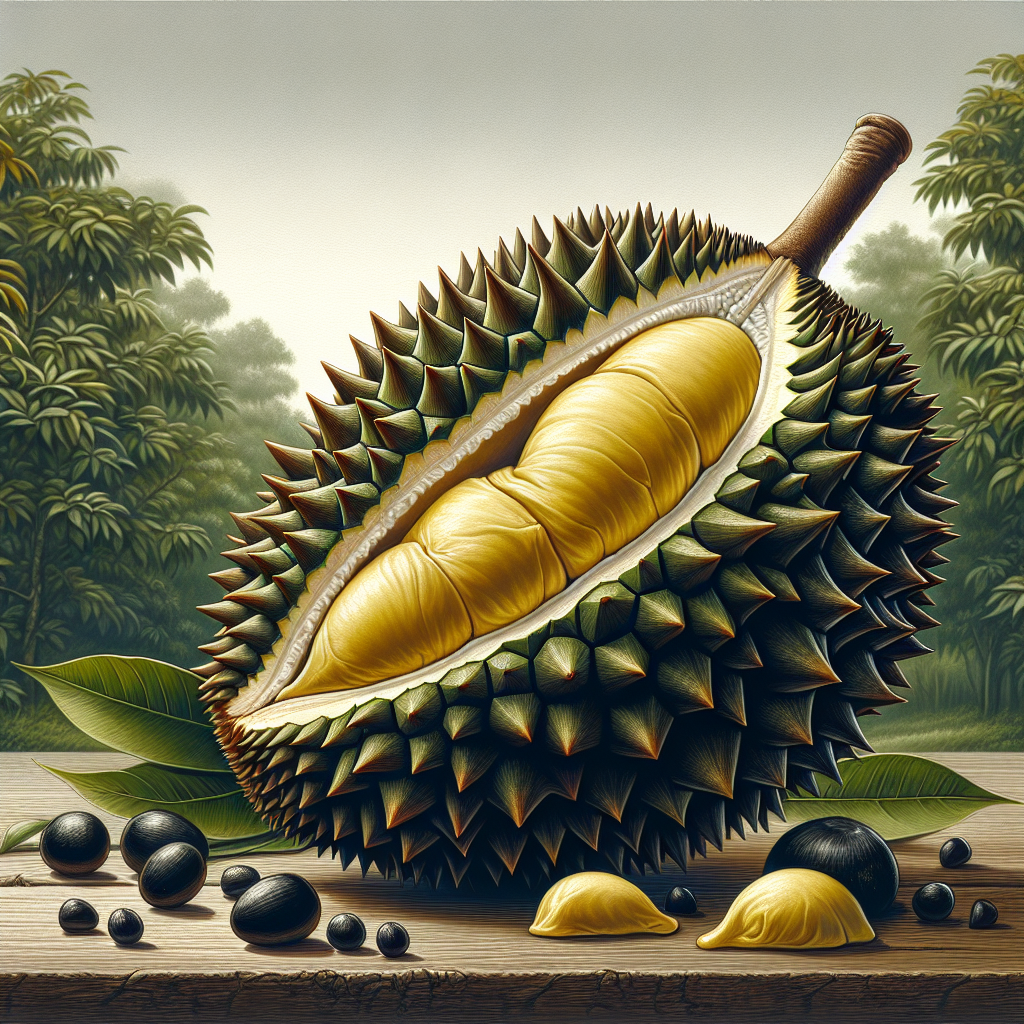
Black Thorn Durian (Durio zibethinus 'Black Thorn') stands out among durian varieties for its striking appearance and superior fruit quality. Native to Southeast Asia, this cultivar features pyramid-shaped fruits covered in jet-black thorns that are thicker and more pronounced than standard Durian types, offering natural protection against pests and handling damage. The aril boasts a rich, buttery texture with notes of caramel, hazelnut, and subtle bitterness, commanding premium prices in markets from Malaysia to international export hubs.
Growers favor Black Thorn for its vigorous growth, heavy cropping potential (up to 100 fruits per mature tree), and resistance to splitting during ripening. Mature trees reach 20-40 meters in height but can be managed at 10-15 meters through pruning. Ideal for commercial orchards or high-value home gardens in USDA zones 10b-12, it thrives in humid tropical environments with proper care. This deep-dive guide equips professional agriculturists with evidence-based practices to achieve optimal yields of 50-80 kg per tree annually after 7-8 years.
Botanical Profile of Black Thorn Durian
Black Thorn Durian belongs to the Malvaceae family, genus Durio, and is a select clone of D. zibethinus known for its enhanced thorn density and fruit size (3-7 kg per fruit). Leaves are elliptic to obovate, 10-25 cm long, glossy green above and brownish-tomentose below, emerging reddish before maturing. Flowers are large (5-10 cm diameter), creamy-white with maroon centers, cauliflorous or ramiflorous, blooming nocturnally in clusters of 5-40 and lasting 2-3 days.
Pollination occurs via bats, flying foxes, and insects like sweat bees, with fruit set in 10-12 weeks post-anthesis. Fruits mature in 14-18 weeks, featuring a thick rind (1-2 cm) with 2-4 cm black spines arranged in 5-7 rows. The 1-3 large seeds are enveloped in golden-yellow aril comprising 25-35% of fruit weight. Root system is extensive, with strong taproots and lateral spread up to 10 meters, demanding deep, well-aerated soils. Black Thorn exhibits semi-deciduous behavior in dry seasons, synchronizing flowering with water stress or smoke exposure.
Soil, pH, and Climate Requirements for Black Thorn Durian
Black Thorn Durian demands fertile, deep loamy soils with excellent drainage, avoiding waterlogging that triggers Phytophthora root rot. Optimal texture is sandy loam to clay loam (20-40% clay), with organic matter >3% for moisture retention. Soil depth should exceed 1.5 meters, free from hardpan or rocky layers impeding root penetration. Test for salinity (<2 dS/m) and avoid sodic soils (ESP <15%).
pH range is 5.5-6.5, with micronutrient availability peaking at 6.0; amend acidic soils with dolomite lime (1-2 t/ha) and alkaline with sulfur (500 kg/ha). Climate requirements include average temperatures of 24-32°C, no frost, and humidity 75-90%. Annual rainfall of 2000-3000 mm, well-distributed, or irrigation supplementing dry spells. Elevations below 800 mASL are ideal; windbreaks are essential in exposed sites (>10 m/s winds). For more on heat management, see Why Summer Heatwaves Are Silently Killing Small Farm Yields - And 7 Organic Strategies to Fight Back. Black Thorn tolerates short droughts but yields drop 30-50% without supplemental water during flowering-fruiting.
Step-by-Step Planting & Propagation
Propagation: Seed propagation yields variable offspring; use clonal methods for true-to-type. Air-layering (marcotting) on 2-3 year branches (50-70% success) or grafting (cleft or veneer on rootstock like D. zibethinus 'Chanee') achieve 85-95% take. Seedlings from elite Black Thorn mothers mature in 7-10 years; grafts fruit in 4-6 years.
Site Preparation: Clear land, plow to 50 cm, incorporate 20-30 t/ha farmyard manure + 2 t/ha lime. Dig pits 1x1x1 m, spaced 10-12 m apart (70-100 trees/ha). Fill with topsoil:compost:sand (50:30:20) + 500 g rock phosphate.
Planting: Best in rainy season onset. Plant grafts at 30-50 cm height, stake firmly. Prune leader to 1 m, mulch 2 m radius with rice hulls (10 cm thick). Irrigate 50-100 L/tree weekly first year. Apply NPK 15-15-15 at 200 g/tree monthly.
Training: Year 1-3: Single trunk to 4-5 m, scaffold branches at 45° angles. Annual pruning removes deadwood, watersprouts, and crossing limbs.
Care & Maintenance regimes for Black Thorn Durian
Irrigation: Drip system delivering 40-60 L/tree/day during dry months, deficit irrigate pre-flowering (50% ETc) to induce bloom. Mulch conserves 30% water.
Fertilization: Soil test annually. Young trees: 1-2 kg NPK 16-20-0 + 200 g urea/tree/year, split 4x. Mature: 3-5 kg N, 2-3 kg P2O5, 4-6 kg K2O/ha/tree, plus Mg, Zn, B foliair sprays. Foliar: 2% urea + 0.5% KNO3 biweekly fruiting.
Pruning: Post-harvest, remove 20-30% canopy for light penetration. Tip prune to promote bushiness. For soil health strategies, integrate Soil Health Mastery: 5 Proven Strategies for Small Farms to Build Fertile Ground Without Breaking the Bank.
Weeding/Intercropping: Cover crops like Clover or Mung Bean suppress weeds, fix N. Avoid legumes near trunks to prevent root-knot nematodes.
Pests, Diseases & Organic Management
Pests: Monitor Aphids, Mealybugs, and capsule borers. Neem oil (2-5 ml/L) weekly; introduce ladybugs (1:10 ratio). For broader strategies, explore Why 90% of Small Farms Fail at Pest Management - And 8 Organic Fixes That Actually Work. Bat exclusion nets during fruiting; pheromone traps for fruit borers.
Diseases: Phytophthora palmivora causes patch canker—use metalaxyl drenches + drainage. Anthracnose on flowers: copper oxychloride sprays. Powdery mildew: sulfur-based. Cultural: 3m basin grading, avoid wounds.
Integrated Approach: Biologicals like Trichoderma (5 kg/ha) for roots, Bacillus subtilis foliair. Rotate with sanitation; scout weekly.
Harvesting, Curing & Optimal Storage
Harvest at 14-18 weeks post-anthesis when thorns split, husk changes from green to yellowish-brown, and 4-5 longitudinal lines appear. Pole harvest individual fruits to avoid tree shock; yield 50-150 fruits/tree.
Curing: Shade-dry 2-4 days at 25-30°C to reduce moisture, enhance flavor volatiles. Avoid direct sun to prevent rind burn.
Storage: Whole fruits: 13-15°C, 85-90% RH, 4-6 weeks shelf life. Aril separated: 4°C vacuum-packed, 2-3 weeks. Ethylene absorbers extend postharvest by 50%. Market promptly as value depreciates post-ripeness.
Companion Planting for Black Thorn Durian
Enhance orchard ecosystems with nitrogen-fixers like Pigeon pea (interrow, 3x3 m) for soil fertility and shade reduction. Marigold borders repel nematodes and Thrips. Ginger understory suppresses weeds, repels borers. Avoid Banana or Mango due to competition and shared pests like fruit flies. Gliricidia as windbreaks/hedges fixes N, provides green manure. Learn more in Why Companion Planting Feels Like Guesswork for Small Farms - And How AI Makes It Foolproof. Benefits: 20-30% yield boost, reduced inputs.