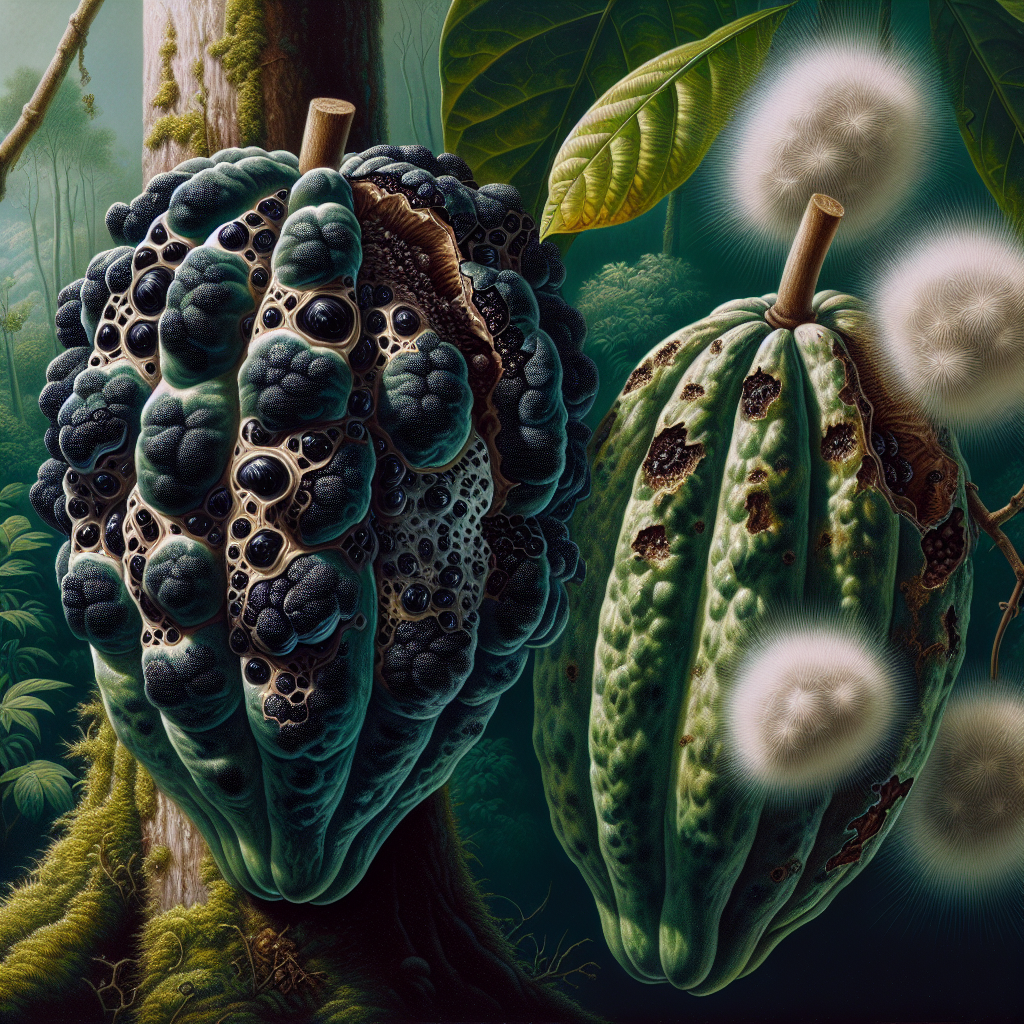
Introduction to Black pod disease
Black pod disease stands as one of the most destructive pathogens in cacao production worldwide, capable of annihilating up to 80% of annual yields in severely affected plantations. Caused predominantly by the oomycete pathogens Phytophthora megakarya in West and Central Africa and Phytophthora palmivora in other tropical regions, this disease manifests as dark, necrotic lesions on cacao pods, cherelles (young pods), and occasionally stems and leaves. First identified in the early 1900s, it thrives in warm, humid conditions typical of cacao-growing areas between 20°N and 20°S latitudes.
The economic ramifications are profound, with global cacao output—vital for the chocolate industry—facing multibillion-dollar losses annually. Smallholder farmers, who produce over 90% of the world's cacao, are particularly vulnerable due to limited access to resistant varieties and chemical controls. This guide provides a comprehensive diagnostic framework, lifecycle analysis, and practical organic management strategies to empower farmers in combating this pervasive threat. By integrating cultural, biological, and preventive measures, growers can sustain productivity even in high-risk environments. For deeper insights into related pathogens, explore Phytophthora palmivora.
Identifying Symptoms & Damage
Accurate diagnosis begins with recognizing the telltale signs of black pod disease, distinguishing it from mimics like insect damage or other rots. Initial symptoms appear as small, dark-green to brownish spots on pod surfaces, often near the attachment point or wounds. These lesions expand rapidly into sunken, black necrotic areas covered in white, fluffy sporangia under humid conditions, emitting a foul, fermented odor as the pod rots internally.
Pods at all stages are susceptible: cherelles shrivel and blacken, mature pods develop chocolate-brown discoloration penetrating deep into the beans, rendering them unusable. Bean infection leads to internal blackening, reducing fermentation quality and market value. Secondary symptoms include pod drop, mummification, and stem cankers—dark lesions girdling branches, causing dieback. Yield losses correlate directly with pod infection rates; 10% infection can slash harvests by 20-30%, escalating to total failure at 50%+ incidence.
Damage assessment involves weekly scouting: count infected pods per tree, noting sporulation (white mycelium indicates active spread). Differentiate from anthracnose (sunken lesions with pink spore masses) or Botrytis (gray mold). Use a knife to section pods—healthy beans are white; infected ones show black vascular streaking. Early detection via these visuals prevents epidemic spread, especially in dense canopies where humidity fosters pathogen proliferation.
Lifecycle and Progression of Black pod disease
Understanding the Phytophthora lifecycle is key to timing interventions. The pathogen survives as thick-walled chlamydospores or oospores in soil, mummified pods, and infected plant debris for 1-2 years. Primary inoculum activates during wet seasons (rainfall >2000mm/year), germinating zoospores that swim in soil water or leaf films to infect via wounds or natural openings.
Sporangia form on lesions under 25-30°C and >90% humidity, releasing biflagellate zoospores that encyst and penetrate pods within hours. Incubation lasts 2-5 days, with lesions expanding 1-2 cm daily in optimal conditions. A single infected pod produces millions of sporangia, splashing up to 1m via rain, enabling explosive epidemics. Disease progression peaks during main crop (cherelles) and minor crop phases, with polycyclic spread amplifying infections exponentially.
In P. megakarya-prone areas, soilborne phases dominate, with roots acting as reservoirs. P. palmivora favors aerial spread via wind-driven rain. Progression halts in dry periods (<7 days), resuming with monsoons. This cycle underscores sanitation's role: removing infected pods disrupts inoculum buildup. Check out this Soil Health Mastery blog for soil management tips that indirectly curb soilborne pathogens.
Environmental Triggers & Risk Factors
Black pod epidemics hinge on specific environmental cues: prolonged leaf wetness (>8 hours), temperatures 20-30°C, and high rainfall. Overhead shade (common in cacao agroforestry) traps moisture, elevating canopy humidity >95%, ideal for sporangia germination. Poor drainage, compacted soils, and flooding exacerbate soil inoculum.
Risk factors include dense planting (>1200 trees/ha), excessive nitrogen favoring succulent growth, and wounds from monkeys, rodents, or mealybugs providing entry points. Monoculture systems lack biodiversity buffers, while climate change intensifies wet seasons, shifting disease fronts. Susceptible varieties like Trinitario and Nacional amplify vulnerability; Forastero hybrids show moderate resistance.
Soil pH <5.5 and low calcium stress trees, thinning cuticles. Windbreaks reduce rain splash but can increase humidity if unmanaged. Monitoring via rain gauges and hygrometers predicts outbreaks—disease doubles with every 10mm rain event. Integrating downy mildew knowledge helps, as similar conditions trigger both.
Organic Control & Treatment Plans
Organic management emphasizes integrated approaches sans synthetic fungicides. Sanitation is foundational: harvest and destroy (bury/incinerate) all diseased pods weekly, reducing inoculum by 70%. Prune low branches for airflow, targeting 40-50% shade.
Biological controls shine: apply Trichoderma asperellum or Pseudomonas fluorescens (10^9 CFU/ml) as foliar/soil drenches every 14 days during rains, achieving 50-60% efficacy. Bacillus subtilis colonizes wounds, outcompeting Phytophthora. Neem oil (5ml/L) + copper oxychloride (organic-approved, 2g/L) sprays at 10-14 day intervals control sporulation; rotate to prevent resistance.
Cultural tactics: Plant at 3x3m spacing on raised beds (30cm) with contour drains. Mulch with Gliricidia prunings (Gliricidia) to suppress soil splash. Boost tree vigor via compost (5kg/tree/year) rich in potassium/phosphorus, hardening tissues.
Treatment plans:
- Early outbreak: Remove infected pods + neem spray.
- Moderate (10-20%): Biocontrol drench + copper alternate.
- Severe: Sanitation + resistant grafts. Monitor with pheromone traps for vectors. Trials show IPM yields 25% higher than untreated plots.
Preventing Black pod disease in the Future
Prevention trumps cure through resilient systems. Select resistant hybrids like PA150 or CATIE-R6, grafting onto tolerant rootstocks. Establish farm biosecurity: quarantine new plants, footbaths for workers.
Long-term strategies:
- Improve drainage with legumes as cover crops.
- Time planting post-dry season.
- Foster biodiversity: interplant with banana (Cavendish Banana) for windbreaks, repelling vectors.
- Annual pruning: open canopy, remove basal shoots.
- Soil solarization (clear plastic, 4-6 weeks pre-planting) kills 90% soil inoculum.
Weather-based models predict risks—avoid overhead irrigation. Farmer cooperatives enable collective scouting apps. Varietal trials in Ghana cut incidence 40%. Vaccinate mindset: annual IPM calendars sustain health across seasons.
Crops Most Affected by Black pod disease
Cacao (Theobroma cacao) reigns as the primary victim, with pods most vulnerable during rapid growth. P. palmivora strikes durian (Durian), papaya (Solo Papaya), and pineapple (Smooth Cayenne Pineapple), causing similar rots. P. megakarya is cacao-specific but related species hit avocado (Hass Avocado) and citrus like orange (Navel Orange).
Minor hosts include papaya, rambutan, and jackfruit in tropics. Cross-infection risks demand vigilant monitoring in mixed orchards. Global hotspots: Côte d'Ivoire (30% losses), Ghana, Brazil, Indonesia. Diversifying to less susceptible crops like mango mitigates monoculture perils.