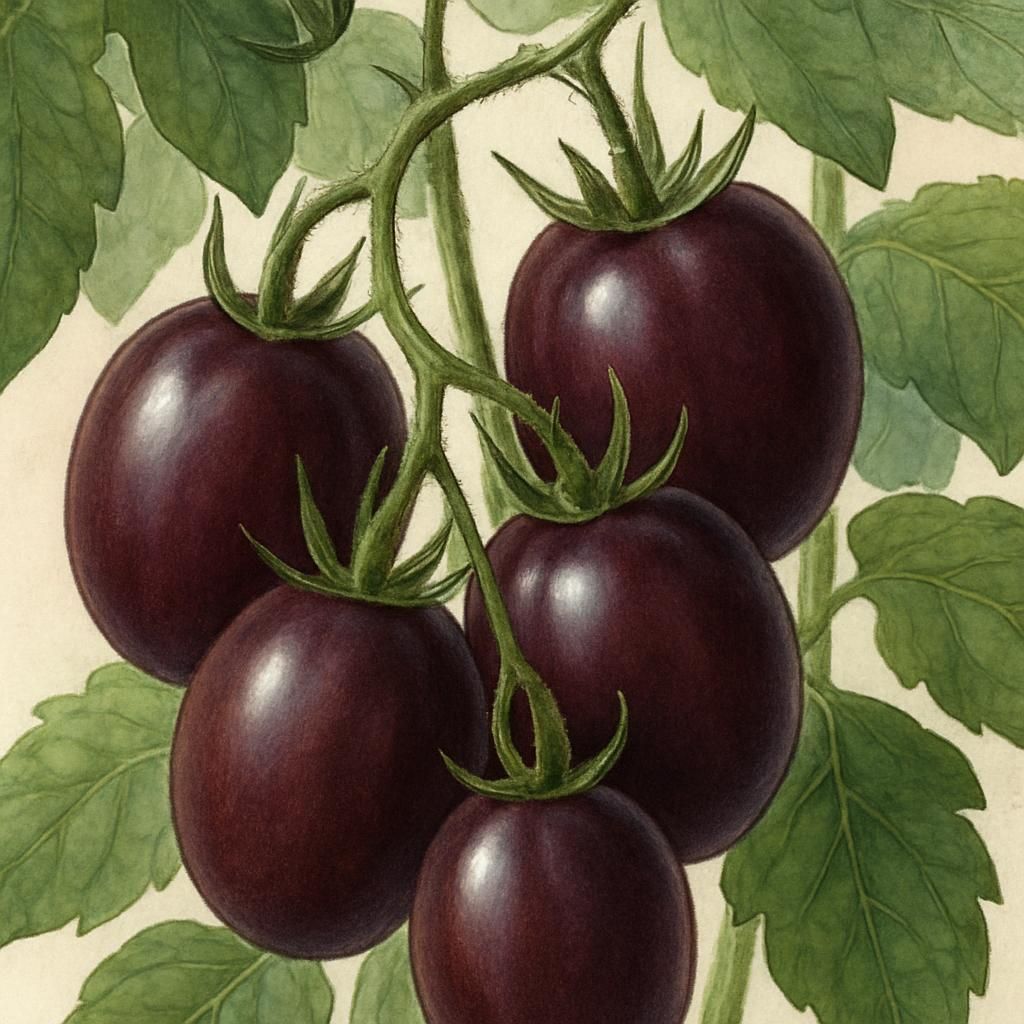
Introduction to Black Plum Tomato
The Black Plum Tomato is a distinctive heirloom variety known for its elongated, plum-shaped fruits that ripen to a rich, dark mahogany-purple. Unlike many cherry or salad tomatoes, Black Plum offers concentrated flavor with lower water content, making it ideal for sauces, pastes, and drying. Gardeners and small-scale growers value its vigorous indeterminate growth habit, reliable productivity, and tolerance to a range of growing conditions.
Originating from Eastern European seed-saving traditions, Black Plum has gained popularity among home gardeners and market growers seeking unique colors and complex taste profiles. Its dense flesh and balanced acidity-to-sugar ratio deliver a savory depth that stands out in both raw preparations and slow-cooked dishes.
Botanical Profile of Black Plum Tomato
Black Plum Tomato belongs to the nightshade family (Solanaceae) and shares the same species as standard tomatoes: Solanum lycopersicum. The plant exhibits an indeterminate growth pattern, producing long vines that can reach 6–8 feet (1.8–2.4 m) when supported. Leaves are compound and slightly fuzzy, typical of most tomato cultivars.
Fruits average 2–3 inches (5–7.5 cm) in length with an oval to slightly pointed shape. At maturity, the skin displays a deep purple-brown hue with green shoulders that fade as ripening completes. The interior is meaty with few seeds and low moisture, contributing to its excellent drying and sauce qualities.
Flowers are self-pollinating and typically appear in clusters of 6–10. Under optimal conditions, plants begin flowering 45–55 days after transplanting and continue producing until frost.
Soil, pH, and Climate Requirements for Black Plum Tomato
Successful cultivation begins with well-drained, fertile soil rich in organic matter. Black Plum Tomato performs best in loamy soils amended with compost or well-rotted manure. Avoid heavy clay without significant amendment.
| Parameter | Ideal Range | Notes |
|---|---|---|
| Soil Type | Loamy, well-drained | Add compost for structure and fertility |
| Soil pH | 6.2 – 6.8 | Test annually; adjust with lime or sulfur |
| Temperature (Day) | 70–85 °F (21–29 °C) | Optimal fruit set occurs in this range |
| Temperature (Night) | 55–65 °F (13–18 °C) | Below 50 °F slows growth |
| USDA Hardiness Zones | 4–11 (as annual) | Start indoors in cooler zones |
| Sunlight | Full sun (8+ hours) | Partial shade reduces yield |
| Spacing | 18–24 in (45–60 cm) between plants | Rows 36–48 in (90–120 cm) apart |
| Soil Temperature at Planting | 60 °F (15.5 °C) minimum | Use soil thermometer for accuracy |
Step-by-Step Planting & Propagation
Start Seeds Indoors: Begin 6–8 weeks before the last expected frost. Sow seeds ¼ inch (6 mm) deep in sterile seed-starting mix. Maintain soil temperature at 75–80 °F (24–27 °C) for rapid germination (7–10 days).
Harden Off Seedlings: Gradually expose plants to outdoor conditions over 7–10 days, increasing time outside each day. Protect from wind and direct sun initially.
Prepare Planting Site: Incorporate 2–3 inches (5–7.5 cm) of compost into the top 12 inches (30 cm) of soil. Install sturdy cages, stakes, or trellis systems before transplanting.
Transplant: Set seedlings outdoors when soil reaches 60 °F (15.5 °C) and nighttime temperatures remain above 50 °F (10 °C). Plant deeply, burying the stem up to the first true leaves to encourage adventitious roots.
Water Immediately: Provide 1 inch (2.5 cm) of water after transplanting. Mulch with 2–3 inches (5–7.5 cm) of straw or shredded leaves to conserve moisture and suppress weeds.
Care & Maintenance regimes for Black Plum Tomato
Consistent attention to water, nutrition, and structural support maximizes both yield and fruit quality. Regular monitoring prevents common issues before they reduce productivity.
| Growth Stage | Water Schedule | Fertilizer Schedule | Pruning Schedule |
|---|---|---|---|
| Establishment (0–3 weeks) | 1–1.5 in (2.5–4 cm)/week; keep evenly moist | Balanced NPK (10-10-10) at transplant; ½ rate | Remove lower leaves touching soil; stake early |
| Vegetative (3–6 weeks) | 1.5–2 in (4–5 cm)/week; deep watering | High-nitrogen side-dress at 3 weeks; switch to balanced | Remove suckers below first fruit cluster |
| Flowering & Fruit Set | 2 in (5 cm)/week; reduce slightly at ripening | Low-nitrogen, high-phosphorus/potassium (e.g., 5-10-10) every 3–4 weeks | Continue selective sucker removal; top vines at 6–7 ft |
| Harvest Period | Maintain 1.5 in (4 cm)/week; avoid fluctuations | Light compost tea every 4 weeks | Remove diseased foliage promptly |
Pests, Diseases & Organic Management
Black Plum Tomato faces typical tomato threats including Aphids, Spider Mites, Whiteflies, and fungal diseases such as Early Blight and Septoria Leaf Spot. Implement integrated pest management (IPM) from the start.
- Cultural Controls: Rotate tomatoes with non-solanaceous crops every 3–4 years. Remove and destroy infected plant debris at season end.
- Biological Controls: Release predatory insects such as lady beetles and lacewings for aphid suppression. Apply Bacillus thuringiensis (Bt) for caterpillar pests.
- Organic Sprays: Use neem oil or insecticidal soap for soft-bodied insects. Apply copper-based fungicides preventively during humid periods.
- Monitoring: Scout weekly, checking undersides of leaves and stems. Act at the first sign of infestation.
Harvesting, Curing & Optimal Storage
Harvest Black Plum Tomatoes when fruits reach full color and yield slightly to gentle pressure. For peak flavor, allow fruits to ripen fully on the vine. Use pruning shears to clip stems rather than pulling.
For sauce production, pick slightly under-ripe fruits and allow them to ripen indoors at 65–70 °F (18–21 °C). Store ripe fruit at room temperature away from direct sun for up to one week. For longer storage, process into sauce, paste, or dehydrate. Freeze whole fruits on trays then transfer to airtight containers for up to 10 months.
Companion Planting for Black Plum Tomato
Strategic companions enhance pollination, deter pests, and improve soil health. Pair Black Plum Tomato with Basil, Marigold, Nasturtium, and Garlic to reduce pest pressure and attract beneficial insects.
Avoid planting near Fennel or Walnut trees, which can inhibit tomato growth through allelopathy. Interplant with Bush Beans or Pole Beans for nitrogen fixation and vertical space efficiency.
For additional guidance on seasonal timing and small-farm resilience, see The Overlooked Art of Seasonal Harvest Timing for Small Farm Profit.