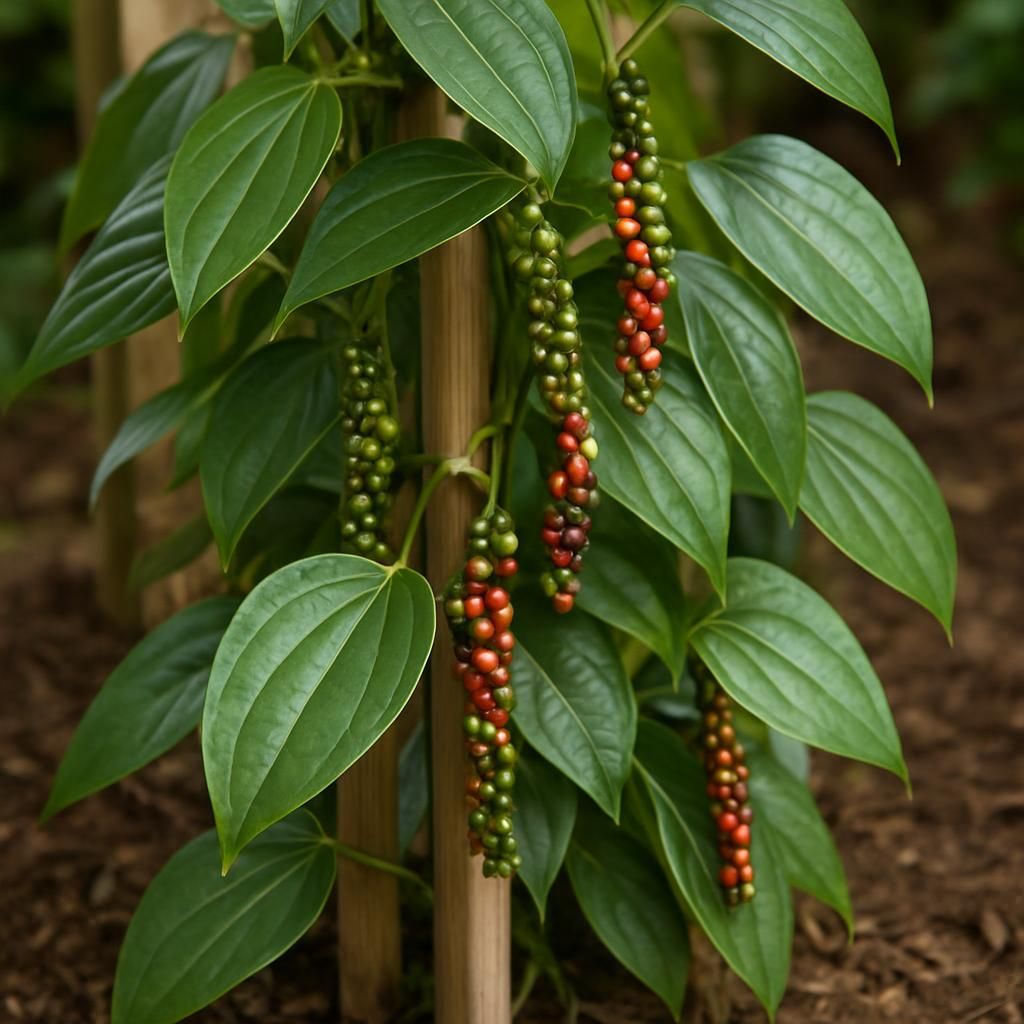
Introduction to Black Pepper (Sarawak)
Black Pepper (Sarawak) is a high-yielding cultivar of the tropical vine Piper nigrum originating from Sarawak, Malaysia. It is renowned for producing large, uniform berries with intense aroma and pungency, making it a favorite among spice processors and home gardeners seeking premium peppercorns. The vine is a long-lived perennial that requires a supportive structure and consistent tropical conditions to reach full commercial productivity of 3–5 kg of dried pepper per vine annually after maturity.
Successful cultivation of Black Pepper (Sarawak) demands attention to drainage, shade management, and regular nutrient cycles. Growers who master these elements enjoy sustained harvests for 15–20 years from a single planting. This guide provides detailed, practical steps for establishing, maintaining, and harvesting this valuable spice crop.
Botanical Profile of Black Pepper (Sarawak)
Black Pepper (Sarawak) belongs to the Piperaceae family and is a woody, climbing perennial vine. It produces adventitious roots along its stems that cling to supports such as living trees, poles, or trellises. The plant develops heart-shaped, dark green leaves up to 15 cm long and produces hanging catkins of tiny flowers that develop into spherical drupes (peppercorns) 4–6 mm in diameter.
Mature vines can reach 4–10 meters in height when trained on supports. The cultivar ‘Sarawak’ is noted for its vigorous growth, high berry set, and relatively uniform ripening. Both male and hermaphrodite flowers occur on the same vine, allowing self-pollination, although cross-pollination can increase yields.
Soil, pH, and Climate Requirements for Black Pepper (Sarawak)
Black Pepper (Sarawak) thrives in deep, well-drained, fertile soils rich in organic matter. It prefers slightly acidic conditions and consistent warmth with high humidity. The following table summarizes ideal growing parameters:
| Parameter | Ideal Range | Notes |
|---|---|---|
| Soil Type | Sandy loam to clay loam with good drainage | Avoid waterlogged or heavy clay soils |
| Soil pH | 5.5–6.5 | Lime only if pH drops below 5.0 |
| Temperature | 20–35 °C (day); 18–25 °C (night) | Protect from temperatures below 15 °C |
| Annual Rainfall | 2000–3000 mm | Evenly distributed; supplemental irrigation in dry spells |
| Relative Humidity | 70–90 % | Maintain with mulching and shade |
| Elevation | 0–1500 m | Lower yields above 1200 m |
| Sunlight | 50–70 % shade in early years; full sun after establishment | Use living standards or shade nets |
Step-by-Step Planting & Propagation
- Select healthy, 6–8 month old rooted cuttings from high-yielding mother vines. Each cutting should have 3–5 nodes and active roots.
- Prepare supports (living standards such as Gliricidia or concrete/wooden poles 2–3 m tall) at least one month before planting.
- Dig planting pits 45 × 45 × 45 cm, refill with a 1:1:1 mix of topsoil, well-rotted compost, and coarse sand. Incorporate 200 g rock phosphate per pit.
- Plant cuttings at the base of the support during the onset of the rainy season. Firm soil gently and water thoroughly.
- Provide temporary shade for the first 4–6 weeks using palm fronds or shade cloth until new growth appears.
- Space vines 2 m × 2 m for intensive systems or 3 m × 3 m when using living standards.
Care & Maintenance regimes for Black Pepper (Sarawak)
Consistent watering, balanced nutrition, and timely pruning are essential. The table below outlines a practical annual schedule:
| Month Range | Watering Schedule | Fertilizer Application | Pruning & Training |
|---|---|---|---|
| Jan–Mar (Dry) | 20–25 L/vine/week; mulch heavily | 150 g NPK 15-15-15 + 50 g MgSO₄ per vine | Remove dead wood; train 2–3 main stems |
| Apr–Jun (Pre-monsoon) | 15 L/vine every 4 days if rain <20 mm | 200 g NPK 15-15-15 split into two doses | Pinch tips at 1.5 m to encourage lateral shoots |
| Jul–Sep (Monsoon) | Reduce to 10 L/week if rainfall adequate | Apply 5 kg well-rotted manure + 100 g rock phosphate | Thin dense canopy; remove crossing branches |
| Oct–Dec (Post-monsoon) | 15–20 L/vine/week | 100 g K₂SO₄ + 50 g bone meal per vine | Light pruning after harvest; tie new growth |
Mulch with 10–15 cm of organic material year-round to conserve moisture and suppress weeds. Replenish mulch every 4–6 months.
Pests, Diseases & Organic Management
Common pests include scale insects, mealybugs, and root-knot nematodes. Diseases such as Phytophthora foot rot, anthracnose, and fusarium wilt can reduce yields if unmanaged.
Organic control begins with prevention: ensure excellent drainage, avoid overhead irrigation, and maintain plant vigor through balanced nutrition. Introduce predatory beetles and parasitic wasps for scale and mealybug suppression. Apply neem oil (0.5 %) or horticultural soap every 14–21 days during peak pest pressure. For foot rot, drench soil with Trichoderma viride (10 g/L) at planting and repeat biannually. Remove and destroy infected plant parts promptly.
Harvesting, Curing & Optimal Storage
Harvest begins 18–24 months after planting when 2–3 berries on each spike turn red. Pick entire spikes by hand. For black pepper, sun-dry spikes 3–5 days until berries turn dark brown and wrinkle; for white pepper, soak ripe spikes in running water 4–6 days to ferment and loosen the pericarp, then rub and dry the inner seeds.
Store dried peppercorns in clean, airtight containers at 10–15 °C and <60 % RH. Properly cured and stored pepper retains pungency and aroma for up to 24 months. Vacuum-seal or use oxygen absorbers for long-term commercial storage.
Companion Planting for Black Pepper (Sarawak)
Black Pepper (Sarawak) benefits from nitrogen-fixing living standards such as Gliricidia and leguminous ground covers. Interplant with Ginger or Turmeric at the base to maximize land use and provide additional income. Marigolds (Marigold) deter nematodes when planted along borders. Avoid planting heavy feeders such as Corn or Cassava that compete for nutrients and moisture.